
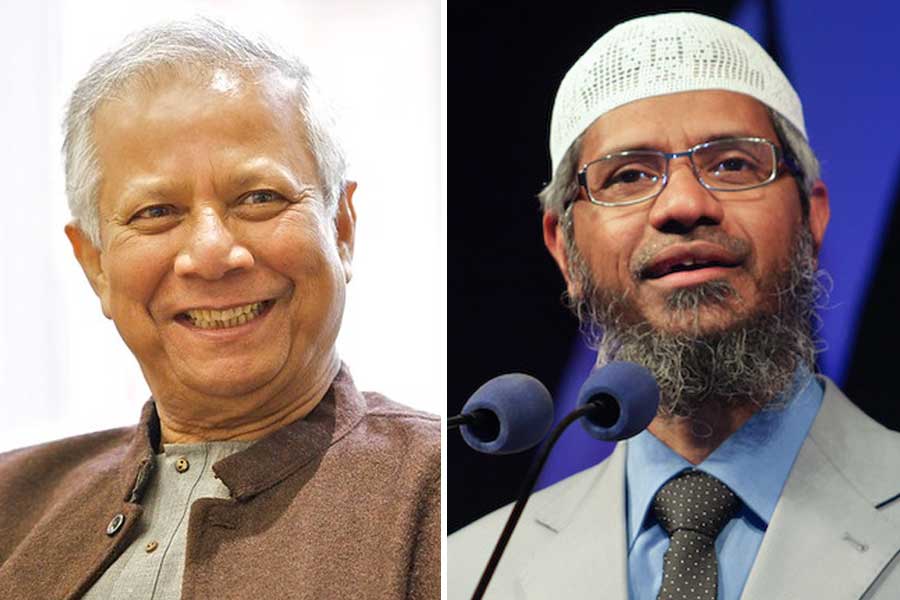
In a development fraught with regional implications, Bangladesh appears to be charting a course that embraces Islamist influence while rehabilitating the figure of Zakir Naik—a preacher long criticized in India for sowing communal discord. The combination of Dhaka’s shifting stance and Naik’s potential return signals a troubling alignment for India’s strategic interests.
Zakir Naik: India’s Troubled Export
Zakir Naik, the Mumbai-based televangelist who founded the Islamic Research Foundation, has been at the centre of major controversy in India and abroad. His public lectures and broadcasts have been accused of promoting divisive rhetoric.
In the context of India, Naik’s speeches have raised concerns about communal tension, with authorities accusing him of fomenting enmity between religious communities. His organisation has come under investigation for alleged money-laundering and radicalisation links.
In Bangladesh, the 2016 attack on the Holey Artisan Bakery in Dhaka, in which 22 people died, reportedly involved terrorists who had referenced Naik’s sermons. The country’s government banned his broadcasts at the time.
Naik’s record thus presents him not simply as a controversial religious figure, but as one whose influence arguably intersects with cross-border communal sensitivities for India.
Bangladesh’s Islamist Pivot and Anti-India Undertones
While Bangladesh for many years maintained a secular and India-aligned posture under Sheikh Hasina’s government, recent shifts suggest different dynamics. According to reports, Bangladesh’s interim government has approved a nationwide tour for Naik from late November to December 2025.
This move indicates a departure from earlier commitments—In 2018 a close aide of Hasina stated: “The soil of Bangladesh will never be allowed to be used by elements who are hostile to our neighbours.”
At the same time, there are indications of growing anti-India narratives emanating from Dhaka. Reports note an Islamist group backed by a Turkish NGO publishing a map of a so-called “Greater Bangladesh” that includes parts of Indian territory—an act flagged by India’s foreign minister.
Another recent example: supporters of the opposition Bangladesh Nationalist Party (BNP) marched towards the Indian High Commission in Dhaka chanting anti-India slogans, in protest of alleged Indian actions
These developments reflect a broader shift in Bangladesh’s posture: the revival of Islamist influence, welcome being extended to a figure long considered hostile by India, and overt public manifestations of anti-India sentiment.
Why India Should Be Concerned
- Regional Security Threat: Presence of Zakir Naik in Bangladesh could offer a platform for messaging that undermines India’s internal communal harmony. His reach and influence among Bengali-speaking viewers are significant.
- Diplomatic and Strategic Risk: Bangladesh reversing earlier assurances and rehabilitating Zakir Naik send diplomatic signals: a potential reorientation away from alignment with India and towards Islamist-driven domestic politics. The “Greater Bangladesh” map episode underscores such risk.
- Ideological Spill-over: With Bangladesh adopting a more Islamist tilt, combined with India’s own communal tensions, the cross-border ideological spill-over becomes more acute. Naik’s lectures could inflame minorities, challenge India’s secular constitutional unity, and strain bilateral trust.
- Precedent of Impunity: If Bangladesh allows a fugitive preacher accused by India of hate speech and radicalising influence to operate freely, this could embolden other cross-border actors seeking sanctuaries. India’s ability to seek extradition, enforce bans, or safeguard interests may weaken.
The Crux: A Token of Shift and a Wedge between Neighbours
The headline captures the gist: Bangladesh welcoming Zakir Naik is more than a mere event—it is emblematic of two intertwined phenomena: the resurgence of Islamist influence in Dhaka and the potential leveraging of that influence in a manner that runs counter to India’s interests. If the current tour indeed proceeds, India finds itself facing a neighbour where ideological, and potentially geopolitical, tides are turning.
What India Can Do
- Strengthen intelligence and border cooperation with Bangladesh to monitor Naik’s activities and any associated networks.
- Engage Dhaka diplomatically to press for adherence to earlier commitments of non-hostility.
- Amplify media and public diplomacy within Bangladesh to raise awareness of the risks of extremist ideologies, including those propagated by Naik.
- Internally, address communal fault-lines in India so that external actors cannot exploit them with ease.
In conclusion, Bangladesh’s welcoming of Zakir Naik is not merely a headline-making event—it is a potential turning point in South Asia’s ideological and strategic dynamics. For India, it warrants careful attention, clear diplomatic signalling, and robust internal preparedness.