
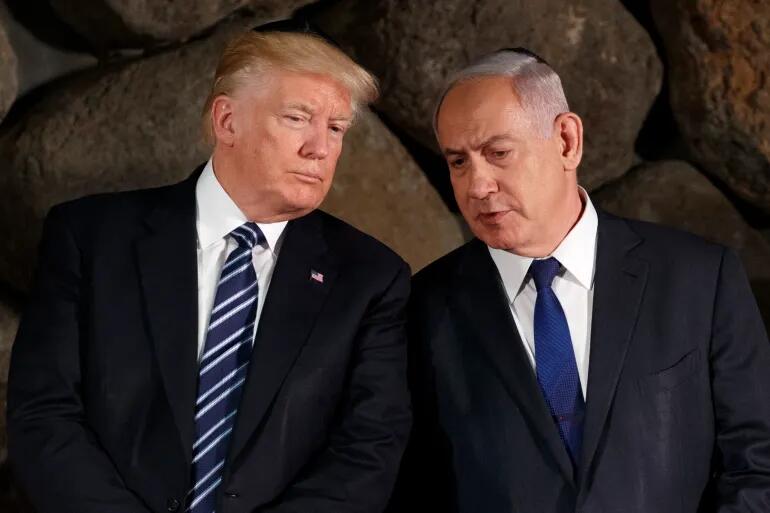
The White House has unveiled a sweeping 20-point framework proposed by former U.S. President Donald Trump to end the Israel-Hamas conflict in Gaza. Endorsed by Israeli Prime Minister Benjamin Netanyahu, the plan seeks to combine immediate humanitarian relief, a phased Israeli withdrawal, prisoner-hostage exchanges, and a vision of Gaza’s reconstruction under an internationally supervised transitional administration. Yet, despite its ambition, the plan’s feasibility depends on Hamas’s cooperation—a factor that makes the proposal both promising in theory and precarious in practice.
Core Structure of the Plan
At its heart, the proposal is designed around three pillars: ending hostilities, resolving humanitarian needs, and laying a pathway toward long-term governance reform. It outlines a clear sequence: first, Israel halts military operations and prepares to withdraw, while Hamas agrees to release hostages. This exchange is to be paired with Israel’s release of prisoners and detainees. Second, humanitarian aid and reconstruction begin immediately, facilitated by international organizations. Third, Gaza undergoes political restructuring, with an apolitical technocratic committee managing governance under the supervision of a “Board of Peace,” chaired personally by Trump.
The plan goes beyond ceasefire arrangements to envision economic development, demilitarization, and even interfaith dialogue initiatives. In theory, it attempts to combine security guarantees for Israel with dignity, rehabilitation, and eventual self-determination for Palestinians.
Humanitarian Relief and Reconstruction
Trump’s proposal explicitly acknowledges Gaza’s humanitarian crisis, pledging large-scale aid, infrastructure rehabilitation, and the opening of crossings under international supervision. The emphasis on bakeries, hospitals, water, and electricity restoration signals recognition of daily hardships. Importantly, the proposal promises no forced displacement of Palestinians—a reassurance in the face of regional fears of mass exodus.
The proposed special economic zone and investment-driven development plan borrow from Gulf models such as Dubai or Neom. If implemented, these could transform Gaza’s economy from aid dependence to investment-driven growth. Yet, the underlying assumption—that investors will commit to a region scarred by war and unstable politics—may be overly optimistic without guaranteed security and political legitimacy.
Security Guarantees and Demilitarization
For Israel, the plan prioritizes demilitarization of Gaza. Independent monitors, weapon buy-back programs, and an International Stabilization Force (ISF) are envisioned to ensure that Hamas and other factions cannot rebuild their military capacity. The ISF, trained with Arab partners and coordinated with Israel and Egypt, is projected as the long-term guarantor of peace.
However, history casts doubt on such mechanisms. International monitoring forces in Lebanon (UNIFIL) and Sinai have faced limitations, often unable to curb militant activity. Expecting Hamas or splinter groups to willingly decommission arms—particularly when the group’s legitimacy rests on armed resistance—remains a major obstacle.
Transitional Governance: A Political Flashpoint
One of the most controversial aspects is the governance framework. Gaza would not immediately return to Palestinian Authority (PA) control; instead, it would be managed by a technocratic committee under international oversight. The committee would answer to Trump’s proposed “Board of Peace,” chaired by him and involving global leaders like Tony Blair.
This arrangement sidelines both Hamas and the PA in the short term, raising questions of legitimacy. For Palestinians, being ruled by an externally appointed body—especially one headed by Trump, whose earlier 2020 peace plan was widely rejected as pro-Israel—may be seen as another form of imposed authority rather than self-determination. While the plan gestures toward eventual Palestinian statehood, it conditions this on successful PA reform and Gaza’s pacification—objectives that remain distant and contested.
The Prisoner-Hostage Equation
A central tradeoff is the exchange of hostages for prisoners. Israel would release 250 life-term prisoners and 1,700 detainees, alongside returning remains, once all Israeli hostages are freed. For Hamas, this provision carries political capital; for Israel, it is a necessary concession to secure the safe return of citizens. Yet, the sequencing is delicate. If Hamas distrusts Israel’s willingness to follow through—or vice versa—the entire plan could collapse at the first hurdle.
Regional and Global Implications
The plan situates Gaza’s future within broader regional frameworks, seeking Arab partners’ guarantees and cooperation. It gestures toward interfaith dialogue and normalization efforts. If successful, it could ease Israel’s regional integration and provide Palestinians a credible roadmap to self-determination. But if rejected or only partially implemented, it risks deepening cynicism and entrenching divides.
Moreover, Trump’s personal centrality to the plan raises questions. Would an international community already polarized about his leadership accept him as the head of a “Board of Peace”? Or does his dominance risk politicizing what needs to be a multilateral, neutral effort?
Conclusion: Between Vision and Reality
Trump’s 20-point Gaza peace plan is remarkable for its breadth, sequencing, and ambition. It seeks to balance immediate humanitarian imperatives with long-term political restructuring, while giving Israel the security assurances it demands. Yet, it is also fragile in execution, heavily dependent on Hamas’s cooperation, regional buy-in, and international trust in Trump’s leadership.
Ultimately, the proposal illustrates both the urgency and the near impossibility of crafting a comprehensive solution acceptable to all sides. Its humanitarian pledges and vision for redevelopment are laudable, but the political architecture—anchored in external oversight and conditional Palestinian statehood—may prove too contentious to deliver lasting peace.