





















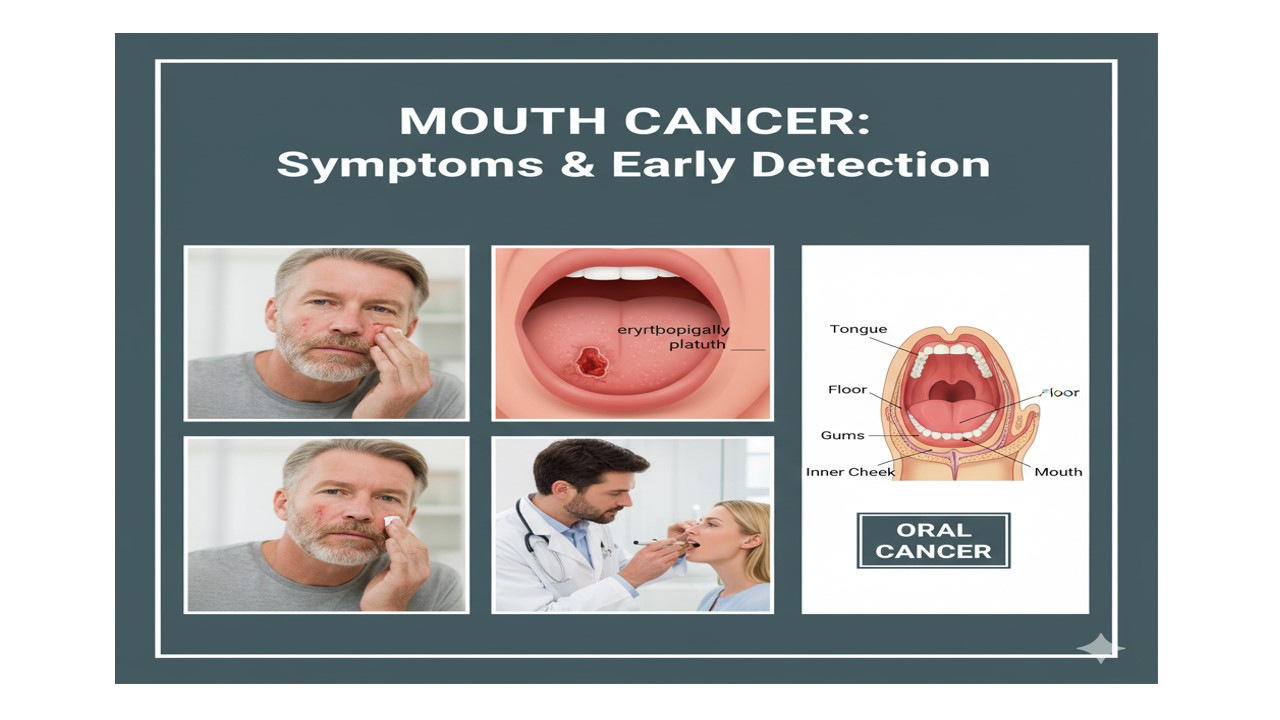
Mouth cancer, also called oral cancer, can affect any part of the mouth, such as the lips, tongue, gums, cheeks, roof of the mouth, or floor of the mouth. The challenge with this disease is that it often begins quietly. Many early mouth cancer symptoms look like harmless problems, such as small ulcers or patches inside the mouth. Because of this, people may ignore them or mistake them for common mouth issues.
Learning to recognise the silent warning signs can make a big difference. Early detection not only improves the chances of successful treatment but can also save lives.
Why Mouth Cancer Can Be Missed?
Unlike some other cancers that cause sudden or severe problems, mouth cancer often develops slowly. A sore or lump may look like a simple ulcer, and pain in the mouth can be blamed on a tooth problem. But if these issues do not go away after a few weeks, it may be a sign of something more serious. That is why regular dental check-ups and self-examination of your mouth are so important.
Silent Symptoms You Should Watch Out For
Prostate cancer often develops quietly, with little to no early warning signs. Paying attention to subtle changes in urinary habits, sexual health, or unexplained pain can help detect problems sooner and lead to timely treatment.
Mouth Ulcers That Do Not Heal
Almost everyone gets mouth ulcers at some point, but one of the key mouth cancer symptoms is an ulcer that lasts longer than three weeks. If a sore spot does not heal and feels painful or unusual, it is important to get it checked.
Red or White Patches
White patches (leukoplakia) or red patches (erythroplakia) inside the mouth can sometimes be early signs of cancer. These patches may not cause pain at first, which is why people often overlook them. If you see any unusual discolouration inside your mouth that does not disappear, it needs medical attention.
Lumps in the Mouth or Neck
A lump on the tongue, inside the cheek, or on the lips can be a warning sign. Similarly, swelling in the neck may signal that cancer has spread to the lymph nodes. Even if the lump is painless, it should not be ignored.
Pain or Difficulty Swallowing
One subtle but serious symptom is discomfort when swallowing food or drink. Sometimes, the pain may spread to the throat or ear. This may also be accompanied by a feeling that something is stuck in the throat.
Hoarse Voice or Speech Problems
Another often-missed symptom is a change in the way you speak. A hoarse, croaky voice that does not improve or slurred speech can be linked to cancer in the mouth or throat area.
Numbness or Tingling
Some patients experience numbness in the lips, tongue, or other parts of the mouth. This may be due to nerves being affected by a tumour. Because numbness is not painful, many people don’t take it seriously, but it is a sign that should not be ignored.
Loose Teeth or Denture Problems
If your teeth become loose without any gum disease or injury, or if dentures suddenly stop fitting properly, this may point to underlying changes in the jawbone or gums caused by mouth cancer.
Unexplained Weight Loss
When mouth cancer progresses, eating may become difficult or painful. This often leads to weight loss without trying. While many conditions can cause weight loss, it is important not to overlook this symptom if it happens along with other changes in your mouth.
Persistent Ear Pain
Sometimes, cancer in the mouth or throat causes pain that feels like an earache. If you have ongoing ear pain without an ear infection, it may be connected to a deeper issue.
When to See a Doctor
Many of the above symptoms can be caused by less serious problems like infections, injuries, or dental issues. However, if any symptom lasts more than three weeks, it should be checked by a doctor. They will look inside your mouth, feel for lumps in your neck, and may refer you for further tests if needed.
Who Is at Risk
Understanding risk factors can also help you be more aware. The major risk factors for mouth cancer include:
- Tobacco use in any form (cigarettes, cigars, chewing tobacco).
- Heavy alcohol consumption.
- Human papillomavirus (HPV) infection.
- Excessive sun exposure on the lips.
- A weakened immune system.
If you have any of these risks, being alert to mouth cancer symptoms is even more important.
The Role of Oncologists and Treatment
If diagnosed, treatment is managed by cancer specialists. Many people search for expert oncologists at Onco Life Hospitals and Onco-Life Cancer Centre in Pune to ensure they are getting the best advice and care. Treatment options may include surgery, radiation therapy, chemotherapy, or a combination, depending on the stage and location of the cancer. Supportive care, like speech therapy and nutrition advice, also plays a role in recovery.
Prevention Tips
While not all cases of mouth cancer can be prevented, some steps can lower your risk:
- Quit smoking and avoid tobacco in any form.
- Limit alcohol use.
- Protect lips from sun exposure with hats and lip balms that have SPF.
- Visit your dentist regularly for oral check-ups.
Final Thoughts
Mouth cancer does not always announce itself with obvious symptoms. Instead, it often begins with small changes like ulcers, patches, or voice problems. These can be easy to miss or ignore, but paying attention to them can save lives.
If you or a loved one notices any ongoing mouth cancer symptoms, it is important to seek medical advice at Onco Life Hospitals or Onco-Life Cancer Centre as soon as possible. Early detection can make treatment much more effective and improve recovery chances.