
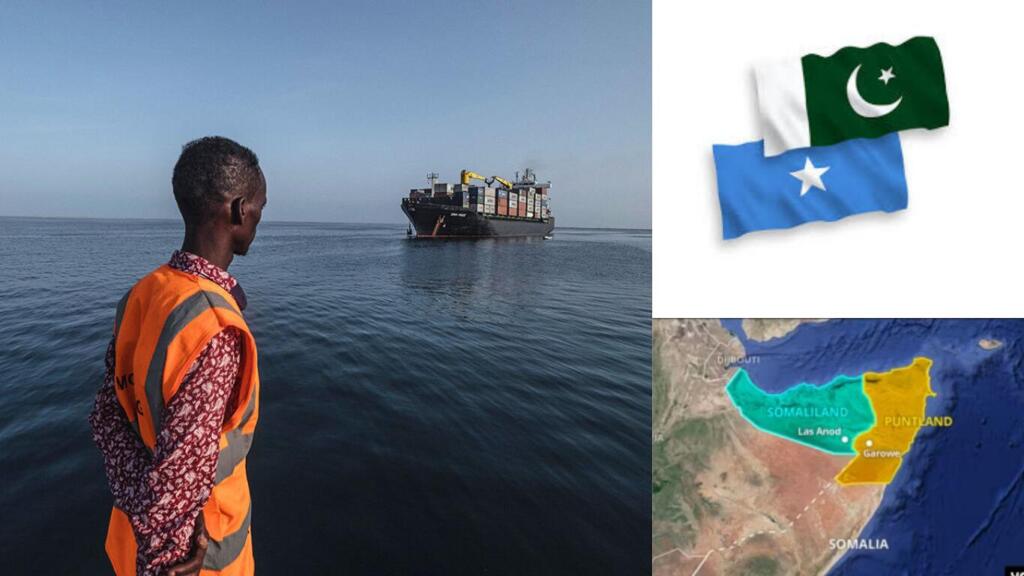
In a decision that’s flown mostly under the radar but is raising eyebrows among regional analysts, Somalia has signed yet another long-term military deal with a foreign nation Pakistan. On August 28, 2025, Somalia’s Cabinet approved a five-year defence cooperation agreement with Islamabad. The pact includes training programmes, military modernisation, and direct support for Somalia’s long-neglected navy. Coming just over a year after Somalia signed a decade-long defense deal with Turkey, this new agreement further deepens the role of foreign powers in Somalia’s security landscape, especially at sea.
Under the new arrangement, Pakistan will play an expansive role. It will train Somali soldiers and officers at all levels, from recruits to top-ranking officers in the Staff and War Colleges. Specialised training in counterterrorism and peacekeeping operations is also part of the deal. For the Somali Navy, which has long suffered from underfunding and poor equipment, the agreement with Pakistan promises technical support. In addition, it also seeks to provide assistance to Somalia in launching new naval units, help with vessel maintenance, and maritime patrol guidance. The agreement opens doors to potential collaboration in defence technology and military industry partnerships. A joint committee will oversee the partnership, reviewing progress each year.
But this growing reliance on foreign partners isn’t just about training or technology—it’s reshaping how Somalia manages its own defence. The coastline of Somalia sits at one of the world’s most strategic crossroads, where the Red Sea meets the Indian Ocean. That location gives it enormous importance in global trade and security calculations. Turkey has already moved in, building naval infrastructure, training officers, and even sending its own warships to patrol Somali waters. There are even reports that Turkey and Pakistan are discussing a joint missile and space-testing site in Somalia—an idea that hints at ambitions well beyond helping Somalia “build capacity.”
From the Somali government’s perspective, these deals might seem like practical steps. Somalia still grapples with insecurity, internal divisions, and a persistent threat from both piracy and terrorism. External help can feel like the only option. But the deeper issue is what happens when help turns into dependency and when sovereignty is quietly handed over in exchange for support.
Foreign militaries don’t operate without strategic intent. Turkey, for example, gains a stronger foothold in the Horn of Africa through its agreement. It positions itself among Gulf states, Western powers, and even China, all vying for influence in the region. Pakistan, through its new agreement, inserts itself into the same competition, gaining both military access and diplomatic leverage in a region that’s increasingly seen as a strategic asset.
What’s happening now looks less like simple cooperation and more like the construction of a layered system of foreign involvement, each new agreement creating more complexity, more dependence, and less control for Somalia itself. As these relationships deepen, Somalia’s room to make independent defense decisions shrinks. The country risks tying its own security not to its national interest, but to the shifting priorities of external actors.
It’s not just a question of policy but also one of perception. While Mogadishu may believe these deals bring stability and global engagement, that’s not what many Somali citizens and some regional leaders think. They, in fact, see foreign powers as encroachers. In a country with a longstanding painful history of external interference, that perception is powerful. Sovereignty isn’t just about official control over territory; it’s also about whether the people believe their government is acting independently, in their best interest.
Somalia’s coastline is a national treasure. It is rich in marine resources with a strategic location. It has been, however, also vulnerable for decades now. Hence, it becomes pertinent to be protected and managed by Somalis, not foreign powers with their own long-term and selfish interests. Even as foreign support isn’t inherently wrong, there should be clear boundaries in this regard. Training and assistance should be tied to transparent timelines, accountable progress, and a clear path to national self-sufficiency. Anything less turns partnership into dependency.
At its core, this is more than a story about military agreements. It’s a cautionary tale about how fragile states, in seeking help, can lose control over the very things they’re trying to protect. Turkey and Pakistan may offer short-term gains. But if Somalia isn’t careful, it risks falling into a sovereignty trap that will be difficult to escape. The real threat may not come from pirates or insurgents but from the slow, steady erosion of Somali control over Somali seas.
(Aritra Banerjee is the co-author of the book ‘The Indian Navy @75: Reminiscing the Voyage)