
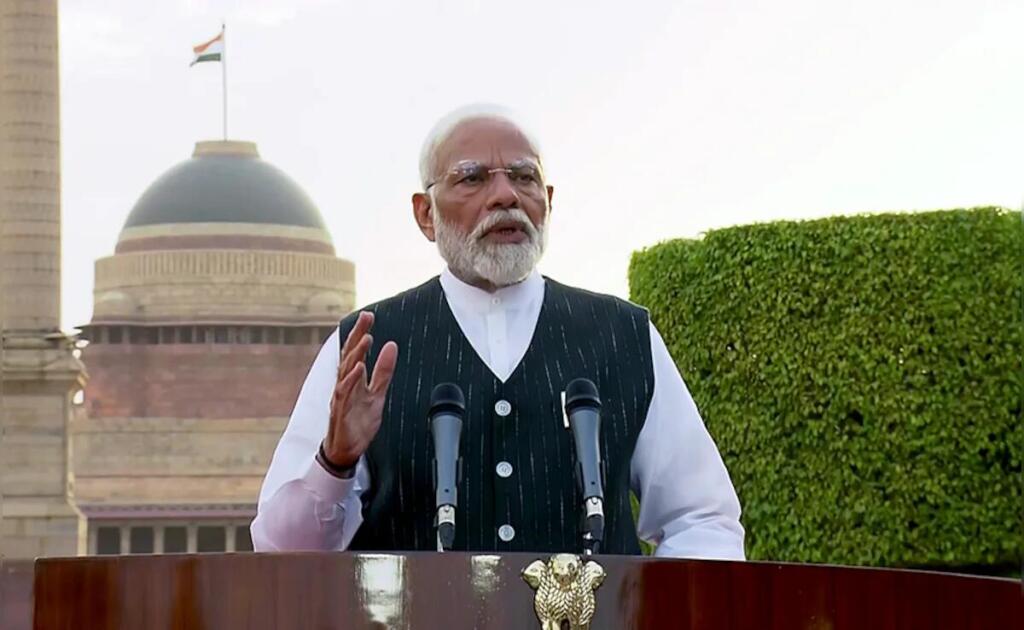
On Sunday evening, PM Modi addressed the nation in a 20-minute speech that combined policy announcements with a cultural appeal. He touched upon GST reforms, changes in income tax slabs, the vision of Atmanirbhar Bharat, and the enduring call of Swadeshi.
The timing was symbolic. From September 22, Navratri begins — the festival season that marks the start of India’s grand cycle of celebrations. On the same day, the government’s new GST reforms also come into effect. Modi therefore declared September 22 as the beginning of a “GST Savings Festival” — a celebration that, he said, will benefit every section of society.
Next-Generation GST – A Festival of Savings
The Prime Minister called the new GST a historic step towards self-reliant India. By reducing tax rates, he explained, the government is directly putting money back into the hands of citizens. Everyday purchases — from homes to bikes, TVs to refrigerators — will now cost less, giving households extra disposable income just in time for the festive season.
This surplus spending, Modi stressed, will not only increase domestic consumption but also push India’s manufacturing sector and the wider economy onto a faster growth path.
One Nation, One Tax – Dream Fulfilled
Modi reminded the nation of the pre-2014 tax chaos: multiple levies across states, a web of complications, and rising costs that ultimately fell on the poor and middle class. Businesses suffered from inefficiencies that strangled productivity.
The solution, envisioned as early as 2014, was a unified tax system. By 2017, through continuous negotiations with states and stakeholders, GST became a reality. Today, Modi declared proudly, “One Nation, One Tax” is not a slogan but a functioning system — a symbol of India’s economic unity and strength.
GST + Income Tax Reforms = ₹2.5 Lakh Crore in Citizens’ Hands
Perhaps the most striking announcement was the combined effect of GST reforms and new income tax slabs. Modi revealed that these steps together would result in savings worth ₹2.5 lakh crore for Indian citizens.
To put this in perspective: this massive amount, which earlier flowed into government coffers as taxes, will now remain with the people. “This is why I call it a savings festival,” he said. This money, he argued, will not lie idle; it will return to the market through spending, boosting demand and contributing directly to India’s GDP growth.
He also noted with pride that since 2014, 25 crore people have come out of poverty, with many entering the new middle class. Raising the income tax exemption to ₹12 lakh this year was a gift to them. For both the poor and the middle class, Modi called this a “double bonanza.”
MSMEs – The Key to India’s Progress
PM Modi placed special emphasis on Micro, Small, and Medium Enterprises (MSMEs), calling them the true drivers of India’s industrial strength. With lower GST rates and simplified compliance, MSMEs will see higher sales, lower tax burdens, and greater opportunities to compete globally.
He reminded citizens that India’s industrial glory had historically rested on local enterprises, and said the time has come to reclaim that legacy by making “Made in India” a global badge of quality.
Swadeshi – The Heart of the Address
While GST and income tax reforms carry immediate economic benefits, the heart of Modi’s speech was Swadeshi. He called on citizens to make Swadeshi not just a choice but a daily habit, a matter of pride, and a national identity.
His words were emphatic: “Just as the freedom movement drew strength from Swadeshi, the prosperity of 21st-century India will also draw power from Swadeshi. Many foreign products have unknowingly become part of our lifestyle. It is now our duty to buy what is made in India, what carries the sweat and hard work of Indian youth.”
He also appealed to shopkeepers to sell more Swadeshi goods, turning every home and every shop into a showcase of Indian craftsmanship. “Say with pride: this is Swadeshi. Say with pride: I buy Swadeshi, I sell Swadeshi.”