
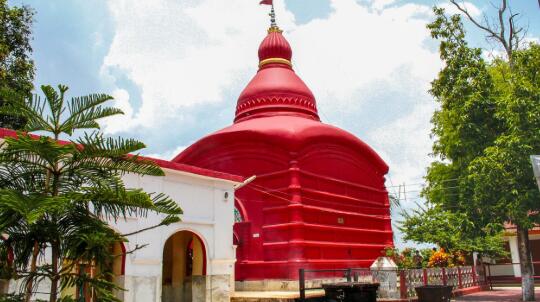
Prime Minister Narendra Modi will inaugurate the redeveloped Mata Tripura Sundari Temple in Udaipur, Gomati district of Tripura, later today. The temple, one of the revered 51 Shakti Peethas in India, has been modernized under the Centre’s PRASHAD (Pilgrimage Rejuvenation and Spiritual Heritage Augmentation Drive) Scheme. The project, sanctioned in 2021 under PM Modi leadership and completed recently, aims at preserving heritage while boosting religious tourism in the northeastern state.
The Prime Minister Modi, arriving in Agartala this afternoon after his visit to Arunachal Pradesh, will head to Udaipur to perform a puja at the shrine. As per the official schedule, no public address is planned during this visit. Security arrangements have been tightened across Agartala and Udaipur to ensure smooth proceedings.
The Mata Tripura Sundari Temple, popularly called Matabari or Tripureswari Temple, is among the most significant Shakti shrines in India. According to Hindu beliefs, this is the sacred spot where the right foot of Goddess Sati fell during Lord Shiva’s cosmic Tandav dance, sanctifying it as one of the Shakti Peethas.
The temple was built in 1501 CE by Maharaja Dhanya Manikya of the Manikya dynasty, following recurring dreams in which the Goddess instructed him to establish her idol atop a tortoise-shaped hillock near his capital, Udaipur. Over the centuries, the temple grew not only into a spiritual hub but also into a unique confluence of religious traditions. Unlike most Shakti Peethas, here Lord Vishnu is also worshipped in the form of a Shalgram Shila, placed alongside the idol of Tripura Sundari. This blending of Shakta and Vaishnava traditions sets the temple apart from others across India.
Architecturally, the sanctum is built in the Bengali Ek Ratna style, with a single dome structure on the roof. The hillock on which it stands, shaped like a tortoise, has given the temple another name Kurma Pitha. Inside the sanctum are two black stone idols: a five foot tall idol of Maa Tripura Sundari and a smaller two foot idol known as Chhoto Ma, which Tripura’s kings once carried during expeditions and battles. A mystical Sri Yantra engraved beneath the main idol further enhances the shrine’s spiritual aura, symbolizing the cosmic balance of masculine and feminine energies.
The worship practices at the temple are distinct and deeply symbolic. Red hibiscus flowers, considered sacred to the Goddess, are offered by devotees. The temple’s signature sweet, Matabari Peda, is offered as prasad and has recently been awarded the Geographical Indication (GI) tag, linking it indelibly with Tripura’s cultural identity.
Every year, the temple becomes the epicenter of celebrations during Diwali. The Matabari Diwali Mela, an official two day fair, attracts lakhs of devotees from across India as well as neighboring Bangladesh. This annual event demonstrates the temple’s role as a cultural bridge and its importance in strengthening the shared heritage of South Asia.
The modernization of the temple complex is part of a ₹54.04 crore project under the PRASHAD scheme. The Centre under PM Modi contributed ₹34.43 crore, while the state government provided ₹17.61 crore. The redevelopment includes marble flooring, upgraded pathways, renovated entrances, and improved pilgrim facilities.
A newly constructed three storied complex accommodates peda stalls, a meditation hall, guest accommodations, and office spaces. Facilities such as a food court, clean drinking water kiosks, proper drainage, and modern toilet blocks have also been introduced. Additionally, the project includes residential quarters for priests, waiting areas for devotees, a VIP lounge, and a Matabari gallery showcasing Tripura’s cultural heritage.
Officials expect that the enhanced facilities will significantly boost religious tourism, attract more devotees, and generate employment opportunities for locals in sectors such as hospitality, transport, handicrafts, and food services.
The redevelopment of Mata Tripura Sundari Temple is more than just an infrastructure project. It reflects an effort to integrate spirituality with socio economic development. With nearly 12 to 15 lakh devotees visiting annually, the temple is a natural magnet for religious tourism. The improved facilities will likely encourage longer stays, thereby benefiting local businesses.
Culturally, the temple is a living testament to Tripura’s syncretic traditions. The coexistence of Vaishnava and Shakta practices demonstrates a rare inclusivity in Hindu worship, offering a model of harmony between different schools of devotion. In a region where cultural identity often intersects with politics and ethnicity, the temple stands as a unifying force that brings together communities across borders.
Historically, the temple also strengthens Tripura’s link to the broader civilizational story of India. The Shakti Peethas are not merely shrines, they are sites that connect India’s sacred geography into a spiritual network, binding the subcontinent with a common thread of faith and mythology. For Tripura, hosting one of these revered centers is both a source of pride and a potential driver of national attention.
As Prime Minister Modi inaugurates the redeveloped complex, the temple embarks on a new chapter. The initiative balances preservation with progress, protecting the ancient sanctity of the shrine while preparing it for the demands of the modern age. Beyond its religious role, Mata Tripura Sundari Temple is poised to become a cultural landmark and a hub of economic activity, cementing its place as one of India’s most unique spiritual destinations. In essence, Matabari represents more than devotion. It symbolizes continuity, inclusivity, and the power of heritage to shape the future.