
On the evening of September 11, 1948, Pakistan’s Quaid-e-Azam Muhammad Ali Jinnah lay on his bed in Karachi, counting his final breaths. Meanwhile, in Delhi, Sardar Vallabhbhai Patel was preparing to crush another of Jinnah’s dreams—this time, Hyderabad.
Patel vs. Nehru: A Clash of Approaches
Hyderabad’s Nizam maintained close ties with Pakistan. Patel understood that if Hyderabad was not swiftly integrated into India, it would become a dangerous “cancer” in the South. In contrast, Jawaharlal Nehru leaned toward granting Hyderabad autonomy within India, influenced by Lord Mountbatten and the British government. Nehru opposed a military solution. But Patel was determined not to repeat the “mistake of Kashmir.”
Jinnah’s Death and the Green Signal
The day Jinnah died, Patel gave the go-ahead for Operation Polo. While Pakistan was preparing for Jinnah’s funeral, the Indian Army was readying itself to march into Hyderabad.
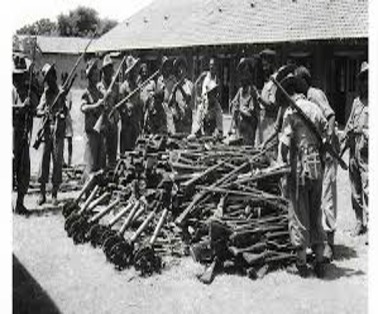
Within hours, Indian troops entered Hyderabad. The Nizam’s forces, supported by the Razakars militia, tried to resist but quickly faltered. In just 108 hours, the Nizam surrendered with his army and court.
Pakistan’s Desperation: A Plan to Bomb Delhi
Pakistan was stunned. When news of Operation Polo reached Karachi, Prime Minister Liaquat Ali Khan was so enraged that he ordered an attack on Delhi.
Lieutenant General S.K. Sinha, in his autobiography Straight from the Heart, recounts how Liaquat convened an emergency meeting of his Defense Council. The goal: to find ways to counter India’s move in Hyderabad.
First, Liaquat asked if the Pakistani Army could reach Hyderabad and fight the Indians. His generals flatly refused, citing lack of capability for such a long operation. Desperate, Liaquat turned to the Air Force, then still commanded by British officers, and asked whether Delhi could be bombed.
Group Captain Elworthy (who later became Britain’s Chief of Defense Staff) categorically refused. Pakistan’s fleet had only four bombers, of which just two could attempt the long-range mission. At best, one might reach Delhi and drop bombs, but survival against the Indian Air Force was “next to impossible.”
A Plan Abandoned
Realizing the futility, Liaquat Ali Khan and his Defense Council scrapped the plan. Both options—ground assault or aerial bombing—would have led only to humiliation and possibly a full-scale war with India.
Later, Pakistan tried to raise the Hyderabad issue at the United Nations, seeking international intervention. But by then, the Nizam had already surrendered, and the UN dismissed the matter as India’s internal affair.