
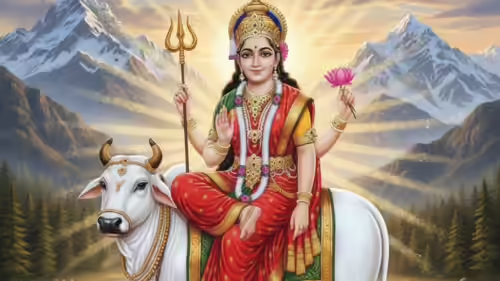
Navratri, the much-awaited nine-day festival of devotion, spirituality, and celebration, began on September 22, 2025. Each day of Navratri is dedicated to one of the nine forms of Goddess Durga, and the first day honours Maa Shailputri, the daughter of the Himalayas. Known as the embodiment of purity, balance, and prosperity, Maa Shailputri marks the spiritual beginning of this sacred journey.
On this day, devotees across the country observe rituals, follow the puja vidhi, dress in the auspicious colour of the day, and invoke the blessings of the goddess to ensure peace and prosperity in their lives.
The Significance of Maa Shailputri
Maa Shailputri is revered as the goddess of the Muladhara (root) chakra, representing the foundation of one’s spiritual awakening. Worshipping her is believed to bring stability, balance, and clarity at the start of life’s spiritual journey. She symbolizes nature, growth, and prosperity, and devotees pray to her for peace of mind, divine protection, and strength to move forward in life with determination.
Scriptures narrate that Maa Shailputri is the reincarnation of Goddess Sati, the first consort of Lord Shiva. After sacrificing her life at Daksha’s yagna, she was reborn as the daughter of Lord Himalaya, hence the name Shailputri—“Shail” meaning mountain and “Putri” meaning daughter. She is also worshipped as Parvati, Himavati, and Bhavani.
Shailputri is closely associated with the Moon, regarded as the giver of fortune, making her worship deeply significant for devotees seeking harmony and prosperity. As the first form of Maa Durga to be worshipped, she is honoured as the starting point of the nine-day festival.
Ghatasthapana and Muhurat for Day 1
Navratri begins with the sacred ritual of Ghatasthapana (Kalash Sthapana), symbolizing the invocation of divine power. According to Drik Panchang, the auspicious timings for Ghatasthapana this year are:
-
Main Muhurat: 6:11 AM to 7:52 AM
-
Abhijit Muhurat: 11:51 AM to 12:39 PM
-
Pratipada Tithi: Begins at 1:23 AM (Sept 22) and ends at 2:55 AM (Sept 23)
-
Kanya Lagna: 6:11 AM to 7:52 AM
Performing the puja during these timings is believed to attract blessings of prosperity, spiritual growth, and positivity into the devotee’s life.
The ritual involves preparing a pan filled with mud and sowing Saptadhanya/Navadhanya (seven or nine types of grains). A Kalash (urn) filled with Ganga Jal, coins, betel nut (supari), durva grass, and turmeric-coated rice is placed in the centre. Around the Kalash, five mango leaves are placed, and a coconut is set on top, symbolizing abundance and divinity. The setup is decorated with flowers, incense sticks, fruits, and sweets, while an oil lamp is kept burning throughout the nine days. This ritual signifies invoking Goddess Durga in the household for the duration of the festival.
Colour of the Day: White for Purity and Peace
Each day of Navratri carries an associated colour with deep symbolism. On Day 1, the colour is white, representing purity, serenity, and innocence. Devotees wear white attire during puja and festivities, as it is believed to draw the blessings of Maa Shailputri. White clothing is also associated with inner peace and harmony, reflecting the calmness of the goddess herself.
Wearing the colour of the day while offering prayers is a way of aligning oneself with divine energy, ensuring a positive and auspicious start to the nine-day celebration. By wearing white and invoking Maa Shailputri, devotees seek her grace for a harmonious life and protection from negative energies.
Rituals and Offerings for Maa Shailputri
On the first day, special offerings are made to Maa Shailputri as part of the puja rituals. A bhog (offering) made of pure desi ghee is traditionally presented, as it is believed to purify the mind and body of the devotee while pleasing the goddess.
The sacred diya (lamp) lit during Ghatasthapana remains burning throughout the nine days, symbolizing divine presence and light. Devotees also chant prayers and mantras dedicated to Maa Shailputri, seeking blessings for spiritual awakening, prosperity, and strength.
Her worship is not only about ritual practices but also about spiritual reflection. By meditating on the goddess, devotees attempt to awaken the root chakra, ensuring stability and preparing themselves for the higher stages of spiritual consciousness represented in the days ahead.
The Divine Beginning of Navratri
The first day of Navratri sets the tone for the nine-day festival of devotion. Worshipping Maa Shailputri is symbolic of beginning life’s spiritual journey with stability, purity, and balance. Her blessings are believed to guide devotees toward peace, prosperity, and inner strength.
By observing rituals such as Ghatasthapana, wearing the sacred colour white, and offering bhog with devotion, believers establish a deep connection with the goddess. As the nine-day festival unfolds, Day 1 becomes the foundation upon which the rest of the celebrations are built.
The worship of Maa Shailputri not only honours the divine feminine power but also inspires devotees to embrace purity, simplicity, and spiritual awakening at the start of Navratri 2025.