
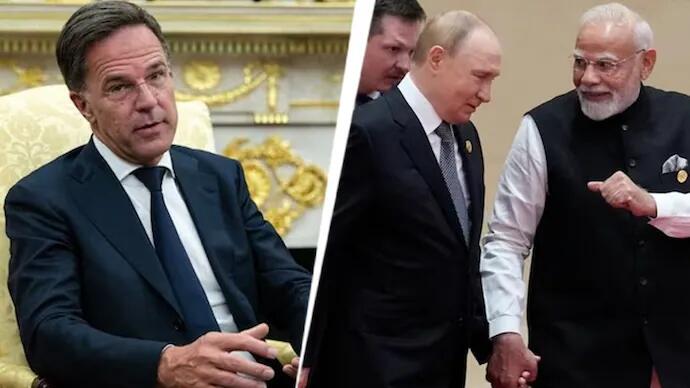
India’s Ministry of External Affairs (MEA) On September 26, 2025, issued a sharp rebuttal to remarks made by NATO Secretary-General Mark Rutte, dismissing his claims as “factually incorrect,” “entirely baseless,” and “unacceptable.” Speaking to CNN on the sidelines of the UN General Assembly in New York, Rutte alleged that US tariffs imposed by President Donald Trump were straining India’s trade with Russia, pushing Prime Minister Narendra Modi to seek clarity from Russian President Vladimir Putin on Moscow’s Ukraine strategy. India swiftly shot down these assertions, making it clear that NATO had crossed a line with irresponsible commentary.
India’s Strong Rebuttal to Rutte’s Narrative
Rutte suggested that Trump’s tariff measures including a 25% reciprocal duty and an additional 25% penalty on India’s continued imports of Russian oil had forced Modi into urgent conversations with Putin about Ukraine. According to him, “Delhi is on the phone with Putin” because India was being hit by tariffs.
The MEA, through its spokesperson Randhir Jaiswal, categorically denied this account. “The statement is factually incorrect and entirely baseless,” Jaiswal said, stressing that NATO’s leadership should act with far greater responsibility. India’s rejection reaffirmed its long-standing principle of strategic autonomy in foreign policy and its refusal to let external actors dictate its sovereign choices.
India’s Balanced Approach to the Ukraine Conflict
Contrary to Rutte’s claims, India’s engagement with both Russia and Ukraine has been consistent with its policy of advocating dialogue and diplomacy. Prime Minister Modi has spoken to both President Putin and Ukrainian President Volodymyr Zelenskyy multiple times, including during his August 2024 visit to Ukraine. India has also engaged with the US, with Modi holding calls with Former US President Joe Biden to stress the need for peace initiatives.
Rather than being driven by tariff pressures, India’s diplomacy reflects an independent and proactive stance. While it continues to buy Russian oil to secure its energy needs, India has consistently rejected Western accusations of funding Moscow’s war effort. New Delhi has also countered hypocrisy, pointing out that NATO members like Turkey, Hungary, and Slovakia import Russian energy without similar threats of sanctions.
NATO’s Diplomatic Overreach
The controversy has triggered debate over NATO’s role in global trade and foreign policy. Critics argue that Rutte overstepped his mandate as head of a military alliance primarily tasked with collective defense. Former Indian envoy Kanwal Sibal remarked that Rutte was “out of his geopolitical depth,” noting NATO has no authority to dictate terms to non-members like India. Indian media also questioned his credibility, with headlines bluntly asking: “Who’s Rutte to warn a sovereign country?”
Rutte’s remarks also align with Trump’s aggressive tariff agenda and broader Western unease with the growing clout of non-aligned powers like BRICS. By linking tariffs and India’s oil imports to NATO’s narrative, Rutte appeared to echo attempts to corner India geopolitically a move New Delhi has strongly resisted.
Tariffs, Trade, and India’s Strategic Autonomy
The Trump administration’s tariff measures including penalties linked to Russian oil imports and threats of “100% secondary sanctions” directly target India, China, and Brazil. In response, India has taken a firm stand. The MEA has exposed Western double standards, highlighting how Europe continues energy trade with Russia while pressuring others to cut ties.
Commerce and Industry Minister Piyush Goyal’s September 2025 visit to New York underscored India’s preference for dialogue rather than capitulation. By negotiating trade adjustments while refusing to abandon its energy security needs, India has signaled both resilience and pragmatism.
India Reaffirms Its Sovereignty
India’s firm dismissal of NATO Secretary-General Mark Rutte’s comments reflects more than just diplomatic irritation. It is a signal to the West that New Delhi will not tolerate misrepresentation of its policies or coercion through tariffs. As global power dynamics shift, India continues to walk its independent path balancing relations with the US, China, Russia, and others while safeguarding its national interests. The message is clear: India’s strategic autonomy is non-negotiable, and NATO must learn to respect the sovereignty of non-member nations in a multipolar world.