
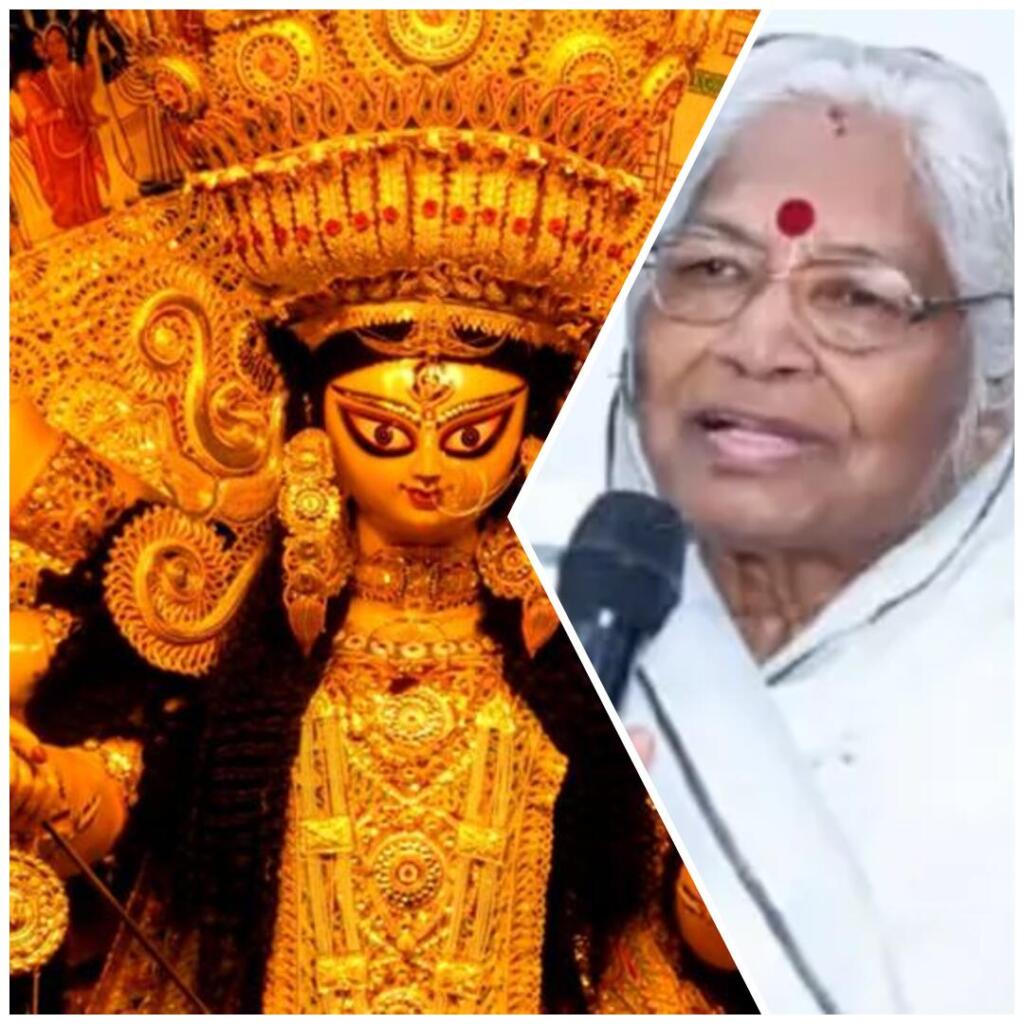
In a recent turn of events, Kamaltai Gavai, the mother of Chief Justice of India (CJI) B R Gavai, sparked controversy when she rejected an invitation from the Rashtriya Swayamsevak Sangh (RSS) to attend a Vijayadashami celebration marking the centenary of the organization in Amravati, Maharashtra. The incident not only drew attention to her stance on the RSS but also led her to voice strong opinions regarding her identity as an “Ambedkarite” and the significance of festivals in Hindu and Buddhist traditions.
The Invitation and Rejection
The RSS had extended an invitation to Kamaltai Gavai for its Vijayadashami event, scheduled for October 5, 2025, in Amravati. The event, an important occasion for the RSS, is set to celebrate the organization’s centenary and the Hindu festival of Vijayadashami. However, Kamaltai Gavai rejected the invitation in no uncertain terms, claiming that media reports which suggested she would attend were misleading and a form of “propaganda” by the RSS.
In a letter written in Marathi, Gavai made it clear that she would not attend the event under any circumstances. She emphasized her deep-rooted commitment to Ambedkarite ideology, which is centered around the ideals of Dr. B.R. Ambedkar, the architect of India’s Constitution, and the principles of social justice. According to her, participating in an event organized by the RSS, a Hindu nationalist organization, would go against her values and harm “social consciousness.”
Gavai’s letter read:
“The news recently published about the RSS Vijayadashami program scheduled for October 5 at 6:30 PM in Amravati, Maharashtra, is utterly false. As the founding president of the Dada Saheb Gavai Charitable Trust, deeply rooted in Ambedkarite ideology, and with my family’s unwavering commitment to the Constitution of India, I will never attend or support the upcoming RSS program in Amravati under any circumstances.”
Defining Her Identity: Ambedkarism vs. Hindu Nationalism
Kamaltai Gavai’s rejection of the RSS event is rooted in her unwavering dedication to the Ambedkarite ideology, which rejects the caste-based discrimination perpetuated by traditional Hindu society. She identified herself not just as a follower of Dr. Ambedkar, but as someone committed to the vision of equality and social justice laid out by the Constitution of India. For her, attending the RSS event, which celebrates a Hindu festival, would be inconsistent with her Ambedkarite beliefs.
In her response, Gavai emphasized that while Vijayadashami holds significance in Hindu culture, for her, the “Dhammachakra Pravartan Din,” also known as Ashok Vijayadashami, is of far greater importance. This day marks the conversion of Emperor Ashoka to Buddhism, a pivotal moment in Indian history that symbolizes renunciation of violence and the embrace of peace and non-violence. For Gavai, the RSS’s celebration of a Hindu festival would be a direct contradiction to her commitment to Ambedkarite values.
In her words:
“I strongly condemn the recently published news as misinformation and urge the public not to fall prey to such propaganda from a social perspective… Spreading this news without my consent or written approval is a conspiracy by the RSS.”
Historical Context: The Gavai Family’s Relationship with RSS
The controversy surrounding Kamaltai Gavai’s rejection of the RSS invitation has its roots in the complex relationship that the Gavai family has had with the RSS over the years. While Kamaltai herself firmly rejected any association with the RSS, it is noteworthy that her late husband, Ramkrishna Suryabhan Gavai, also known as Dadasaheb Gavai, attended a significant event organized by the RSS in 1981.
Dadasaheb Gavai, a prominent leader of the Republican Party of India (RPI), was invited as the chief guest at the valedictory ceremony of the Sangh Shiksha Varg in Nagpur, an RSS training camp. His participation in the RSS event, despite his political alignment with the RPI and his advocacy for social justice, suggests a more nuanced historical relationship between the Gavai family and the RSS. This contrast between the past and present has led to debates about the evolving political and social ideologies within the Gavai family.
The Role of Kamaltai’s Son, Dr. Rajendra Gavai
While Kamaltai Gavai’s rejection of the RSS invitation has become a focal point of the controversy, her son, Dr. Rajendra Gavai, has been vocal in a different direction. Dr. Gavai, a prominent leader in the Republican Party and a member of the Dr. Babasaheb Ambedkar Memorial Committee, publicly announced that he and his mother would indeed attend the RSS event. His video statement directly contradicted Kamaltai’s rejection, adding fuel to the debate surrounding the family’s position on the RSS.
Dr. Rajendra Gavai’s insistence on attending the RSS event despite his mother’s opposition highlights a division within the family regarding the relationship with the RSS and the celebration of Hindu festivals. It also underscores the complexity of political and social affiliations, particularly in a country like India, where religion, caste, and ideology often intersect in multifaceted ways.
The Broader Debate on Ambedkarism and Hindutva
Kamaltai Gavai’s rejection of the RSS event and her vocal condemnation of the organization is part of a larger debate between Ambedkarite ideology and Hindutva, a form of Hindu nationalism promoted by the RSS. Ambedkarites have long criticized the caste hierarchies entrenched in Hindu society, and their efforts to challenge these social structures often place them at odds with organizations like the RSS, which are seen as promoting a vision of Hinduism that is inherently hierarchical and exclusionary.
At the same time, the RSS has sought to reframe itself as a nationalist organization that embraces all Indians, irrespective of their caste or religion, although critics argue that its brand of nationalism remains closely tied to an exclusionary interpretation of Hindu identity.
Kamaltai Gavai’s rejection of the RSS event serves as a reflection of this larger ideological conflict, one that involves not only questions of religion and caste but also competing visions for India’s future. While the RSS champions a Hindu nationalist agenda, Ambedkarites continue to advocate for social justice, equality, and the protection of the rights of marginalized communities.
Conclusion: A Family Divided
Kamaltai Gavai’s decision to reject the RSS invitation, along with the differing stance of her son Dr. Rajendra Gavai, highlights the ongoing tensions within India’s social and political fabric. The Gavai family’s public dispute over whether to attend an RSS event underscores the complexities of navigating identity in a society marked by deep religious and ideological divisions. As India continues to grapple with issues of caste, religion, and nationalism, the controversy surrounding the Gavais’ positions serves as a microcosm of the larger challenges facing the nation.
Top of Form
Bottom of Form