
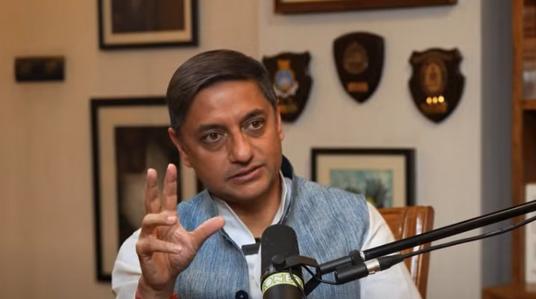
Sanjeev Sanyal, member of the Prime Minister’s Economic Advisory Council (EAC), has sounded an urgent warning about India’s judicial system, calling it the single biggest hurdle to the country’s ambition of becoming a developed economy. Speaking at the Nyaya Nirmaan 2025 conference on Saturday, Sanyal argued that unless India overhauls its legal and judicial ecosystem, other reforms will not be sufficient to achieve the government’s Viksit Bharat (Developed India) vision by 2047. “We effectively have somewhere between 20 to 25 years to become Viksit Bharat,” Sanyal told the gathering, pointing to the narrow demographic window during which India must convert its growth momentum into long-term prosperity. He emphasised that while India is the world’s fastest growing major economy and has recently become the fourth largest, this period of rapid growth is limited. “After that, we will grow old, just like Japan and Europe today. So this is the two decades in which we have to grow as rapidly as we can,” he said.
Central to his critique was what Sanyal described as a “99 to 1 problem.” He argued that regulators and policymakers are forced to create excessively complex rules to prevent misuse by a tiny minority, because the judicial system cannot be relied upon to resolve disputes efficiently. “In any functioning system, that 1 percent of exception should actually get sorted out by the legal system. But because I do not think it will get sorted out there, the rest of the 99 percent of rules, regulations and laws have to take care of that 1 percent,” he said. This, according to Sanyal, leads to over-regulation and stifles economic growth.
To underline his point, Sanyal highlighted the failure of mandatory pre litigation mediation under Section 12A of the Commercial Courts Act, 2015. Citing data from Mumbai’s two main commercial courts, he claimed that “between 98 to 99 percent of pre litigation mediation actually fails.” Instead of reducing the burden on courts, the provision has added unnecessary months, costs, and procedural complications, he argued. He also pointed out that a similar attempt to make mediation mandatory for civil cases nearly succeeded in 2023, but was stopped due to objections from critics. Sanjeev Sanyal stressed that procedural fixes alone would not be enough. He called for a cultural and structural transformation in the legal profession, criticising its medieval, guild like stratification. “Why should certain routine tasks require a law degree in the age of AI?” he asked, questioning rigid professional hierarchies such as senior advocates and advocates on record.
He also pushed for reforms in courtroom traditions, arguing that practices such as addressing judges as “my lord” were outdated and inappropriate in a modern democracy. He criticised the long judicial vacations that effectively shut down courts for weeks, noting, “The judiciary is a public service like any other part of the state. Court availability should match public expectations of other state services.” Concluding his remarks, Sanjeev Sanyal appealed to members of the legal community to recognise their responsibility. “I’ve really come here to beseech my fellow citizens that you from the legal profession really pull up your socks. Because we are waiting for you to really push for this,” he said.
Why Sanjeev Sanyal is Right About Judicial Reform
Sanjeev Sanyal’s sharp critique of India’s judiciary is neither new nor exaggerated. It echoes a growing consensus across industry, governance, and civil society that India’s legal system is overburdened, outdated, and ill suited to the needs of a rapidly growing economy. His speech highlights not only the systemic inefficiencies but also the urgent need to address them if India is serious about achieving the Viksit Bharat dream.
The Cost of Delayed Justice
It is often said that “justice delayed is justice denied.” For businesses, investors, and ordinary citizens alike, this delay translates into direct economic costs and eroded trust in the system. India has nearly 5 crore pending cases across various courts. Commercial disputes can drag on for years, discouraging investment and innovation. Foreign investors frequently cite weak contract enforcement as one of the top deterrents to doing business in India.
Sanjeev Sanyal’s “99 to 1 problem” captures this reality well. Instead of designing a system where exceptional disputes are swiftly resolved in courts, India has created a maze of regulations that stifle efficiency. This regulatory overreach not only slows down growth but also breeds corruption, as navigating the system becomes dependent on discretionary approvals.
Outdated Legal Culture
The cultural critique of India’s legal profession is also valid. Courtroom customs such as “my lord” and lengthy vacations reflect a colonial era mindset rather than a modern democratic ethos. In a country where millions struggle daily to access basic services, it is unfair for one arm of the state to function in a semi feudal manner. Judicial reform is not merely about efficiency. It is about aligning the judiciary with the principles of equality, accountability, and public service.
Modernisation and Technology
Sanjeev Sanyal’s suggestion that not all legal tasks should require law degrees in the age of AI deserves serious consideration. Technology can be a force multiplier in clearing case backlogs, streamlining procedures, and improving access to justice. E courts, digital filing, and AI assisted research are already transforming legal systems worldwide. India should be at the forefront of such change, given its technological capabilities.
A Narrow Window of Opportunity
The most pressing part of Sanjeev Sanyal’s argument is his warning about India’s demographic window. With a young workforce today, India has a unique opportunity to grow rapidly and secure prosperity before it begins to age. But if judicial inefficiency continues to strangle economic progress, this opportunity may be squandered. Once the demographic dividend fades, catching up with developed nations will become much harder.
Sanyal’s call to the bar and bench to “pull up your socks” is not an attack but a plea. Just as reforms have been embraced in bureaucracy, taxation, and corporate governance, the legal profession too must take ownership of its responsibility in nation building. Without judicial reform, even the best economic policies may fail to deliver their intended outcomes. In sum, Sanjeev Sanyal is right. India cannot afford to delay reforming its judiciary. To achieve Viksit Bharat, the legal system must be made faster, fairer, and more accessible. Not tomorrow, but today.