
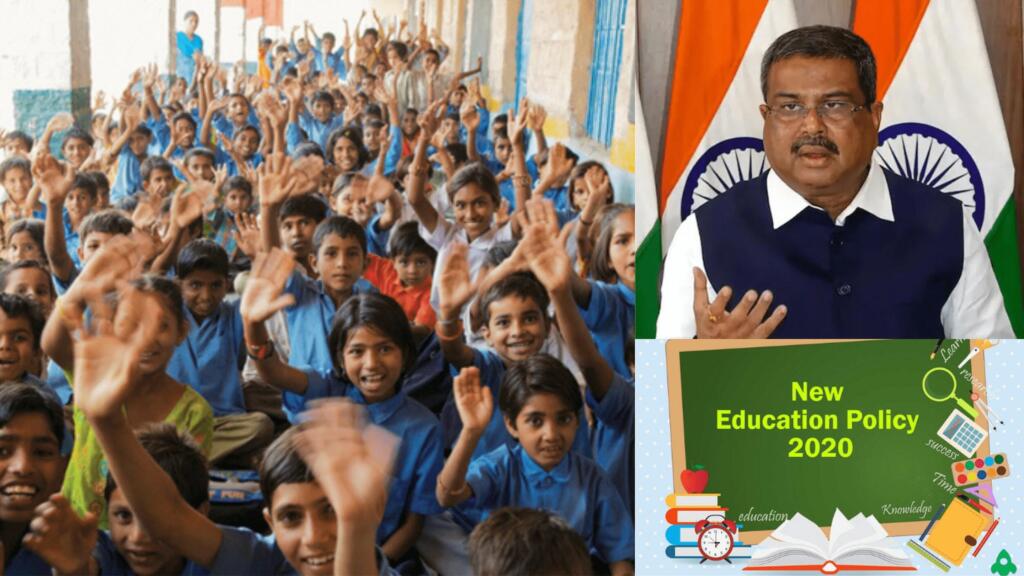
India is rewriting its education story with remarkable determination. On International Literacy Day 2025, Union Education Minister Dharmendra Pradhan reminded the nation that literacy is not just about reading or writing, but about empowerment, dignity, and self-reliance. While the literacy rate has climbed from 74% in 2011 to 80.9% in 2023–24, the true test lies in ensuring this progress touches every citizen’s life. With the ULLAS-Nav Bharat Saaksharta Karyakram already reaching over 3 crore learners, India is proving that education is not charity but nation-building.
ULLAS-Nav Bharat: Lighting the Lamp of Learning
Addressing the nation virtually, Dharmendra Pradhan emphasized that literacy must empower individuals and not remain a mere statistical achievement. The ULLAS-Nav Bharat Saaksharta Karyakram has emerged as the backbone of this vision. With more than 3 crore learners and 42 lakh volunteers enrolled, the program is driving literacy to the grassroots. Nearly 1.83 crore learners have already taken foundational literacy and numeracy assessments, with a success rate touching 90%.
The program is also inclusive in design learning materials are now available in 26 Indian languages, ensuring that literacy is accessible to all, cutting across cultural and linguistic boundaries. Pradhan lauded Ladakh, Mizoram, Goa, Tripura, and Himachal Pradesh for achieving full literacy, describing it as a shining example of what government, volunteers, and communities can achieve together.
This year’s theme, “Promoting Literacy in the Digital Era,” further reflects the pivotal role of technology in advancing not just literacy, but lifelong learning in a rapidly evolving world.
National Education Policy 2020: Blueprint for Viksit Bharat
At the heart of India’s literacy and education revolution lies the National Education Policy (NEP) 2020, the first comprehensive reform in over three decades. The NEP has set India on a transformative path, replacing rote memorization with experiential, inquiry-based learning. The introduction of the 5+3+3+4 structure tailors education to developmental stages, making it more effective and relevant.
Innovations such as Jadui Pitara kits for early learners, the NIPUN Bharat Mission for literacy and numeracy, and the integration of coding, design thinking, and financial literacy in schools are preparing India’s children for the future. By moving away from rigid and elitist models of education, the NEP has placed inclusivity, skill development, and multilingualism at the center of policy.
Pradhan noted that these reforms, powered by digital infrastructure, have placed India decades ahead in the education race, particularly compared to other countries of the Global South.
Breaking Barriers: Education in Every Tongue
For centuries, linguistic elitism excluded millions of Indians from quality education. The Modi government has decisively dismantled this barrier by promoting education in local languages. Already, 104 primary textbooks have been introduced in 22 states and union territories in mother tongues. Indian Sign Language (ISL) has been standardized for classes 1–12, ensuring inclusivity for the hearing-impaired.
Digital platforms like DIKSHA, which offers over 3.66 lakh e-content pieces in 133 languages, and 200 educational TV channels broadcasting in 29 languages, have expanded access to quality learning. Higher education too is undergoing a linguistic revolution, with engineering courses in eight Indian languages, JEE/NEET/CUET exams in 13 regional languages, and 428 academic programs across 19 central institutions offered in Indian languages.
This multilingual push ensures that education is not limited to a privileged few but is a right available to every Indian in their mother tongue.
Higher Education Revolution: From Quantity to Global Quality
Since 2014, India has witnessed a 60% growth in universities, from 760 to over 1,213, alongside a 21% increase in colleges. The government has opened 42 new centrally funded institutions, including seven IITs, eight IIMs, eight Central Universities, 16 IIITs, and the first-ever Central University in Ladakh.
The health and medical sector has also been restructured with new AIIMS across the Northeast and 15 new medical colleges in Assam. The outdated Medical Council of India has been replaced by the National Medical Commission, ensuring greater transparency and accessibility.
Digital transformation has been the centerpiece of this expansion. Initiatives like PM eVidya, SWAYAM, and the National Digital University have democratized access, especially during the pandemic. The One Nation, One Subscription initiative has opened access to global journals for 1.8 crore students and researchers.
Globally, India’s presence in higher education has grown too. With 54 Indian institutions ranked in QS 2026, up from just 11 in 2015, and global campuses of IITs in Zanzibar and Abu Dhabi, India is once again reviving the civilizational legacy of Nalanda and Takshashila as hubs of global learning.
Literacy as the Foundation of Viksit Bharat
India’s literacy rate climbing to 80.9% is a remarkable achievement, but as Dharmendra Pradhan underlined, the true measure of progress lies in making literacy a lived reality for every citizen. Through ULLAS-Nav Bharat, NEP 2020, multilingual reforms, and digital infrastructure, India is not just teaching people to read and write it is empowering them to participate in the nation’s growth.
The literacy movement is no longer about erasing illiteracy alone; it is about creating confident, skilled, and self-reliant citizens who can carry India into its vision of Viksit Bharat 2047. The challenge ahead is not small, but with political will, societal participation, and digital power, India is on course to transform education into its strongest tool of nation-building.