















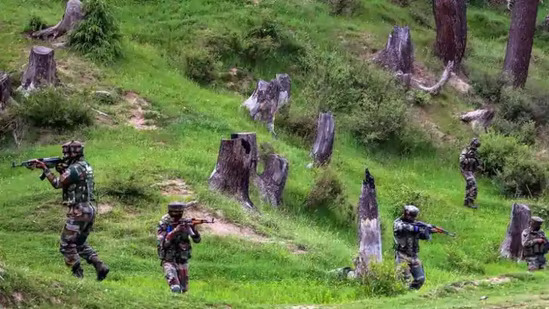
In September 2016, when India carried out its first publicly acknowledged cross-border operation, popularly referred to as the Uri surgical strike, it initiated a fundamental change in how South Asian security landscape functioned.
For decades, Pakistan had relied on a strategy of covert proxy war under the shadow of nuclear deterrence, confident that India’s restraint would prevent escalation.
The disclosure of the 2016 strikes by New Delhi, however, marked a departure from this pattern. It introduced the idea that India was now willing to act overtly, demonstrating escalation dominance in the subcontinental context.
Why Uri Surgical Strike Signalled Escalation Dominance
Foreign analysts and military strategists regarded Surgical Strike-1 as a landmark because it broke the psychological barrier that had constrained India since the 1999 Kargil War.
India had traditionally followed a policy of strategic restraint, even in the face of high-casualty terror attacks such as the 2001 Parliament attack and the 2008 Mumbai carnage.
The perception in global security circles was that New Delhi would not risk escalation with a nuclear-armed neighbour.
The 2016 operation challenged this narrative. India showed the world that it could plan, execute, and disclose a precision military strike across the Line of Control (LoC) without sparking uncontrolled conflict.
By owning the operation publicly, New Delhi also signalled to Islamabad and international observers alike that it was ready to call out Pakistan’s nuclear bluff.
Analysts have termed this ability to raise the costs of Pakistan’s actions while still controlling the ladder of conflict as India acquiring “escalation dominance”.
This shift had two implications. First, it delegitimised Pakistan’s reliance on plausible deniability, since India’s disclosures were backed by intelligence briefings to foreign governments.
Second, it reassured the international community that India’s approach, although retaliatory, was still calibrated deterrence, not reckless escalation.
Pakistan’s Denials vs. India’s Disclosures
The immediate aftermath of the 2016 strikes revealed contrasting strategies in information warfare. Pakistan’s military establishment chose outright denial, dismissing India’s claims as “fabricated drama.”
Domestically, this allowed the Pakistani leadership to avoid admitting a breach of its defences. Internationally, however, Islamabad’s denials clashed with India’s proactive diplomacy.
New Delhi briefed major capitals, including Washington, London, and Moscow, within hours of the operation. Leaks from US intelligence suggested that American surveillance had indeed picked up unusual military activity along the LoC around the time India reported the strikes.
While most governments refrained from officially “endorsing” India’s claim, international media outlets like The New York Times and BBC carried reports citing intelligence sources that lent credibility to India’s version.
This battle of narratives was critical. India had seized the initiative on the ground, and also in shaping the international discourse.
With its denials falling flat on their face, Pakistan was diplomatically boxed-in. Islamabad’s insistence that “nothing happened” undermined its credibility, while India’s disclosures aligned with a growing global recognition of Pakistan as a hub of cross-border terrorism.
How the 2016 Precedent Paved the Way for Balakot (2019)
The surgical strike set the stage for India’s airstrike on Balakot in February 2019. After the Pulwama terror attack that killed 40 Central Reserve Police Force (CRPF) personnel, India escalated beyond the LoC to strike deep inside Pakistani territory in Khyber Pakhtunkhwa. That move was another step on the escalation dominance ladder: from cross-LoC raids to air power projection.
The Balakot strike was made possible because the 2016 operation had normalised India’s right to respond to terrorist attacks militarily, in a limited, calibrated manner. Internationally, the narrative of a responsible India exercising “surgical” options gained traction.
Once again, Pakistan responded with denials about damage, coupled with retaliatory air operations that failed to alter the perception of Indian resolve.
Balakot also set a clear tone: the 2016 precedent was not to be considered a one-off political move, but seen as an overall doctrinal shift: India was now prepared to cross thresholds that were once deemed too risky, while still framing its actions as counter-terrorism rather than conventional war.
From Balakot to Sindoor (2025): Consolidating the Doctrine
The evolution of India’s military responses culminated in Operation Sindoor, a codename for the latest publicly acknowledged retaliation against cross-border terror infrastructure. Building on the foundation laid in 2016 and 2019, Sindoor showcased a more sophisticated doctrine of responsible retaliation.
Unlike in 2016, when the emphasis was on proving capability, or in 2019, when the emphasis was on reach, the Sindoor operation emphasised integration: combining precision strikes, cyber disruption, and coordinated information campaigns. It underlined India’s ability to escalate in multiple domains while retaining control over the tempo of conflict.
Foreign analysts have noted that the Sindoor operation represents the maturation of India’s strategy: calibrated military action paired with diplomatic outreach to pre-empt international criticism. By now, India has institutionalised a doctrine of limited war under the nuclear overhang, closing the space that Pakistan once exploited.
A Doctrinal Turning Point
The 2016 surgical strikes were more than a tactical success; they were a doctrinal turning point. By going public, India demonstrated that it could combine military power with strategic communication to alter the rules of engagement in South Asia. The move stripped Pakistan of plausible deniability, gained tacit international acceptance, and set the stage for subsequent actions like Balakot and Sindoor.
As a result, India’s security posture today is no longer defined by restraint alone, but by responsible retaliation. This evolution has rebalanced the security dynamics of South Asia, establishing India as a state willing to defend its interests with calibrated force, while still avoiding uncontrolled escalation.
(Ashu Mann is an Associate Fellow at the Centre for Land Warfare Studies. He was awarded the Vice Chief of the Army Staff Commendation card on Army Day 2025. He is pursuing a PhD from Amity University, Noida, in Defence and Strategic Studies. His research focuses include the India-China territorial dispute, great power rivalry, and Chinese foreign policy.)