















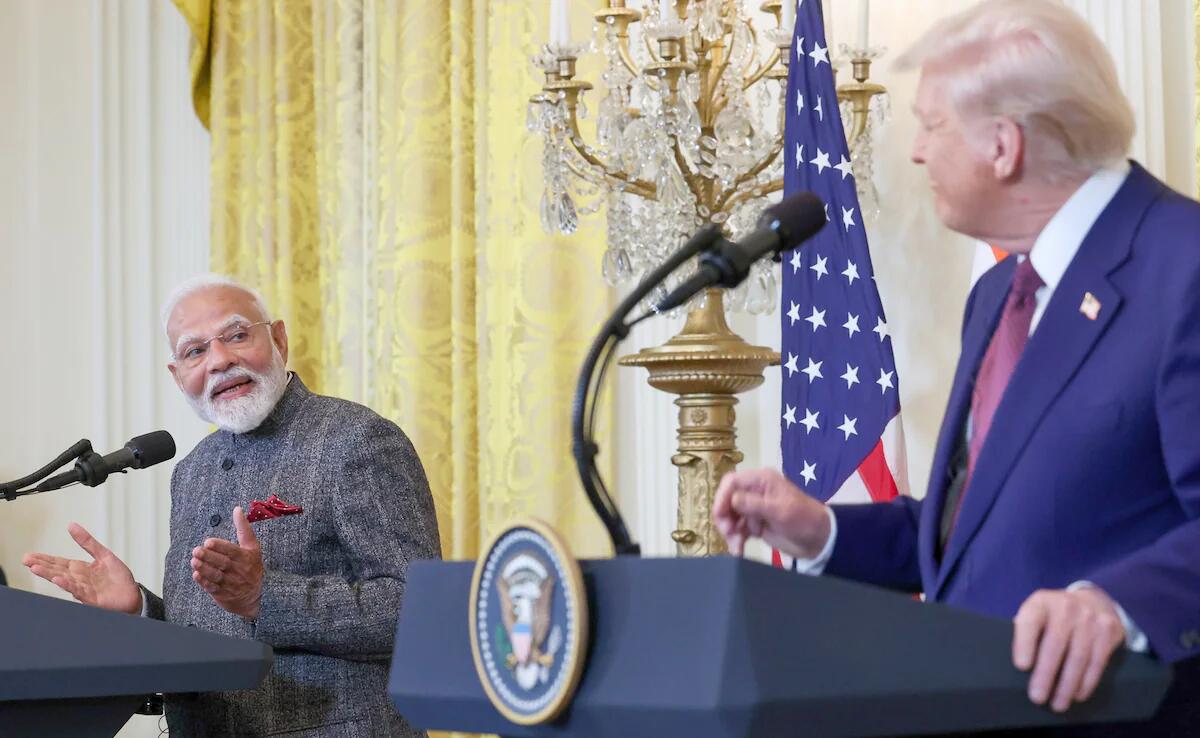
India–US relations today are going through a phase where disagreements over tariffs and India’s growing ties with Russia have created tension. Yet, at the highest political level, the commitment to the partnership remains strong. When asked whether he is willing to improve relations with India again, US President Donald Trump struck a conciliatory note. Speaking to reporters at the White House, he said: “I will always be a friend of Modi. He is a great Prime Minister. Yes, at the moment I do not like some things, but there is a special relationship between India and America. Such moments keep coming.”
Prime Minister Narendra Modi responded positively, reflecting both personal warmth and strategic calculation. On social media platform X, he wrote: “We wholeheartedly appreciate President Trump’s sentiments and positive assessment of our relationship. India and America have an extremely positive, visionary, comprehensive and global strategic partnership.”
Tariffs, Russian Oil and Perceptions of Drift
The most visible disputes in recent months have been economic and geopolitical. US President Trump’s administration imposed tariffs of up to 50% on Indian goods, which created hurdles for bilateral trade and caused discontent in Indian industry. Simultaneously, Washington expressed displeasure over India’s decision to buy discounted crude oil from Russia. From India’s perspective, however, energy security and affordable imports for its 1.4 billion citizens cannot be compromised for another country’s geopolitical preferences.
Another trigger for speculation came when photos from the Shanghai Cooperation Organisation (SCO) summit in Tianjin showed PM Modi with Russian President Vladimir Putin and Chinese President Xi Jinping. These images generated chatter in the American media about India drifting closer to the Russia–China bloc. US President Trump even remarked in a social media post that, “Looks like we have lost India and Russia to China.”
Despite these perceptions, India’s actions stem from a principle of strategic autonomy. New Delhi has consistently maintained that its partnerships are issue-based, and its ties with Moscow or Beijing will not undermine the depth of cooperation with Washington.
Strategic Partnership Beyond Individuals
The India–US partnership has matured far beyond personal diplomacy between leaders. Defence cooperation, technology transfers, the Indo-Pacific strategy, counter-terrorism initiatives, and platforms such as the Quad reflect an institutionalised bond that neither tariffs nor temporary disagreements can derail. For the US, India is the key balancing power in Asia, a democratic partner that offsets China’s rise. For India, the US is an irreplaceable source of advanced defence technology, investment, and innovation support.
Both sides recognise the indispensable nature of this partnership. This is why despite voicing concerns on issues like tariffs and oil imports, US President Trump simultaneously assures that he will “always be a friend.” Prime Minister Modi’s “heartfelt appreciation” for these words further reinforces that the core of the partnership remains secure.
A Relationship Defined by Shared Interests
What sets the India–US relationship apart in the modern world is its foundation in shared interests rather than dependency. Unlike Cold War-era alignments, this is a partnership where differences are not hidden but managed with maturity. India continues to assert its right to independent decision-making, while the US continues to push for alignment on strategic issues. Yet both nations know that cooperation brings far more benefits than conflict.
The ability to express differences openly without weakening the broader relationship is a sign of strength. It shows that New Delhi and Washington no longer need to pretend perfect harmony; their bond is resilient enough to withstand turbulence. Whether it is a trade dispute or diverging approaches to Russia and China, both capitals understand that global challenges—from Indo-Pacific security to counter-terrorism and climate change require them to work together.
Strategic Bond Will Endure
The exchanges between US President Trump and Prime Minister Modi highlight the dual nature of India–US ties: visible friction on specific issues but undeniable convergence on long-term goals.
India and the US remain partners bound by shared democratic values, overlapping security interests, and a mutual recognition that their destinies are intertwined in shaping the 21st century. The rhetoric of “always friends” and “wholehearted appreciation” is more than just political politeness—it reflects the depth of a strategic bond that neither temporary disputes nor public disagreements can break.





