
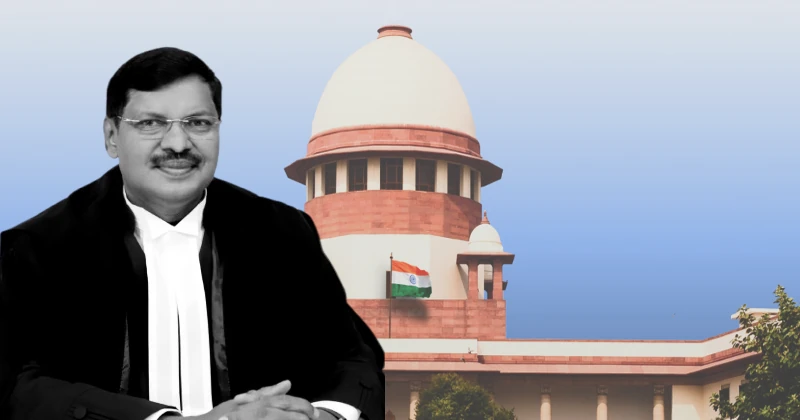
On September 16, 2025, the Supreme Court of India dismissed a petition seeking the restoration of a mutilated idol of Lord Vishnu at the Javari temple in Khajuraho, Madhya Pradesh. The seven-foot idol, a part of the UNESCO-protected Khajuraho group of monuments, was beheaded centuries ago during the Mughal invasions. Since then, it has remained desecrated, incomplete, and unable to inspire worship as intended.
The petition was filed by a devotee, Rakesh Dalal, who argued that this was not merely an archaeological matter but a question of faith, dignity, and the constitutional right of Hindus to worship their deities in completeness. Represented by Senior Advocate Sanjay M Nuli, he urged the Court to direct the Archaeological Survey of India (ASI) and other authorities to restore the idol and revive the sanctity of the temple.
The Case for Restoration
The petition narrated the legacy of the Khajuraho temples, masterpieces built under the Chandravanshi rulers that today stand as proud symbols of India’s civilisational wealth. Yet, the idol of Lord Vishnu at Javari remains damaged, despite India having enjoyed more than seven decades of independence. Dalal’s argument highlighted that centuries of foreign invasions, followed by British indifference and later governmental apathy, had left the deity dishonoured in the land where millions still worship Vishnu as the protector of the universe.
The petitioner maintained that refusal to restore the idol amounts to denial of Hindus’ fundamental right to worship. He also reminded the Court that despite numerous representations, campaigns, and appeals to the government, no concrete step had been taken to rectify the matter.
The Court’s Response and Its Impact
While dismissing the plea, the bench led by Chief Justice of India BR Gavai remarked that the matter was not fit for judicial intervention, suggesting instead that the petitioner place his faith in prayer. For many devotees, the remark came across as a light-hearted dismissal of a deeply sensitive issue.
It is important to clarify here that the role of the judiciary is bound by constitutional limitations. The Court may have intended only to point out that such matters fall within the domain of the ASI or the executive branch of government, not the judiciary. However, the phrasing left many Hindus disheartened, as it appeared to trivialise centuries of pain associated with temple desecrations.
What has caused concern among devotees is the wider perception such remarks create. When faith-based petitions are treated with levity, it risks reinforcing the belief that Hindu religious grievances are not given the same weight as those of other communities. This perception feeds into a larger debate about asymmetry in how sensitivities of different groups are addressed in India.
Unequal Standards in Secularism
Imagine, for a moment, if similar comments had been directed at another community. Public outrage would likely have been immediate, with statements from legal bodies, political groups, and civil society. Yet when the same tone is directed toward Hindu petitioners, the reaction tends to be muted. This imbalance reflects an unfortunate truth: in the Indian secular framework, the majority often finds its grievances brushed aside as unimportant, while minority concerns are amplified and taken up with urgency.
This asymmetry is visible in multiple cases. When questions of waqf lands arise, they are handled with utmost seriousness, sometimes even with interim relief granted. But when Hindus seek restoration of a mutilated idol, the matter is treated as a non-essential concern. The message this sends is troubling: one group’s faith is treated as sacrosanct while another’s can be disregarded without consequence.
The Larger Civilisational Context
The Vishnu idol at Khajuraho is not merely a broken statue. It symbolizes a long history of invasions and temple desecrations, where thousands of Hindu places of worship were destroyed or defiled. For devotees, seeking restoration is not only about reviving the sanctity of a single temple but about healing centuries of civilizational wounds.
The Supreme Court, in the past, has recognized the deity itself as a juristic person, most notably in the Ayodhya Ram Janmabhoomi case. That landmark judgment upheld the belief of millions that the deity must be honored in law as well as in faith. Against this background, many hoped that the Court would adopt a similarly sensitive approach to the Khajuraho plea, even if jurisdictional limitations prevented direct intervention.
A Need for Balance and Sensitivity
The dismissal of the petition to restore the Vishnu idol at Khajuraho has sparked a wider debate about how India balances its secular framework with the sensitivities of its majority community. Courts are, of course, bound by law and cannot direct restoration work if it falls outside their jurisdiction. However, the tone of judicial observations carries immense weight, especially when they touch upon issues of deep civilizational significance.
Hindus have consistently chosen the constitutional path, turning to courts for redress rather than to the streets. This is a mark of faith in India’s institutions. But when such faith is met with remarks that appear to trivialize devotion, it undermines not only the petitioner’s cause but also the moral authority of the system to preach tolerance and respect.
Restoration of mutilated idols may not always be a matter the judiciary can resolve directly. Yet, it remains the duty of the state, through institutions like the ASI, to ensure that symbols of India’s heritage and faith are treated with dignity. A more sensitive approach acknowledging the pain of devotees while pointing them toward the correct legal remedies would strengthen trust in the judiciary and uphold India’s ethos of respect for all faiths.
The Khajuraho Vishnu idol stands as a reminder that historical wounds do not vanish with time. They demand acknowledgment, respect, and, wherever possible, restoration. For a civilisation that reveres dharma and continuity, ensuring that its deities are not left dishonoured is not merely a matter of faith—it is a matter of justice.