




















Apple is pushing forward with its India manufacturing strategy, even as US President Donald Trump continues to pressure the company to return production to American soil.
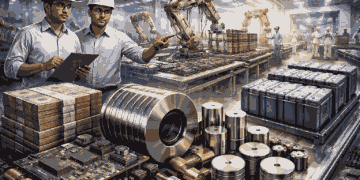
The tech giant is not only scaling up iPhone assembly in India but is now also localising production of the advanced machinery used in the assembly process.
These are critical tools in the post-Surface Mount Technology (SMT) phase, where components are mounted onto circuit boards with extreme precision.
This bold expansion comes even as Trump ratchets up pressure. In May, the US President publicly warned Apple CEO Tim Cook that iPhones sold in the US should be “manufactured and built in the United States, not India, or anyplace else,” or face penalties.
He threatened a 25 per cent tariff on imported iPhones not made domestically. While smartphones like the iPhone currently enjoy a key exemption from the broader 50 per cent tariff imposed on Indian imports—linked to India’s Russian oil purchases—Trump has made it clear he can revoke this at any time.
As per a report, India now produces over 70 per cent of the iPhones sold in the US, a dramatic jump from just 31 per cent a year ago. Exports from India hit a record 22.88 million units in the first half of 2025—a 52 per cent year-over-year increase—driven by Apple’s shift away from China amid rising geopolitical friction.
Now, Apple is taking things a step further by moving beyond component sourcing and into local manufacturing of the sophisticated machines that power iPhone production.
According to a report, approximately 35 Indian firms are now active in this ecosystem, with around 17 of them directly tied up with Apple over the past 20–24 months. Industry giants such as Titan Engineering and Automation Ltd (TEAL), Jyoti CNC Automation, Bharat Forge, and Wipro are among the companies supplying Apple with this crucial machinery. Smaller non-Chinese players are also setting up local operations.
“These companies make equipment used in the assembly of iPhones, and they are used after Surface Mount Technology (SMT) line production,” the report said. Apple retains the Intellectual Property Rights (IPR) and technical know-how for these tools.
Apple’s move comes in response to growing export restrictions from China, which has recently halted shipments of key machinery to Indian facilities operated by Apple’s assembly partners such as Foxconn, Tata Electronics, and Jabil. Beijing has also pulled back Chinese engineers from India and pressured its firms to scale down Indian operations. Apple, fully aware of the implications, is accelerating efforts to insulate its supply chain.
The company’s India operations now include five factories—two of which are newly built—that produce iPhones and AirPods. Apple currently works with 35–40 Indian suppliers for components like batteries, chargers, and cables, achieving around 20 per cent domestic value addition. The Indian government hopes to push this to 30–40 per cent through incentives like the ECMS 2.0 scheme.
The report also highlighted Apple’s interest in joint ventures between Indian companies and foreign suppliers from China, South Korea, Taiwan, and Japan. For instance, Foxconn-backed Yuzhan Technology is investing $1.5 billion dollars in a manufacturing plant in Tamil Nadu.
Even as Trump continues to apply pressure—and despite Apple’s pledge to invest $100 billion dollars in the US over four years—India’s lower costs and fast-maturing manufacturing ecosystem appear too attractive to pass up.
China still leads Apple’s global supply chain, with 157 of its 470 suppliers based there. But India is closing the gap quickly, with its share of iPhone production rising from 14 per cent in 2024 to a projected 25% by the end of 2025.
As iPhone 17 production ramps up, Apple’s aggressive push in India signals a clear bet: that even if tariffs come, the “Make in India” engine won’t stall.
Earlier, with the launch of the much-hyped Apple iPhone 17 series in India, long queues could be seen outside Apple stores.
The scenario included overnight campers waiting for their “dream phone,” fights breaking out in Mumbai, and social media melting down with sarcasm all this unfolded on day one of the sale.
A social media user said “In a country where people hesitate to stand in line for civic duties or public services, the sight of thousands waiting to shell out over Rs 1 lakh for a smartphone is both hilarious and telling.”
Apple officially commenced sales of the iPhone 17, iPhone 17 Pro, iPhone 17 Pro Max, and the all-new iPhone Air across India. Powered by the latest silicon chip and running on iOS 26, these devices integrate Apple’s new AI-powered “Apple Intelligence” features.
The iPhone 17 is available in lavender, mist blue, sage, white, and black, with prices starting at Rs 82,900 and soaring up to Rs 1.9 lakh for the 1TB iPhone 17 Pro Max. For the super-premium variants, like the Pro Max, the tag can touch a jaw-dropping Rs 2.3 lakh yet the demand shows no signs of slowing down.
In Mumbai’s Bandra Kurla Complex, the launch-day euphoria turned into chaos when a fight broke out among buyers. Video footage showed excited customers, packed like sardines, slapping and shoving each other in their desperation to grab the latest iPhone.
While, in Delhi’s Select Citywalk Mall, customers camped outside overnight, waiting for the shutters to rise. One frustrated buyer from Ahmedabad, who had been in line since 5 am, complained about people cutting queues and the lack of security.
Ironically, in a country where people resist queues for healthcare or elections, waiting hours for a shiny gadget seemed effortless.





