


















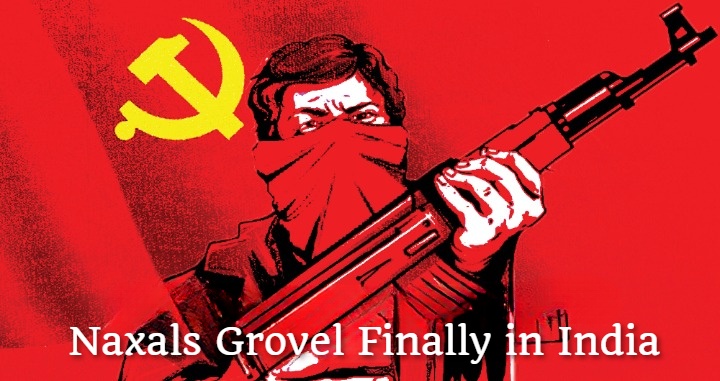
On 28th September 2025, India’s Union Home Minister Amit Shah made a significant announcement, revealing that 10,500 Naxals once militants battling the state—have laid down their arms and returned to the mainstream. This marked a major achievement in the Indian government’s ongoing efforts to combat Naxalism and its impact on the country’s socio-political landscape. Shah’s statement highlights a critical milestone in India’s long-standing battle with Naxal insurgency, also known as the Maoist movement, particularly in the infamous “Red Corridor” stretching across several states. These states—Madhya Pradesh, Chhattisgarh, Jharkhand, Odisha, Bihar, West Bengal, and others—have historically been hotspots for Naxal activity. However, under the leadership of the BJP government and its determined push for national security and social cohesion, there is a gradual but notable shift in this trajectory.
The Naxal Challenge: A Longstanding Struggle
The Naxal movement in India, which traces its origins to the 1967 Naxalbari revolt in West Bengal, has been a thorn in India’s security framework for decades. Initially, the insurgency sought to address the economic and social inequalities faced by India’s marginalized tribes and rural populations. Over time, it evolved into an armed struggle against the state, fueled by support from external actors and spread across rural India.
The term “Red Corridor” refers to a belt of land that stretches across several states in central and eastern India, where the Naxals have operated with considerable autonomy. These insurgents, often heavily armed, used guerilla tactics to challenge the state apparatus and spread their influence. However, this insurgency led to violence, displacement of tribal populations, and a significant strain on local economies and governance. The Indian government has been struggling to contain the spread of Naxalism and bring peace to these regions for years.
The Modi Government’s Commitment to Eradication
The BJP-led government under Prime Minister Narendra Modi and Home Minister Amit Shah has taken a comprehensive and multifaceted approach to tackle Naxalism. Over the past few years, the government has launched a series of measures aimed at neutralizing the Naxal threat while simultaneously addressing the root causes of the insurgency.
One of the critical strategies has been a combination of military action and socio-economic development, which Amit Shah highlighted in his recent speech. In his address at the “Bharat Manthan-2025: Naxal Mukt Bharat – Ending Red Terror Under Modi’s Leadership” event in New Delhi, he pointed to the success of initiatives that have encouraged militants to return to mainstream society. By focusing on rehabilitation programs, the government has created opportunities for Naxal fighters to abandon their violent path and reintegrate into their communities.
Shah’s revelation that 10,500 Naxals have surrendered is a testament to this shift. The BJP government has actively engaged in facilitating their return through various rehabilitation schemes, employment opportunities, and ensuring social acceptance. Importantly, the initiative has been presented as one of the key successes of the Modi government’s approach, which balances security with empathy, offering Naxals a chance at redemption.
The Role of ‘Operation Kagar’ and Military Action
While rehabilitation and socio-economic upliftment are at the forefront of the government’s strategy, the security apparatus has not been shy of applying force where necessary. Amit Shah’s comments also come at a time when the government is intensifying its military operations through initiatives like ‘Operation Kagar’, aimed at eliminating Naxalism and Maoist ideologies by March 2026.
‘Operation Kagar’ is a robust military offensive launched by the Modi government that targets the core of the insurgency. The operation is designed to dismantle Naxal strongholds, neutralize top leaders, and regain control of areas previously under the influence of the insurgents. The operation has been marked by aggressive counter-insurgency tactics, along with intelligence-sharing networks, aimed at choking the Naxal supply chain of arms and resources.
The military approach is also closely aligned with strategic development in regions that have historically been Naxal strongholds. By creating better infrastructure, facilitating economic opportunities, and providing better governance, the government hopes to erode the ideological base of the insurgents and weaken their hold on local populations.
Connecting the Northeast: A Broader Vision
In his speech, Amit Shah also drew attention to the transformation of the Northeastern region, which had long been viewed as isolated from the rest of the country. Shah reflected on the state of affairs before the BJP came to power in 2014, noting how the people of Northeast India often felt disconnected from the rest of India. He emphasized that the current government has bridged this gap through major infrastructure projects, particularly railways and waterways, which have reduced physical and social distances.
This development in the Northeast serves as a metaphor for the broader goals of the BJP’s Naxalism eradication strategy. By building infrastructure and promoting economic integration, the government hopes to alleviate the conditions that give rise to insurgent movements. The government’s focus on reducing social distances is evident in the way it is ensuring that the government’s development initiatives reach even the most remote parts of India, including those in the Red Corridor.
The Future of the Red Corridor
While the surrender of over 10,000 Naxals marks a significant shift, it is too early to declare the end of the Red Corridor or Naxalism itself. The insurgency still holds sway in several pockets of India, and its leadership remains a threat. However, the actions taken by Amit Shah and the Modi government show that India is committed to both militarily and socio-economically breaking the back of the Naxal movement.
The BJP’s approach is characterized by a mix of force, development, and rehabilitation, all aimed at integrating these rebel groups back into the fabric of Indian society. The ‘Operation Kagar’ is expected to continue its rigorous campaign until the insurgency is completely neutralized, while ongoing infrastructure projects aim to ensure that there are fewer reasons for discontent in these marginalized regions.
Amit Shah’s remarks about reducing the “social distance” between the people of India, whether in the Northeast or in the Red Corridor, underscore the broader objective of fostering a unified, secure, and prosperous nation. The combination of hard and soft power may just be the key to achieving a Naxal-free India by 2026, as promised under the government’s roadmap.
In conclusion, Amit Shah’s leadership in tackling the Red Corridor is a testament to India’s evolving approach to security and governance. With Operation Kagar and the ongoing development of India’s most conflict-ridden regions, the Narendra Modi-led government is laying the foundation for a more secure and unified India. While the path ahead remains challenging, the growing number of surrenders signals a significant victory for peace and development in India’s troubled regions.