


















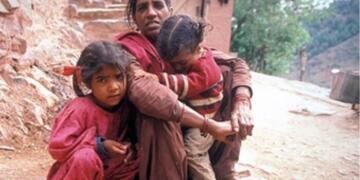

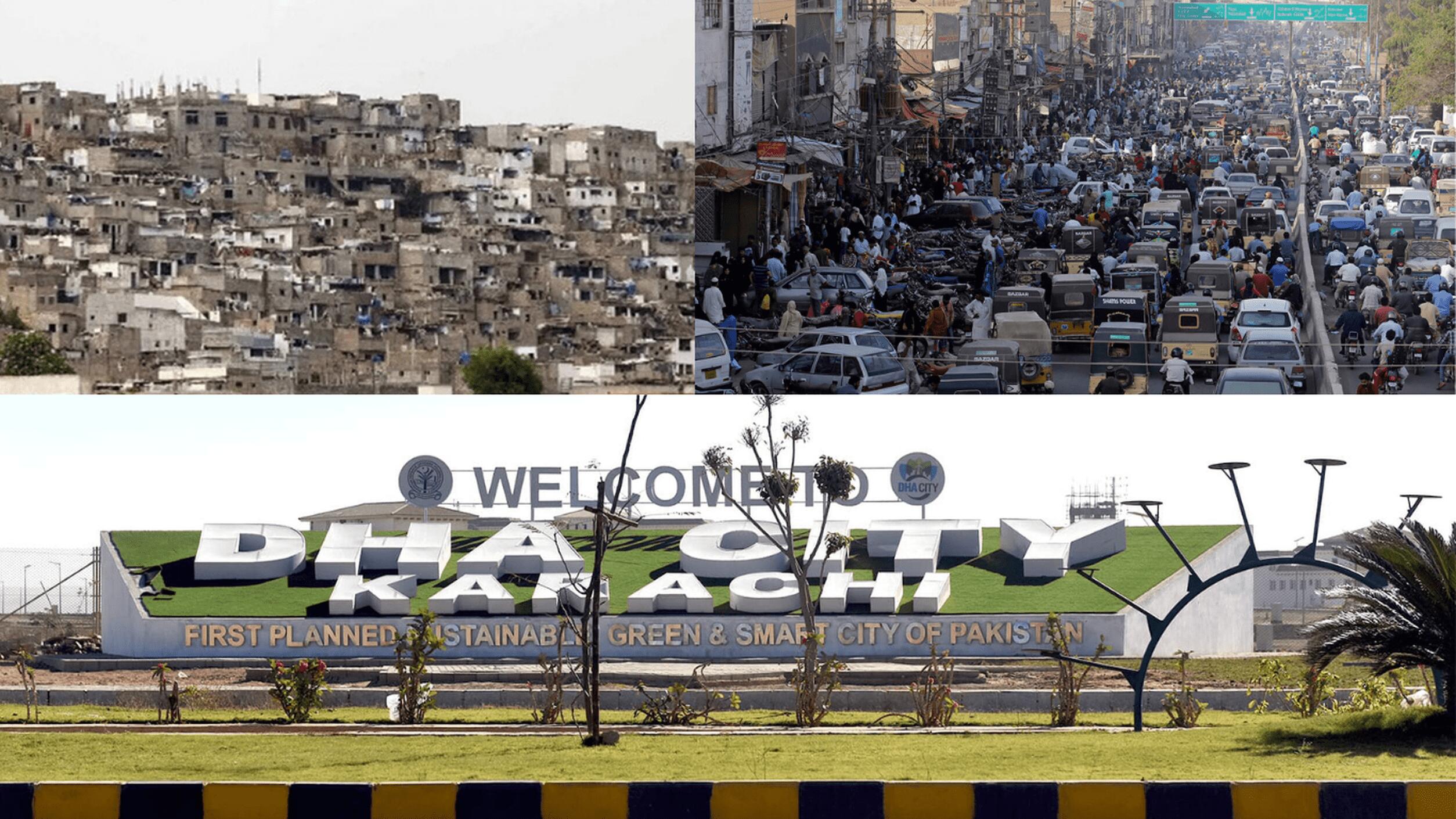
Across Pakistan’s largest cities, the Defence Housing Authorities (DHAs) have grown from modest welfare schemes into some of the most influential players in real estate. What started as a promise of housing security for retired officers has gradually turned into large-scale property enterprises, where prime plots are sold to the public at premium prices. The contradiction is clear, while DHA colonies prosper, millions of citizens are left coping with soaring costs and overcrowded neighbourhoods.
From welfare to enterprise
The origins were rooted in good intentions, giving veterans and their families decent shelter. Over time, though, the mission widened. Anyone familiar with these areas can see how they have reshaped city spaces. Today, DHA enclaves dominate Karachi, Lahore, Islamabad and other urban centres, operating more like private developers than welfare boards.
DHA Karachi, managed from Clifton Cantonment, has spread well beyond its original limits. New projects such as DHA City Indus Hills are promoted with the language of affordability, but in practice serve as investment opportunities for the upper tier of society. In 1975, in Lahore, it began as a cooperative housing society, but in 1999, it was formally brought under the Defence Housing Authority. That transition handed control directly to the military, paving the way for expansive gated colonies and top-down decision-making. Anyone driving past Phase 5 today can see how farmland has rapidly given way to residential compounds.
Karachi’s contested land and Bahria’s role
On Karachi’s outskirts, some of the fiercest land disputes have played out. In 2019, Pakistan’s Supreme Court approved a Rs 460 billion settlement with Bahria Town Karachi after ruling that thousands of acres in Malir district had been acquired illegally. The case showed how large developers thrive within state-sanctioned frameworks, often backed by cantonment and defence authorities. Entire gated communities, marketed as modern lifestyles, sprang directly from these contested deals.
The Navy in the real estate economy
Although the Army is the most prominent actor, the Pakistan Navy has also carved out space in real estate. Its Bahria Foundation has expanded into multiple sectors, from shipping and education to property. In practice, the concept of welfare is often intertwined with commercial activity. In Gwadar, the Navy has set up Naval Anchorage through its Benevolent Association, presented as a welfare scheme but located at one of the country’s most strategic ports. The location underlines how military housing is closely linked to the politics of land and strategy.
The social cost of premium enclaves
Defence housing has been highly lucrative for institutions and developers, but critics point out that it comes with steep social costs. Cantonment authorities allocate land not only for military families but also for well-heeled investors. As these exclusive colonies spread, they sideline broader urban planning and push ordinary families further away from affordable housing.
In Karachi, DHA’s continuous expansion has, by many accounts, fuelled speculation in areas far beyond its boundaries, driving up land prices across adjoining districts. In Lahore, successive DHA phases have become the benchmark for luxury real estate, reshaping the city’s property market. The contrast is glaring for everyone to see. Officers and investors enjoy secure, well-designed neighbourhoods, while much of the population struggles to find decent, affordable homes. A common man can only dream of an affordable home unless he enlists in the army and joins the elite club.
The Indian contrast
India offers a different picture. Officials there consistently highlight affordability, transparency and state-led planning as core goals. New Delhi has also criticised opaque land deals tied to the China-Pakistan Economic Corridor (CPEC), especially in Gwadar, labelling them illegal and unacceptable where they overlap with Indian claims.
Domestically, India’s housing policy stresses both openness and delivery. Under PMAY Urban 2.0, more than 120 lakh homes have been sanctioned, and 94 lakh have been handed over, with sanction orders posted publicly online. The programme is not without shortcomings, but its focus on mass housing is hard to miss. This emphasis on access and transparency contrasts sharply with Pakistan’s reliance on elite enclaves built under the banner of welfare.
A tilted urban future
Pakistan’s urban trajectory points towards growing inequality. As long as land development remains in the hands of cantonment authorities and defence-run ventures, the challenge of building inclusive housing will only intensify. Karachi, Lahore and Gwadar all illustrate a model that privileges institutional profit over social needs. Defence housing has proved to be a financial windfall for a few, but it has driven housing further out of reach for the many. The language of welfare cannot disguise the exclusion it produces.
Can cities dominated by cantonment colonies and gated societies ever provide housing justice? That is the dilemma Pakistan now faces.
(Ashu Mann is an Associate Fellow at the Centre for Land Warfare Studies. He was awarded the Vice Chief of the Army Staff Commendation card on Army Day 2025. He is pursuing a PhD from Amity University, Noida, in Defence and Strategic Studies. His research focuses include the India-China territorial dispute, great power rivalry, and Chinese foreign policy.)