
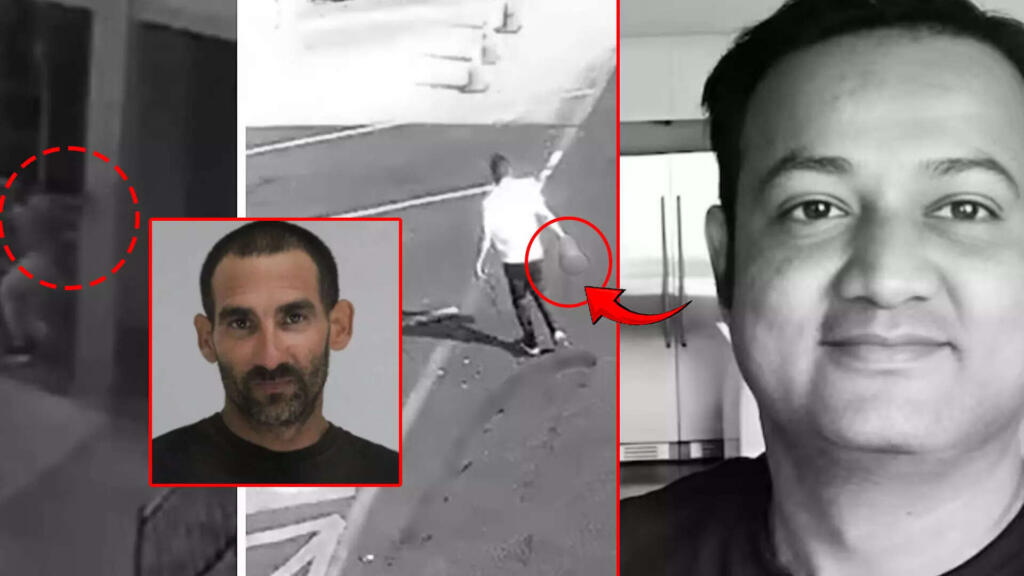
In one of the most horrifying crimes in recent years, 50-year-old Indian-origin motel manager Chandra Mouli Nagamallaiah was brutally attacked and beheaded with a machete in Dallas, Texas, by his employee, 37-year-old Cuban immigrant Yordanis Cobos-Martinez. The shocking act of violence, which unfolded in front of Nagamallaiah’s screaming wife and son, should have triggered headlines across the United States. Instead, the coverage remained muted, almost invisible. Compare this to the wall-to-wall debates and outrage that followed the killing of American right-wing activist Charlie Kirk, or Ukrainian national Iryna Zarutska. When Indians are victims, especially on American soil, the silence is deafening. This incident raises urgent questions Is it because he was Indian? Is it because of the color of his skin? Or is Indian life seen as less valuable in the Western media lens?
The Murder in Dallas: What Happened
The gruesome incident occurred after an argument over a broken washing machine inside the motel where Chandra Nagamallaiah worked. Reports state that Cobos-Martinez grew furious when Chandra Nagamallaiah asked another employee to translate instructions instead of speaking to him directly. The situation escalated quickly Cobos-Martinez retrieved a machete, stabbed the manager multiple times, and then chased him across the parking lot as his terrified family looked on.
Nagamallaiah’s wife and 18-year-old son tried desperately to stop the assailant but were pushed aside. In an act of unimaginable cruelty, Cobos-Martinez slashed Nagamallaiah’s throat for nearly four minutes, decapitated him, kicked his severed head like a football, and dumped it in a trash bin. A viral video later showed the accused carrying the severed head towards the dumpster, still clutching the bloodied machete. He was arrested immediately after leaving the crime scene, covered in blood.
A Dangerous Man Ignored by the System
What makes the case even more alarming is the background of the accused. Cobos-Martinez was not new to violent crimes. Court records reveal that he had previously been charged in 2018 for indecency with a child and assault causing bodily injury. In 2017, he was arrested in California after allegedly attempting to carjack a woman while naked. Despite such a criminal past, he continued to roam freely and even found employment at the motel where this murder occurred.
This failure of the American justice and immigration system raises a critical point how could a man with such a violent history be allowed to continue living in the United States without proper checks? Reports confirm that he is now under an immigration detainer hold, but for Nagamallaiah and his family, justice comes too late.
The Deafening Silence of American Media
Perhaps the most troubling aspect of this tragedy is the lack of outrage in American media and politics. When Charlie Kirk was shot dead in Utah recently, social media, mainstream channels, and political circles exploded with anger, sympathy, and debates on gun violence. When Ukrainian national Iryna Zarutska was murdered, again, the story received widespread coverage. But when an Indian brown-skinned, immigrant, working-class was beheaded in broad daylight, there was barely a whisper.
The hypocrisy is glaring. Had such an atrocity taken place in India against a foreign national, US media and politicians would have descended with statements, condemnations, and op-eds questioning India’s law and order. But when the victim is Indian and the crime takes place on American soil, the same voices fall silent. Indians abroad must realize the bitter truth: your suffering does not make headlines in the West.
A Reality Check for Indians Abroad
This incident should serve as a wake-up call for the Indian diaspora. Indians make up nearly 1.5% of the US population, a demographic that can swing election results in a country where presidential races are decided by thin margins. Yet, Indians remain fragmented, chasing Western approval, and rarely speaking in one voice when targeted.
Nagamallaiah’s murder exposes a deeper problem: Indians abroad often forget their roots, spending energy competing with each other rather than building solidarity. The message is clear until Indians unite, respect and security will remain elusive. While Indian-origin CEOs head some of America’s biggest corporations, the ordinary Indian worker remains vulnerable to racism, crime, and silence.
This crime also reflects another harsh reality: many Americans view Indians as job-stealers, as outsiders, or simply as less valuable lives. In workplaces, universities, and even politics, racial biases run deep. Despite contributing enormously to the US economy and society, Indians remain soft targets of hate and violence.
India’s Response and What Comes Next
The Indian Consulate in Houston has expressed shock at the brutal murder and confirmed that it is providing assistance to Nagamallaiah’s family. While diplomatic formalities are being followed, this tragedy underlines the urgent need for India to demand accountability and safety guarantees for its citizens abroad.
At the same time, Indian communities in the US must demand stronger laws, stricter background checks, and recognition of their growing political influence. Silence will only embolden those who view Indians as expendable. This is the moment for the diaspora to stand tall, raise its voice, and ensure such horrors are neither ignored nor repeated.
A Call for Unity and Vigilance
The beheading of Chandra Nagamallaiah is more than just a crime it is a chilling reminder of the vulnerability of Indians in America and the hypocrisy of Western outrage. When one of their own falls victim to violence, Americans demand justice. But when an Indian is hacked to death, the silence speaks volumes about prejudice and selective empathy.
Indians must understand this reality and act accordingly. Stop chasing validation, stop tearing each other down, and start standing together. With their growing numbers and influence, Indians in the US hold real political power but only if they choose unity over division.
The tragedy in Dallas must not fade into obscurity. It should instead mark a turning point for Indian communities worldwide: protect your own, raise your voice, and never again let the world treat Indian lives as expendable.