
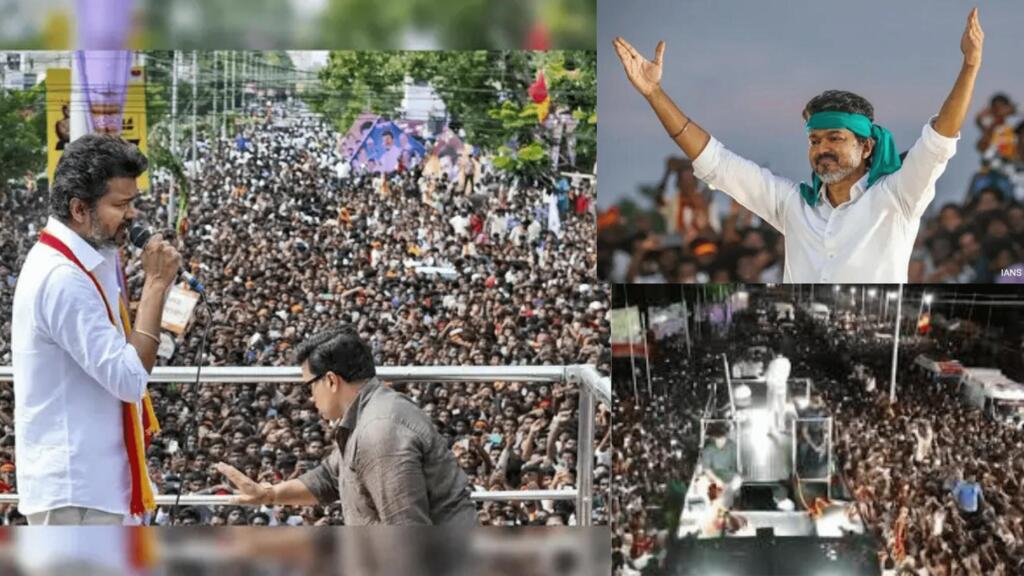
Tamil Nadu witnessed a devastating tragedy on Friday when a stampede at Tamilaga Vettri Kazhagam (TVK) chief Vijay’s rally in Karur district left at least 31 people dead and several others critically injured. Initial police reports suggest that the toll may rise further, with fears of more fatalities. According to officials, the stampede was triggered when a section of the crowd surged forward, leading to several people fainting and causing panic. With an estimated 30,000 people gathered at the venue and Vijay’s arrival delayed by more than six hours, the crowd became uncontrollable, setting the stage for disaster.
Tamil Nadu Chief Minister MK Stalin, expressing shock over the incident, announced urgent medical aid for those injured and directed ministers and top police officials to take charge of relief operations. He appealed for calm, requesting people to cooperate with authorities to restore order in Karur.
Prime Minister Modi has also expressed his condolences and said the incident is deeply saddening
Repeated Warning Signs Ignored
This is not the first time that TVK rallies have come under scrutiny for crowd management failures. Earlier this month, during Vijay’s debut rally in Trichy, the actor-politician’s convoy was mobbed by fans from the airport to the venue, turning a 20-minute ride into a six-hour gridlock that brought the city to a standstill. The chaos was widely reported, and the police, citing safety concerns, had laid down 23 strict conditions for future TVK rallies.
These included bans on joining convoys, restrictions on public receptions, and advisories that vulnerable groups such as pregnant women, children, the elderly, and the differently abled should avoid attending in person and instead follow events online. Despite these precautions, most conditions were openly defied by supporters. In Karur, many people had even brought infants and young children, making the tragedy even more painful as reports confirm children were among the deceased.
The Madras High Court had already cautioned TVK about the risks. Justice N Sathish Kumar, while hearing TVK’s petition against the “unfulfillable” conditions, had pointed to the chaos at Trichy and questioned: “If something untoward had happened, who would take responsibility? As party president, Vijay ought to control the crowds.” Those words now seem prophetic in light of the Karur tragedy.
Accountability of Organizers and Police Preparedness
The stampede has triggered widespread debate about accountability. Was the disaster a result of TVK’s inability to regulate its supporters, or the police’s failure to implement adequate safety measures? The inordinate six-hour delay in Vijay’s arrival has also been questioned. Was it a deliberate attempt to showcase his mass appeal by allowing the crowd to swell beyond safe capacity?
Police sources confirmed that prior warnings existed, given the scale of earlier rallies, yet security measures appeared grossly inadequate. The ADGP has now been tasked with investigating lapses, and some arrests of organizers are expected. However, such punitive steps raise a grim question: will they bring back the lives lost?
This tragedy also echoes similar disasters, such as the stampede at Bengaluru’s Chinnaswamy Stadium, where 11 people died and over 50 were injured due to mismanagement of crowds. In both cases, basic crowd control protocols failed, and preventive measures were sidelined in the face of massive enthusiasm and poor planning.
Lessons for Political Rallies and Public Safety
Beyond political blame games, the Karur stampede is a reminder of the urgent need for stronger crowd management at political and public events. For parties, the duty to protect supporters must outweigh the desire to display mass strength. For the government, strict enforcement of safety guidelines is non-negotiable, regardless of the stature of the leader involved.
Tragedies like Karur force two uncomfortable questions: Should people risk their safety to attend rallies of their favorite leaders? And can the state ensure such gatherings do not turn into death traps? While inquiries, arrests, and compensation announcements may follow, the irreparable loss of lives especially of young children will remain a permanent scar.
The Karur incident is a wake-up call. Unless political organizers and state authorities treat public safety as paramount, rallies meant to showcase democratic participation may continue to descend into tragedies.