



















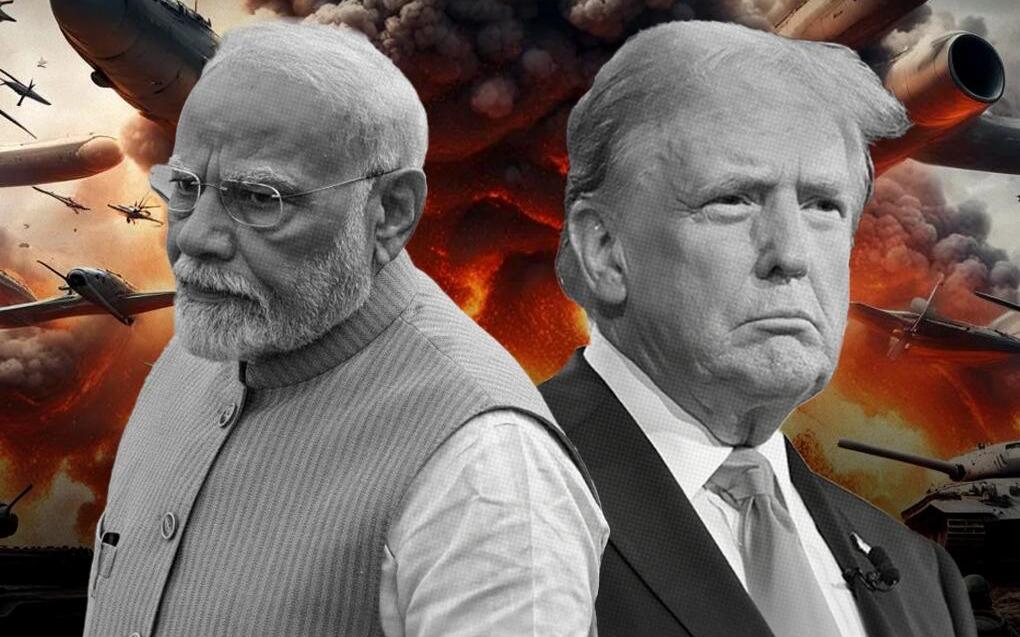
US President Donald Trump has announced new tariffs on Indian imports, 25% effective immediately, escalating to 50% by August 6, citing India’s high tariffs, trade with Russia and a $45.7 billion US trade deficit. The move aims to pressure India into a more favorable trade deal. However, beyond the rhetoric of economic nationalism lies a deeper risk that the tariffs could boomerang. Damaging the United States economy more than having an effect on India.
One need only look at history, specifically, to Indian Prime Minister Jawaharlal Nehru’s disastrous post-independence policy of shutting India’s economy to imports. Aimed to build self-reliance, Nehru’s socialism-heavy and protectionist approach ultimately led to stagnation, inefficiency and near bankruptcy of India by 1991. Trump’s tariff-driven protectionism is also seemingly following a disturbingly Nehruvian path.
Economic Impact on the United States
The White House claims this policy will protect American jobs, re-shore manufacturing, and correct trade imbalances But Trump conveniently forgets that India is a critical US trading partner in sectors such as pharmaceuticals, textiles, jewelry, electronics and IT services. A 50% tariff on these products would significantly raise prices for the US consumers.
It must be noted that with inflation already at 2.7% (June 2025), these tariffs could fuel further price hikes, countering the Federal Reserve’s stabilization efforts and reducing consumer spending power.
Job Losses and Economic Slowdown
Rather than restoring US jobs, it is believed that the tariffs may cause major disruptions across sectors. Estimates suggest the US could lose up to 500,000 jobs and $115 billion in GDP by the end of 2025. Industries such as retail, logistics and healthcare, which depend on affordable Indian imports, are likely to face the brunt of the impact.
Wall Street analysts have already revised economic forecasts downward:
IMF and OECD have downgraded U.S. growth projections.
JP Morgan warns of a recession risk if consumer confidence and business investment continue to slide.
Supply Chain Disruptions
India’s importance in global supply chains in generic pharmaceuticals, electronics and smartphones cannot be overstated and these sectors in the US would be facing the most problems. In Q2 2025 alone, India accounted for 44% of US smartphone imports, growing 240% year-on-year. These Trump tariffs could choke off these supply lines, forcing the US companies to either absorb higher costs or shift sourcing to less-preferred countries like Vietnam or China. The shift is also likely to cause further financial strain on US companies and also common citizens. This undermines Trump’s broader objective of reducing dependence on China.
Retaliatory Risks from India
Prime Minister Narendra Modi has already indicated that protection of Indian agriculture and industrial sectors was a priority for his government. This means retaliatory tariffs targeting US agricultural exports, including soybeans, dairy and almonds are likely to be introduced by the Indian government. With past US-India trade negotiations collapsing over disagreements on agriculture and e-commerce, India has taken a firm stance on the tariff issue.
PM Narendra Modi has already indicated that India remains committed to its long-term vision of “Viksit Bharat 2047”. And has assured the citizens that the country will endure short-term pain to maintain strategic autonomy.
What Trump Needs to Learn From from Nehru’s Import Ban
In the 1950s–70s, Prime Minister Nehru embraced an import substitution industrialization strategy, virtually banning imports to protect domestic industries. The policy backfired, bigtime. Inefficient monopolies, crony capitalists, technological stagnation and chronic shortages of essential goods were the norm in India.
It must me pointed out that under Nehruvian policies, India’s GDP crawled at a 3.5% annual rate, mockingly dubbed the “Hindu rate of growth”, until the 1991 balance-of-payments crisis forced liberalization under Prime Minister PV Narasimha Rao. Opening up its economy to global trade and beginning its transformation into the economic powerhouse it is today.
Parallels with Trump’s Tariffs
While Trump’s tariffs may not be outright bans, the US government’s logic is eerily similar to the then Nehru government. He wants to restrict foreign competition to protect domestic industries. But as with Nehru’s India, this risks insulating industries from competition, reducing efficiency and innovation, and burdening consumers with higher costs.
Why the US Could Suffer More Than India
Though India will feel the pain, it is less exposed:
Only 20% of India’s exports go to the US
India’s domestic demand-driven economy and growing ties with Europe, Southeast Asia, and Africa offer alternative markets.
By contrast, the US is deeply integrated into global supply chains and highly reliant on Indian imports in key sectors. A tariff-induced supply shock could lead to higher inflation, investor uncertainty and weakening strategic alliances, especially in the Indo-Pacific, where India plays a key role in counterbalancing China.
Lessons Trump Should Learn from Nehru’s Failures
Nehru’s policies made India insular and uncompetitive and Trump’s tariffs risk similar stagnation by discouraging global investment and raising domestic costs for products.
The US must encourage healthy competition as it drives innovation. Shielding US industries with tariffs could make them complacent and less efficient.
Nehru’s India was too small to invite major retaliation. However, today global trade is far more interdependent and countries like India are prepared to hit back a its stance shows.
Under Trump, the US risks alienating a key geopolitical ally over a narrow, deficit-focused economic agenda.
Trump’s tariffs on Indian imports may be politically expedient, but economically, they carry significant risk of slowing down the US economy. Protectionism, when overplayed, leads to isolation, inefficiency and decline, as was seen in Nehru’s socialism driven economic policy. India learned this in the 20th century and paid the price until liberalization in the 1990s.
If Trump wants to secure long-term American prosperity, he should avoid repeating Nehru’s mistakes. A more constructive path lies in targeted negotiations, strategic alliances and investment in innovation, not in unilateral trade wars.





