
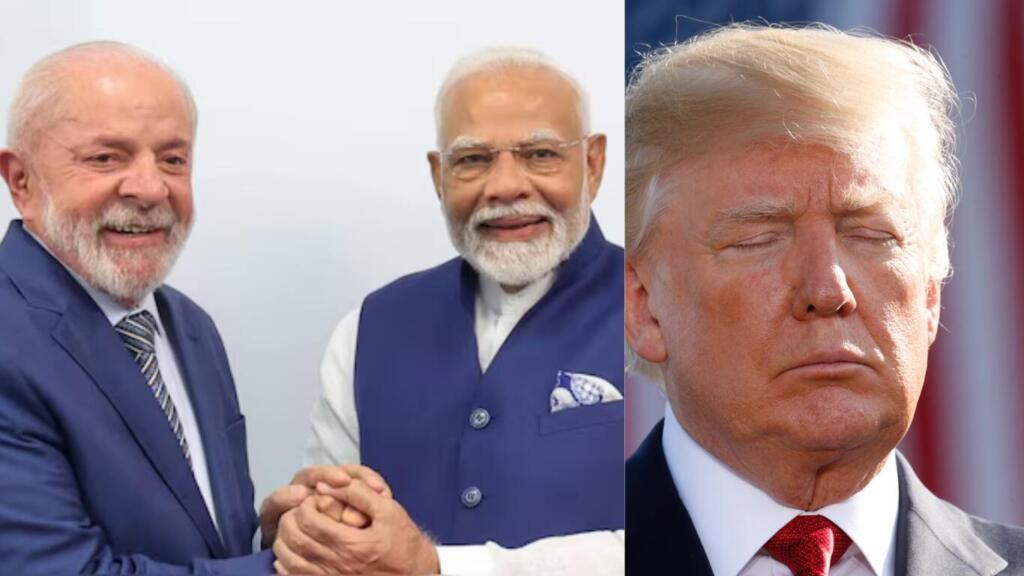
Despite U.S. President Donald Trump inviting Brazilian President Luiz Inácio Lula da Silva to call him “anytime” to discuss trade disagreements, Lula took a firm stand he would not be calling Trump. Instead, he affirmed that Brazil would pursue all available legal and diplomatic channels, including the World Trade Organization (WTO), to defend its national interests following the U.S.’s decision to impose a 50% tariff on Brazilian exports. The message was clear: Brazil will not be bullied.
At a public event in Brasília, Lula made it clear that he prefers engagement with global peers such as Indian Prime Minister Narendra Modi and Chinese President Xi Jinping, rather than dialogue with Trump. “I will call many presidents… I will call Xi Jinping, I will call Modi….” I will not call Trump because he does not want to talk,” Lula stated.
Lula also confirmed that he would extend an invitation to Trump to attend COP30, the United Nations climate conference in Belem, Pará, this November. “If he doesn’t attend, it won’t be for lack of manners or democracy,” he added a pointed reminder that Brazil maintains diplomatic courtesy without conceding to coercion.
US Slaps 50% Tariff on Brazil, Lula Rejects Informal Dialogue
Tensions escalated when U.S. President Trump announced a retaliatory 50% tariff on Brazilian goods, citing an alleged “witch hunt” related to former President Jair Bolsonaro. Trump stated, “He can talk to me anytime he wants,” extending an olive branch to Lula. However, in a direct rebuttal, Lula said Brazil’s commerce would not be based on casual calls.
Lula labeled the tariff imposition day as “the most regrettable” moment in U.S.–Brazil bilateral history. He stressed that long before Washington’s action, his government had already begun diversifying Brazil’s trade partners and strengthening engagement with BRICS countries.
Brazil to Challenge Tariffs at WTO While Reducing Dependence on U.S. Market
Lula reaffirmed that Brazil would contest the U.S. tariffs through formal WTO dispute mechanisms. “In 2025, we will resort to all possible measures starting with the WTO to defend our interests,” he declared.
Brazil’s response aligns with its broader strategy of trade autonomy. Even before Washington’s policy shift, Lula’s administration had already broadened Brazil’s market base, particularly focusing on BRICS partners such as India, Russia, and China.
In response, Brazil’s Finance Minister Fernando Haddad welcomed Trump’s offer while echoing Lula’s stance affirming that any dialogue must be grounded in mutual respect and dignity.
Highlight: BRICS Unity Shaping Global Economic Landscape
BRICS countries present a potent counterweight to U.S. economic dominance. If India, China, Russia, and Brazil move toward creating a unified trade network—or even consider an alternate currency to the U.S. dollar it could significantly weaken Washington’s leverage. U.S. policymakers appear anxious about this emerging bloc, which challenges traditional financial channels and threatens to shift global economic power. Lula’s firm posture underscores Brazil’s commitment to sovereignty and signals that BRICS is ready to lead on equal terms.
Brazil Chooses Principle Over Political Ploys
By refusing Trump’s informal outreach and instead signaling readiness to confront the tariffs at the WTO, Brazil has clearly defined its stance: sovereignty first, diplomacy on equal footing second. Rather than bowing to ad-hoc dialogue, Lula chose institutional paths and strategic alliances, reinforcing Brazil’s position on the global stage.
This episode marks a turning point: Latin America is no longer content to follow U.S. directives. Countries like Brazil now seek real partnership rooted in mutual respect—not transactional leverage. As the BRICS nucleus grows stronger, moves like Lula’s assert Brazil’s role in redefining the rules of global trade engagement.