


















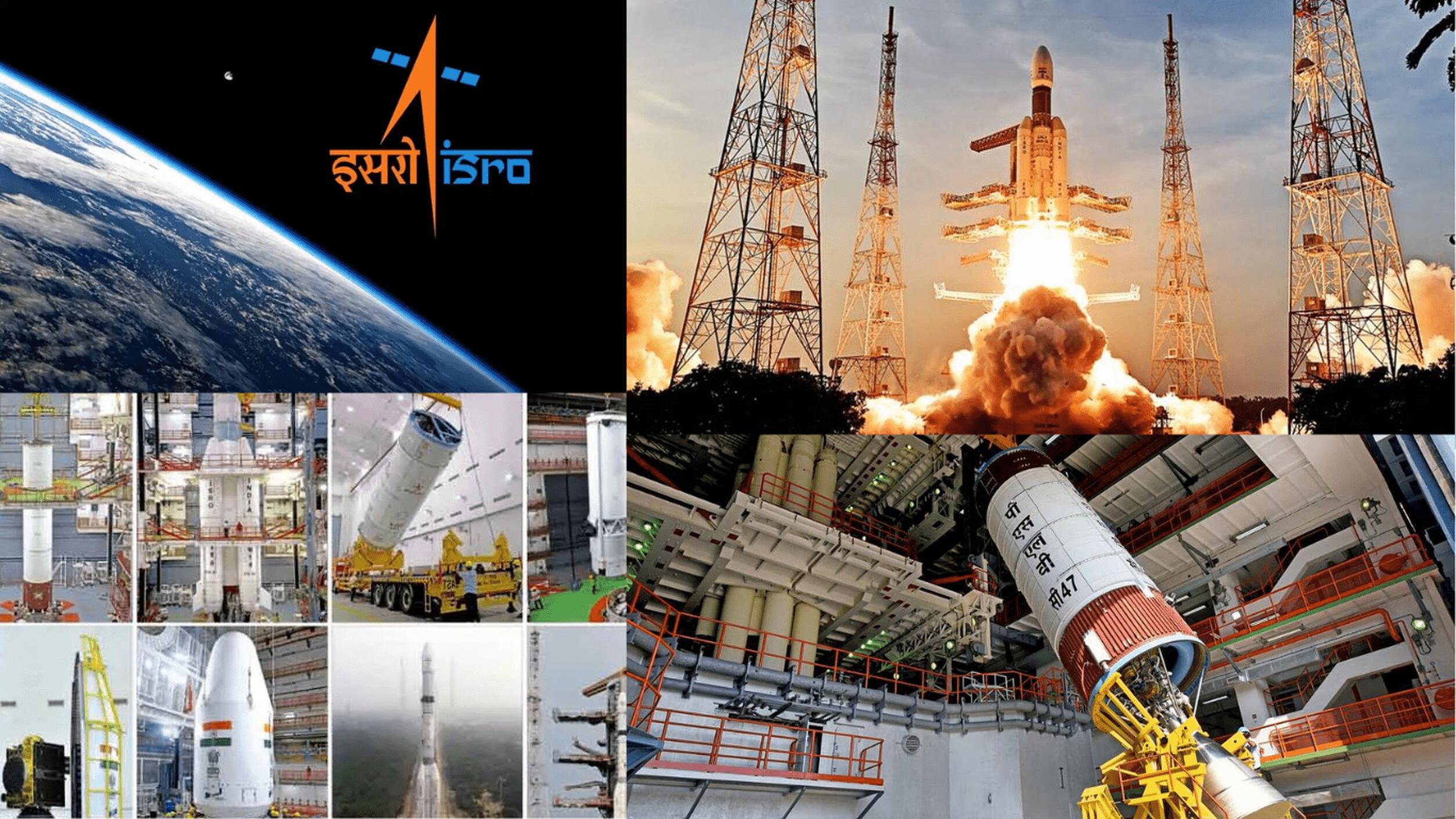
India is preparing to launch its boldest leap in space technology yet. The Indian Space Research Organisation (ISRO) has begun work on its most powerful and tallest rocket ever, Next Generation Launch Vehicle (NGLV) “Soorya”, which at 92 metres tall will surpass the height of Delhi’s Qutub Minar.
Nicknamed Soorya, this futuristic rocket is designed not just for heavy-lift missions but also for reusability and green propulsion, aligning with global trends of cost-effective and sustainable space exploration. With its development formally approved by the Union Cabinet in September 2024, the project is central to India’s long-term ambitions ranging from building its own space station to achieving a crewed landing on the Moon by 2040.
A Bold Leap in India’s Space Ambitions
Speaking at the National Science Day celebrations in Thiruvananthapuram, Padmakumar E S, Director of ISRO Inertial Systems Unit, confirmed that initial designs for the NGLV are already underway. “A team has been set up, funds have been sanctioned, and the design process has started. It will take around seven years to complete, and there will be three tests,” he announced.
The Union Cabinet has cleared an investment of ₹8,240 crore for the program, which covers development costs, three developmental flights, facility creation, program management, and launch campaign preparations. This significant funding reflects the government’s long-term commitment to making India a global leader in space technology.
Padmakumar further revealed that the first uncrewed mission is expected within a few months, setting the stage for the larger NGLV project. ISRO has also invited private industry to collaborate in the program, ensuring that India’s booming space sector has opportunities beyond government institutions.
Two Versions for Different Missions
To maximize its utility, ISRO is developing two versions of the Soorya rocket:
Low Earth Orbit (LEO) Version: Built for missions that place satellites and other payloads into low Earth orbit.
Geosynchronous Transfer Orbit (GTO) Version: Optimized for launching payloads into higher, geosynchronous orbits.
These two variants ensure that the NGLV is flexible enough to support a wide range of missions, from satellite launches to deep-space exploration and even future human spaceflight.
The payload capacity of Soorya will mark a massive jump in India’s launch capabilities:
Expendable Payload Capacity: 23.4 tonnes to LEO and 9.6 tonnes to GTO.
Recoverable Payload Capacity: 14.8 tonnes to LEO and 5.5 tonnes to GTO.
The inclusion of recoverable configurations signals a major step towards rocket reusability, similar to advancements pioneered by global players like SpaceX. This not only reduces the cost of launches but also makes frequent missions more feasible.
Cutting-Edge Design and Green Technology
Soorya will be a three-stage rocket powered by nine clustered engines in the first stage and two engines in the second stage. The first stage is being designed for recovery and reuse, a technological leap that ISRO is prioritizing to make launches more affordable and sustainable.
Equally significant is the rocket’s reliance on modular green propulsion systems, aligning with global efforts to reduce the environmental impact of space exploration. With sustainability becoming a global concern, India’s move to integrate eco-friendly fuels into such a massive rocket underlines its vision to be a responsible leader in the space race.
Soorya’s scale and design will also make it instrumental in supporting future space station missions, particularly India’s planned Bharatiya Antariksh Station, as well as the nation’s long-term lunar exploration goals.
Towards a Spacefaring Future
India has steadily grown into a formidable player in space exploration. From the Mars Orbiter Mission to Chandrayaan-3’s successful landing on the Moon, ISRO has consistently punched above its weight. Now, with the development of Soorya, India is preparing to move into the league of heavy-lift reusable rockets—an arena currently dominated by the United States, Russia, and China.
The government has already laid down ambitious targets: operating an indigenous space station by 2035 and executing a crewed Moon landing by 2040. The NGLV Soorya is at the heart of both goals. Its massive lift capabilities and reusable design will make it the backbone of India’s manned missions, cargo resupply runs, and interplanetary ambitions in the decades to come.
Soorya Heralds India’s Next Space Age
The Next Generation Launch Vehicle “Soorya” is not just a rocket—it is a symbol of India’s space future. Taller than the Qutub Minar, equipped with reusable stages, green propulsion, and immense payload capacity, Soorya represents India’s transition into a spacefaring power of the 21st century.
While the project will take nearly a decade to fully materialize, its approval and early progress signal a new era of confidence and capability. With Soorya, ISRO is preparing not just for bigger launches but for a future where India operates its own space station, lands humans on the Moon, and contributes significantly to global space exploration. By investing in Soorya, India has chosen to stand shoulder-to-shoulder with the world’s most advanced space powers. It is a rocket designed not just to reach orbit, but to push the boundaries of human ambition.