
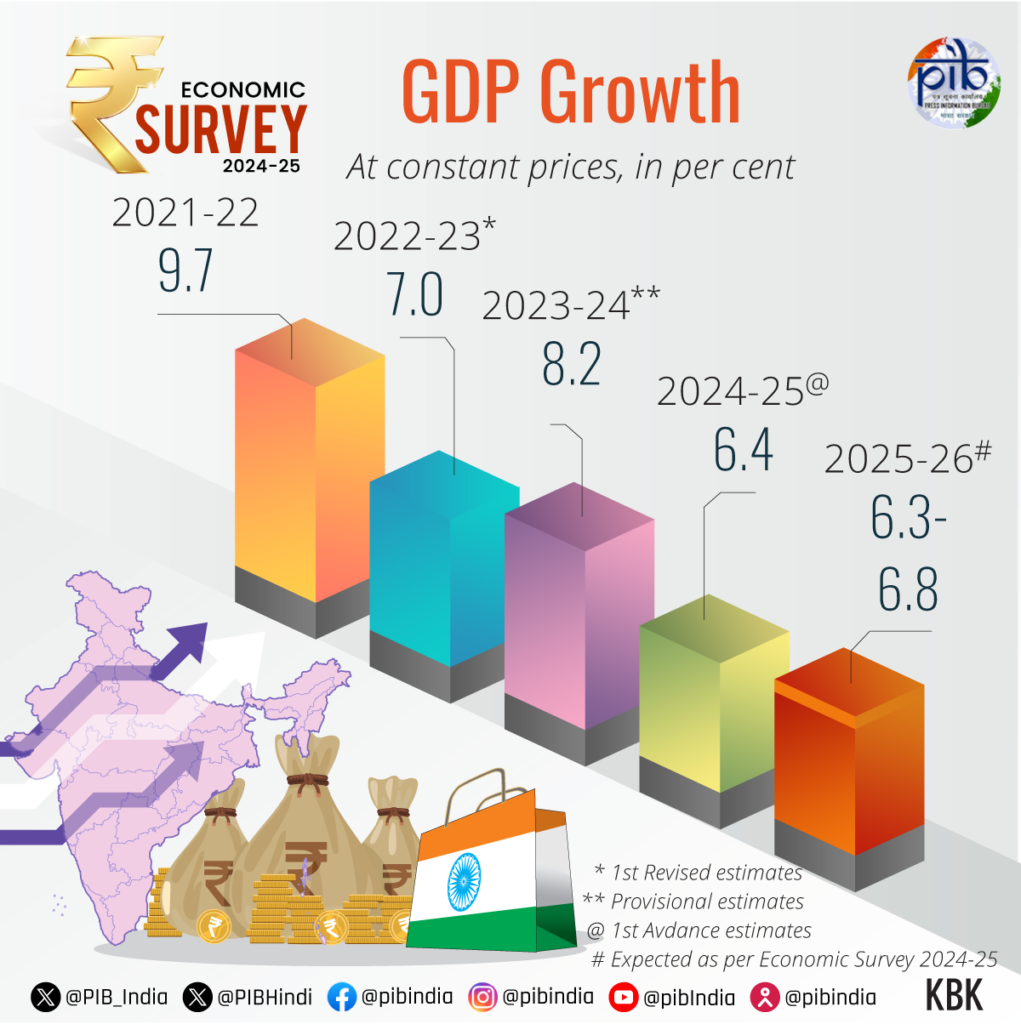
In a bold proposal aimed at strengthening India’s economy amid rising global and domestic uncertainties, the Imagindia Institute has recommended the introduction of a six-day national work week for one year. The proposal, titled the ‘Rashtra Nirman Sankalp Yatra’, is projected to deliver a 2% increase in India’s GDP in 2025–26 through a collective, time-bound national effort.
The initiative calls upon both the government and the citizens of India to contribute one additional working day each week, thereby boosting national productivity, unity, and resilience during what the think tank describes as a period of ‘economic and civilizational tests’.
‘Extraordinary times demand extraordinary resolve’, said Mr. Robinder Sachdev, President and Vice Chairman of the Imagindia Institute. ‘In the journey of civilizations, the fittest, those who adapt, act, and accelerate are the ones who thrive. India must respond with energy, sacrifice, and a renewed sense of national purpose.’
Economic Case for a Sixth Workday
Imagindia estimates that shifting to a six-day workweek would represent a 20% increase in available labour time. Even with a 40–50% compliance rate, this translates to an 8–10% increase in total labour hours across the economy.
The proposal is underpinned by the concept of labour-to-GDP elasticity. In most global economies, every 1% increase in labour inputs results in a 0.3 to 0.5% increase in GDP. Applying this framework, Imagindia predicts a 3% to 5% rise in GDP from the additional workday. Even after factoring in real-world frictions such as partial compliance, fatigue, sectoral constraints, and inefficiencies; the think tank maintains that a 2% GDP boost is a realistic and strong target.
Historical Precedents
The institute draws upon historical examples to support its case. Wartime mobilizations during World War II, South Korea’s rapid industrial push in the 1970s, and China’s rural infrastructure campaigns in the 2000s; all demonstrated how nations can achieve short-term GDP gains of 1–3% through focused labour mobilization.
The Imagindia proposal also resonates with the widely discussed remarks of Infosys founder Narayana Murthy, who in 2023 urged young Indians to work 70 hours a week to accelerate the nation’s progress. While his call sparked national debate on work culture and burnout, it also highlighted the importance of collective effort in building India’s economic future.
Imagindia’s approach channels that same spirit of contribution, framed not as a permanent shift but as a time-bound, one-year mission to unify citizens around productivity, purpose, and national growth.
India’s vast informal sector, characterized by high labour intensity, is expected to respond particularly well to such a mobilization effort.
Call to Action
The Imagindia Institute has proposed that a national task force be formed immediately to evaluate the feasibility and potential impact of the one-year initiative. The think tank recommends that this evaluation be completed within 10 days.
Should the proposal be deemed viable, Imagindia suggests that Prime Minister Narendra Modi formally launch the Rashtra Nirman Sankalp Yatra on August 15, Independence Day.
‘This is not just an economic initiative’, the proposal states, ‘but a civilizational moment, a chance for 1.4 billion Indians to unite in discipline, purpose, and contribution.’
According to the institute, the initiative transcends political and sectoral divides, offering a national call to action for citizens, industries, and institutions alike. If embraced collectively, Imagindia believes this one-year campaign could act as a launchpad for a new era of Indian productivity, pride, and progress.
It is important to note that this proposal reflects the personal opinion of Mr. Robinder Sachdev, expressed in his capacity as a public policy thinker. While rooted in economic rationale, the initiative is intended to spark national dialogue and reflection, not serve as an official policy directive.