
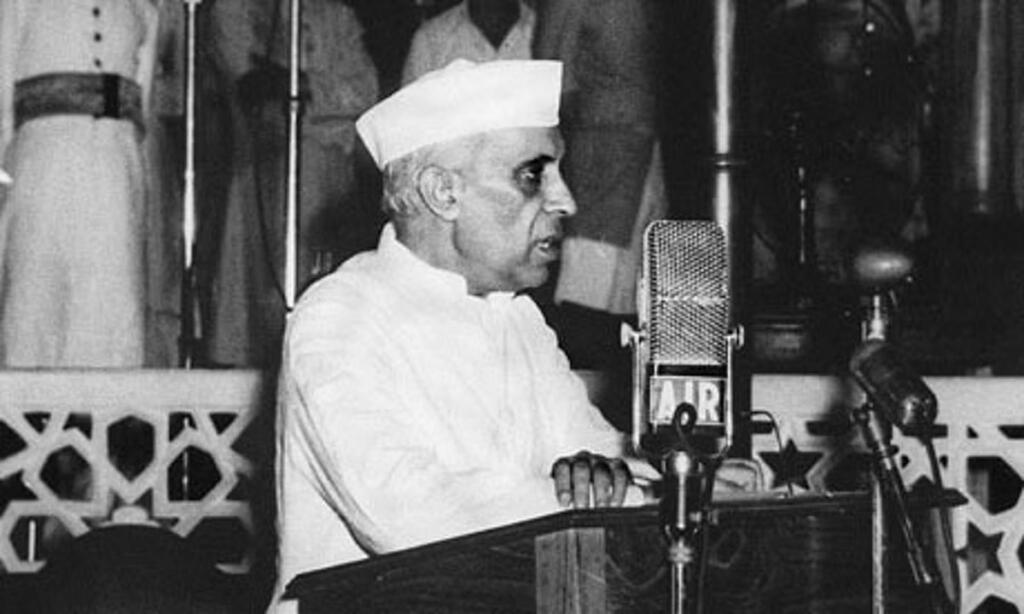
Prime Minister Narendra Modi on Tuesday invoked a News18 report based on parliamentary archives to criticise former Prime Minister Jawaharlal Nehru’s handling of the Indus Waters Treaty (IWT), highlighting Nehru’s reluctance to consult Parliament before signing the landmark agreement with Pakistan in 1960.
According to the archival records, Nehru faced sharp questions in Parliament on November 30, 1960—just weeks after the treaty was signed in Karachi on September 19—without any prior discussion in the House.
The Parliament had been in session until September 9, yet members, including senior Congress leaders, were kept in the dark.
When pressed on the lack of transparency, Nehru offered a dismissive response.
“Should I bring a truckful of papers to the Parliament?” he asked, referring to the extensive documentation and correspondence over the 12 years leading up to the treaty.
“All those numerous papers will probably fill a cart… If you have to bring them and present them to Parliament, you’d need a truck,” Nehru said, describing the documentation as a “mountain of papers” consisting of engineering estimates, debates, and diplomatic exchanges.
He went on to argue that such complex international negotiations were not suited for parliamentary scrutiny at every step.
“There must have been dozens of approaches, dozens of plans—many discussed, many rejected. Are we to come to Parliament at every stage and ask for approval?” Nehru remarked.
Criticism in the House focused on the lack of parliamentary oversight in what many MPs considered a decision of national significance.
Some even described the treaty as a “second partition.”
Nehru hit back sharply at this characterisation, calling it a “perversion of the facts.”
“Partition of what? Of an inch of territory? Partition of a pailful of water? Is that the way to approach an international question?” he asked rhetorically.
He expressed disappointment in what he saw as a narrow, overly politicized response to a crucial diplomatic initiative.
“When we are dealing with mighty things—like the future of nations—we must rise above such language,” Nehru told the House, requesting a more “friendly” and rational approach to international matters.
The BJP and several political commentators argue that Nehru’s unilateral decision on the Indus Waters Treaty was a strategic blunder.