
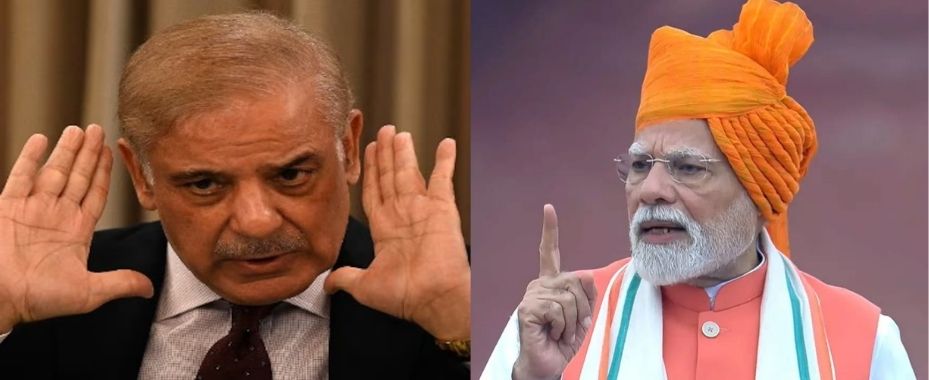
On the occassion of India’s 79th Independence Day, Prime Minister Narendra Modi addressed the nation from the ramparts of the Red Fort, he delivered what can only be described as a scathing reply to Pakistan’s repeated threats and nuclear sabre-rattling over the Indus Waters Treaty (IWT). For decades, India had tolerated what Modi called a “one-sided” and “unjust” water-sharing agreement; one that allowed rivers originating in India to quench Pakistan’s fields while Indian farmers were left parched. Today, the Prime Minister made it clear: those days are over.
The Indus Waters Treaty, brokered by the World Bank in 1960 and signed by then Prime Minister Jawaharlal Nehru and Pakistan’s President Ayub Khan, has long been hailed internationally as a rare example of cooperation between the two arch-rivals. But Modi minced no words in calling it a historic blunder. “The waters that belong to India will be used by India, for India’s farmers alone. We will no longer tolerate an arrangement that deprived our own farmers for decades,” he thundered.
Pakistan’s Nuclear Blackmail Threats
In recent weeks, Islamabad’s rhetoric has hit fever pitch. Pakistan’s Chief of Army Staff, Field Marshal Asim Munir, speaking at a private dinner in Tampa, Florida, threatened that Pakistan would “take half the world down” if pushed, promising to destroy any future Indian dams with “ten missiles.” Prime Minister Shehbaz Sharif and former foreign minister Bilawal Bhutto Zardari joined the chorus, warning India that any attempt to alter river flows would be an offensive act and “they won’t bow down”.
But Modi’s response was unflinching. “Nuclear blackmail has been continuing for a long time, but it will no longer be tolerated,” he declared. “If our enemies persist in such attempts, our armed forces will respond on their own terms, at a time of their choosing.” The message was loud and clear: India will not be bullied into giving away its natural resources, least of all under the shadow of nuclear threats.
Operation Sindoor
Following the Pahalgam terror attack in April, India suspended the IWT, alongside cutting all visa services and closing the Attari border. Under “Operation Sindoor,” New Delhi made it unmistakable that water security is now part of its strategic deterrence posture.
For decades, Pakistan enjoyed the benefits of the treaty without paying the political or economic costs. While Islamabad’s leadership boasted about its “rights” over the Indus waters, millions of Indian farmers struggled with drought and declining irrigation supply. Modi’s policy shift is a decisive assertion that India’s water belongs first and foremost to its own people.
Pakistan’s leadership may brandish missiles in speeches, but its bluster masks a stark reality: the suspension of the treaty exposes Islamabad’s deep dependence on Indian goodwill.
The suspension of the IWT marks not only a break from a lopsided deal but also from decades of strategic hesitation. “Bharat ne yeh tay kar liya hai ki khoon aur paani ek saath nahi bahega,” which loosely in english translates to “Blood and Water won’t flow together”,Modi declared; a doctrine that ties national security to water security in a way that Pakistan can no longer ignore.
The Indus Waters Treaty, once touted as untouchable, is now on ice. And in putting it there, PM Modi has sent a message that goes beyond water disputes, a message that India will not be cornered or coerced.