
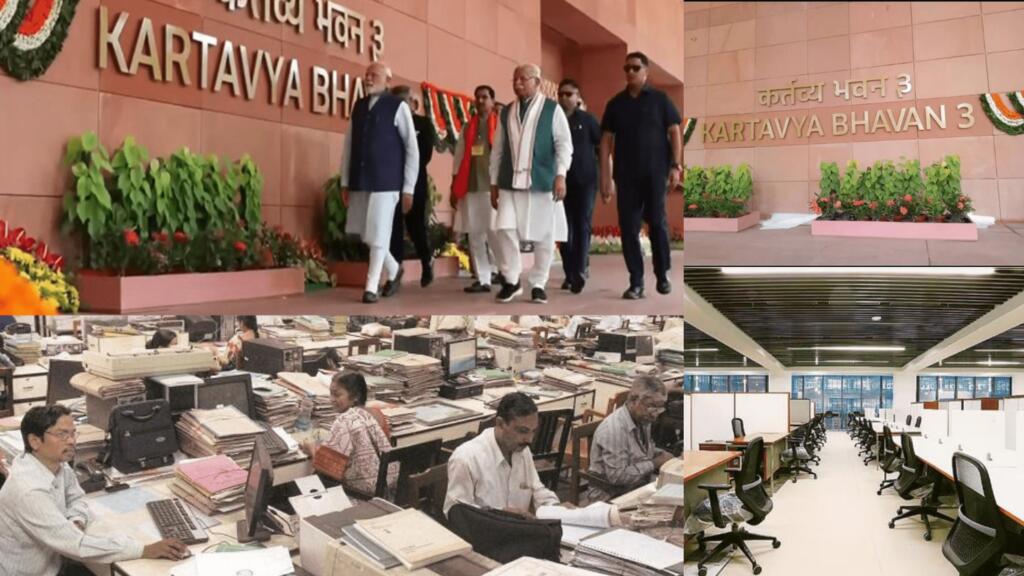
Prime Minister Narendra Modi on Wednesday inaugurated Kartavya Bhavan, the first of ten planned Common Central Secretariat (CCS) buildings under the modernized Central Vista project. Spread over 1.5 lakh square metres, the facility houses major ministries including Home Affairs, External Affairs, Rural Development, Petroleum & Natural Gas, MSME, DoPT, and the Principal Scientific Adviser’s office. Equipped with the latest conference halls, surveillance systems, and amenities, Kartavya Bhavan is designed to streamline decision-making and foster synergy across departments delivering on the promise of a modern and efficient public service.
Despite the high-tech infrastructure and the visionary intent behind Kartavya Bhavan, a forum of Central Secretariat Service (CSS) officers has raised objections not about pending files or administrative delays, but over absence of private cabins. The officers many of whom worked inside Central Vista’s previous buildings have now demanded segregated rooms for Under Secretaries and Section Officers to protect privacy. The CSS Forum claims the open-plan layout consisting of low separators and shared work halls hampers confidentiality and focus.
Yet, in a modern governance environment, shared workspaces are standard. It raises the uncomfortable question: are our civil servants prepared to adapt to a no-nonsense, results-oriented work culture or are they simply crying poor reception because they can’t carry out old “office-office” routines?
Babus Claim ‘Loss of Critical Thinking’
The officers’ letter to the PMO emphasized that the open layout “adversely affects focus and critical thinking,” and compromises handling of sensitive matters. However, many of these same officials were part of the bureaucratic machinery that delayed infrastructure and reforms for decades. Now, they appear disgruntled by modest arrangements in a world-class building. Do they truly require isolation to process files or are they simply yearning for personal space to linger, gossip, or nap away from scrutiny?
Ministry insiders are deeply frustrated. Kartavya Bhavan is not meant to be a clubbed office it’s a symbol of dynamic governance. Creating windowed cabins for select officers runs counter to the spirit of collective responsibility. Senior officers with cabins in old setups may now feel slighted—but democracy demands adaptability, not entitlement in air‑conditioned enclosures.
A Wake-Up Call to Officials
Kartavya Bhavan underlies the government’s commitment to Atmanirbhar Bharat not just in manufacturing but in administration. It is built to centralize ministries, reduce delays, encourage inter-ministerial communication, and eliminate bureaucratic silos. This is a forward‑looking vision. Instead of congratulations or gratitude, CSS leaders chose to lodge complaints, painting themselves as victims of progress.
This attitude threatens to reverse every reform the NDA government has undertaken: digitization of services, reduced file time, citizen-first portals, and unified secretariat structure. Kartavya Bhavan is meant to amplify those reforms not be derailed by nervous officials clinging to the past.
India Deserves Modern Officers, Not Comfort‑Seeking Bureaucrats
Kartavya Bhavan signals a turning point in how central governance functions intended not for self-serving red tape, but for responsive, transparent public service. It’s a symbol of a government eager to move ahead boldly. Yet, some civil servants are trying to convert this symbol into a reason to retreat into comfort zones they no longer deserve.
If our officers cannot adapt to shared spaces and modern collaborative environments, they risk becoming obstacles to national efficiency. Instead of writing cautionary letters to the Prime Minister, they should uphold the vision of Kartavya Bhavan where duty, not privilege, defines public service. After all, the people of India expect governance to rise not to clamor for cushioned cabins.