
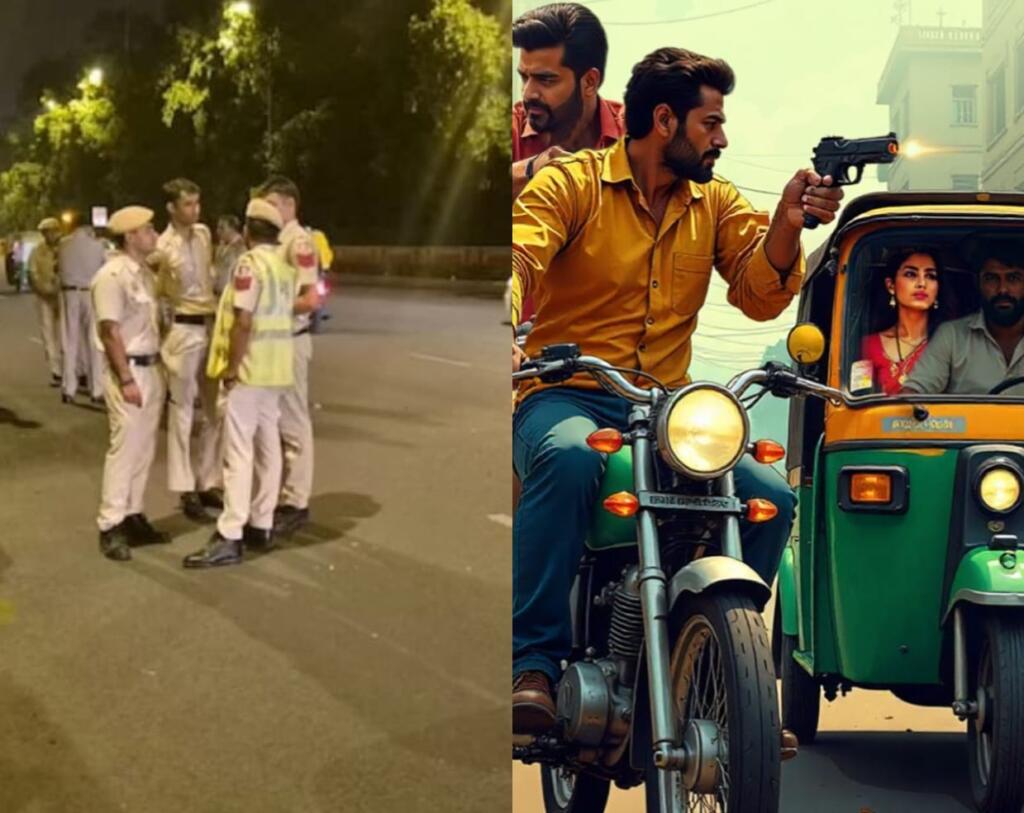
In a deeply disturbing incident that raises urgent questions about women’s safety and the gaps in safeguarding mechanisms, a woman in Delhi’s Vasant Vihar was shot in the chest by a man who was out on interim bail; the very man she had accused of raping her just a year ago. The man is identified as 30 year old Abuzair Safi. The woman, a salon manager, is now recovering at AIIMS Trauma Centre, stable but wounded not just physically, but by the very system that promised her protection.
Safi, along with his accomplice Aman Shukla, reportedly approached the woman on a black motorcycle on Wednesday and opened fire. He had been granted bail in a rape case she filed last year, a freedom he used not to rebuild his life or contest charges in court, but to silence her.
Police arrested Shukla using CCTV footage and digital surveillance tools, while Safi was apprehended a day later with the firearm used in the shooting. A case has now been registered under charges of attempted murder, common intention, and relevant sections of the Arms Act.
But the larger question now stares us in the face: What happens when a rape survivor does everything the system asks of her; reports the crime, cooperates with investigation, and is then left exposed to retaliation?
It raises question that we must ask:
What is the threshold for denying bail in crimes of this nature?
Are current safeguards for survivors even remotely adequate?
Do we underestimate the risk posed by accused individuals who may have both motive and means to retaliate?
The survivor had reportedly ignored Safi’s repeated attempts to contact her, a decision any court might interpret as self-protective. Yet, those ignored messages, police say, only fueled his rage. And so, out on bail, with a gun in hand, he tried to end her life.
It is worth reflecting on what that says about our approach to justice. Interim bail is, by design, a balancing act between the rights of the accused and the interests of justice. But how often is that balance tilted at the expense of those already vulnerable?
The law presumes innocence until guilt is proven. But can a system that grants liberty to the accused afford to ignore the cost borne by the accuser? Especially when that liberty is misused not just to escape, but to attack.
The judicial process is slow, as it must be to ensure fairness. But delay, in such cases, is not neutral; it is dangerous. It leaves survivors in limbo, their safety contingent on the very men they’ve accused. This incident is not just an act of violence; it is an indictment of a justice system that fails to anticipate the risk survivors live with every day.
And so, we are left to ask: When a survivor is shot for filing a case, what message does that send to the next woman who’s considering coming forward?
If safety is not guaranteed after reporting rape, if silence seems safer than justice, then something is fundamentally broken.