
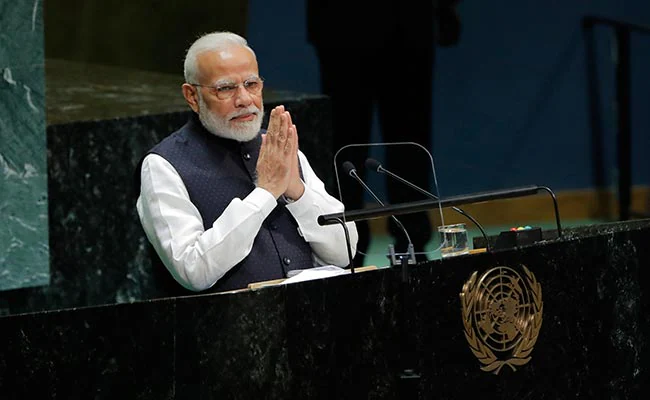
India is yet to decide on Prime Minister Narendra Modi’s participation in the United Nations General Assembly (UNGA) in September, despite his name appearing on the provisional list of speakers. Sources familiar with the matter confirmed on Wednesday that the final call will be taken closer to the date of the high-level session in New York.
The speculation surrounding Modi’s potential visit intensified after Ukrainian President Volodymyr Zelensky hinted at a planned meeting with him on the sidelines of the UNGA. However, insiders suggest such a trip appears “very unlikely” at present.
Provisional List Names Modi for September 26 Address
According to the UN’s provisional list of speakers, India’s head of government is scheduled to address the General Assembly on the morning of September 26. The high-level debate is set to open on September 23 and conclude on September 29, with the US head of state expected to speak on the opening day.
The list, prepared well in advance in August, prioritises heads of state and government before foreign ministers or other representatives. However, it is not unusual for leaders to withdraw from the session after being initially listed, and Indian officials have pointed out that such changes happen frequently.
Zelensky’s Statement Sparks Speculation
On Monday, President Zelensky took to social media after a phone call with Modi, claiming that the two leaders had planned to meet during the UNGA. This statement further fuelled conjecture about a possible Modi visit to the US, potentially opening the door for diplomatic engagements beyond Ukraine, including with US President Donald Trump.
However, sources in New Delhi remain cautious, noting that scheduling and political considerations, alongside India’s current diplomatic priorities, make the trip far from confirmed.
Trade Disputes and Strained US-India Relations
Relations between India and the US have recently been clouded by trade disputes and geopolitical differences. Trump’s imposition of a 25% reciprocal tariff on Indian goods, along with another penalty of 25% on India for continuing to purchase Russian oil, has created significant friction.
Additionally, Trump has repeatedly accused India of “fuelling the Russian war machine” by buying discounted crude from Moscow. His public insistence that he mediated a ceasefire between India and Pakistan to end four days of hostilities in the past has also been met with disapproval in New Delhi, where officials have maintained that such claims undermine India’s diplomatic position.
Participation Decision to be Made Closer to Date
Officials emphasise that the decision on whether Modi will personally address the UNGA or delegate the task to External Affairs Minister S. Jaishankar will depend on evolving diplomatic priorities and the Prime Minister’s schedule. India has, in the past, been represented by its foreign minister when the Prime Minister chose not to attend.
A Diplomatic Balancing Act
While the provisional UNGA schedule has sparked anticipation of Modi’s appearance, the government’s reluctance to confirm his participation reflects a careful balancing of global engagements and domestic priorities. With ongoing trade tensions with the US and the evolving dynamics of India’s relations with Ukraine, New Delhi appears intent on weighing the benefits of such a visit against the potential diplomatic pitfalls. The final decision is expected only when the timing, agenda, and strategic gains align in India’s favour.