





















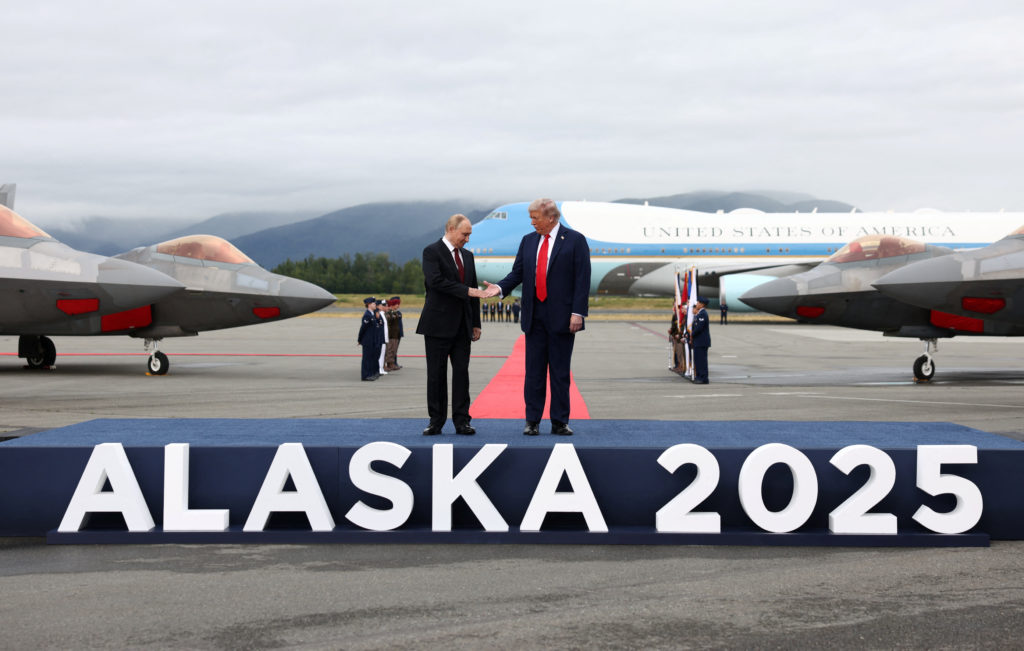
The world watched closely as US President Donald Trump and Russian President Vladimir Putin came face-to-face in Alaska for their first in-person meeting in five years. Against the backdrop of the deadliest conflict in Europe since 1945, the summit was steeped in history, symbolism, and high stakes. While the meeting produced no breakthrough to halt the Ukraine war, it did mark a crucial step toward restarting dialogue between two of the world’s most powerful leaders. Trump, reaffirming his stance, declared: “There’s no deal until there’s a deal,” even as Putin extended an unexpected invitation to Moscow.
A Historic Summit in Alaska: Setting the Stage for Talks
The summit, held at Joint Base Elmendorf-Richardson in Anchorage, Alaska, carried immense symbolic weight. Alaska, once Russian territory until its purchase by the United States in 1867, remains geographically close to Russia and historically significant as a Cold War frontier. Hosting Putin there was seen as a bold signal of renewed engagement after years of frosty ties.
For nearly three hours, Trump and Putin, accompanied by two senior officials each, engaged in closed-door discussions. The meeting was described as “mutually respectful” and “constructive,” with both leaders agreeing on several points but leaving key issues unresolved. The joint press conference that followed was brief, guarded, and carefully worded—underscoring the sensitivity of the ongoing Ukraine conflict.
Trump’s Cautious Optimism: “No Deal Until There’s a Deal”
In his remarks, US President Donald Trump struck a cautiously optimistic tone. He emphasized that while “many points were agreed to,” a few significant ones remained unsolved. “There is no deal until there is a deal,” he reiterated, suggesting progress had been made but not enough to finalize a resolution.
Trump stressed that Ukraine remained at the center of discussions, highlighting his push for a ceasefire and a commitment from Putin to directly engage with Ukrainian President Volodymyr Zelenskyy. He left open the door for future talks, noting a “very good chance” of getting to a deal, while acknowledging that any breakthrough must involve direct assurances from Moscow.
The most notable exchange came when Trump hinted at another possible meeting. Putin, smiling, responded in English: “Next time in Moscow.” This simple remark captured the spirit of cautious optimism that defined the Alaska summit.
Putin’s Stance: Ukraine as a “Tragedy” and Security Concern
Russian President Vladimir Putin used the platform to underline his long-standing narrative: that the conflict in Ukraine stems from fundamental security threats to Russia. He described the war as a “tragedy” and reiterated that lasting peace requires addressing its “primary causes.”
“We have always considered the Ukrainian nation a brotherly nation. Everything that’s happening is a tragedy for us,” Putin said, stressing Moscow’s “sincere interest” in ending hostilities. However, he warned against any attempts by Kyiv or European capitals to “sabotage” the nascent progress made in Alaska.
Perhaps most strikingly, Putin declared that the Ukraine conflict “would never have started” if Donald Trump had been president in 2022. He claimed that during his final interactions with the previous US administration, he had warned of “serious consequences in the form of military actions” if the situation was mishandled. His comments echoed Trump’s long-standing assertion that the war would not have broken out under his leadership.
Symbolism, Gestures, and the Politics of Diplomacy
The Alaska talks were not only about substance but also about symbolism and gestures. The choice of venue—a Cold War-era hub once central to intercepting Soviet aircraft—was laden with historical resonance. By hosting Putin there, Trump sent a signal of openness while grounding the meeting in shared history.
In a notable post-summit gesture, Putin laid flowers at the graves of Soviet pilots who died in Alaska during World War II while ferrying US aircraft to the USSR under the lend-lease program. This act of remembrance underscored the historical ties between the two nations, even amid modern tensions.
The summit format itself was adjusted from the original one-on-one plan to a “three-on-three” format. Trump was joined by Senator Marco Rubio and businessman Steve Witkoff, while Putin was accompanied by Foreign Minister Sergey Lavrov and aide Yuri Ushakov. The expanded format suggested a cautious approach—more structured than Trump’s controversial 2018 Helsinki meeting with Putin.
Despite the symbolism and diplomatic courtesies, the meeting produced no tangible agreement. Both leaders offered broad, vague statements of progress but avoided specifics and declined to take questions from the press.
Key Takeaways: What the Alaska Summit Means Going Forward
The Alaska summit, while not a breakthrough, marked a tentative reset in U.S.-Russia dialogue. Several key takeaways emerged from the meeting:
No Deal Yet: Trump emphasized that “very few issues” remain unresolved but refused to declare progress as a deal. The central sticking points appear to involve Ukraine’s sovereignty and territorial integrity.
Putin’s Narrative: Putin reiterated that the war is rooted in security threats to Russia, stressing that peace must address these causes.
Invitation to Moscow: Putin’s unexpected invitation for Trump to continue talks in Moscow adds a new dimension to the evolving diplomacy.
Exclusion of Europe and Ukraine: Neither Ukraine nor European leaders were included in the talks, raising concerns in Kyiv and across Europe about being sidelined.
Peace vs. Concessions: Trump has previously suggested Zelenskyy may need to make “hard choices” on territorial concessions, a position likely to remain controversial.
While no immediate resolution was reached, the summit opened a door to further discussions and injected cautious optimism into the otherwise deadlocked Ukraine peace process.
A Step Toward Dialogue, But the Road Remains Long
The Alaska summit between US President Donald Trump and Russian President Vladimir Putin was more symbolic than substantive, but it carried significant diplomatic weight. It showcased a willingness to re-engage, highlighted the importance of dialogue, and underscored the personal dynamics between two powerful leaders.
For Trump, the message was clear: “There is no deal until there is a deal.” For Putin, the emphasis remained on addressing Russia’s security concerns while presenting himself as open to peace.
While the meeting ended without a breakthrough, it set the stage for continued engagement—possibly in Moscow. The world will watch closely whether this tentative restart of U.S.-Russia diplomacy can deliver what both leaders claim to want: an end to Europe’s deadliest conflict since World War II.





