





















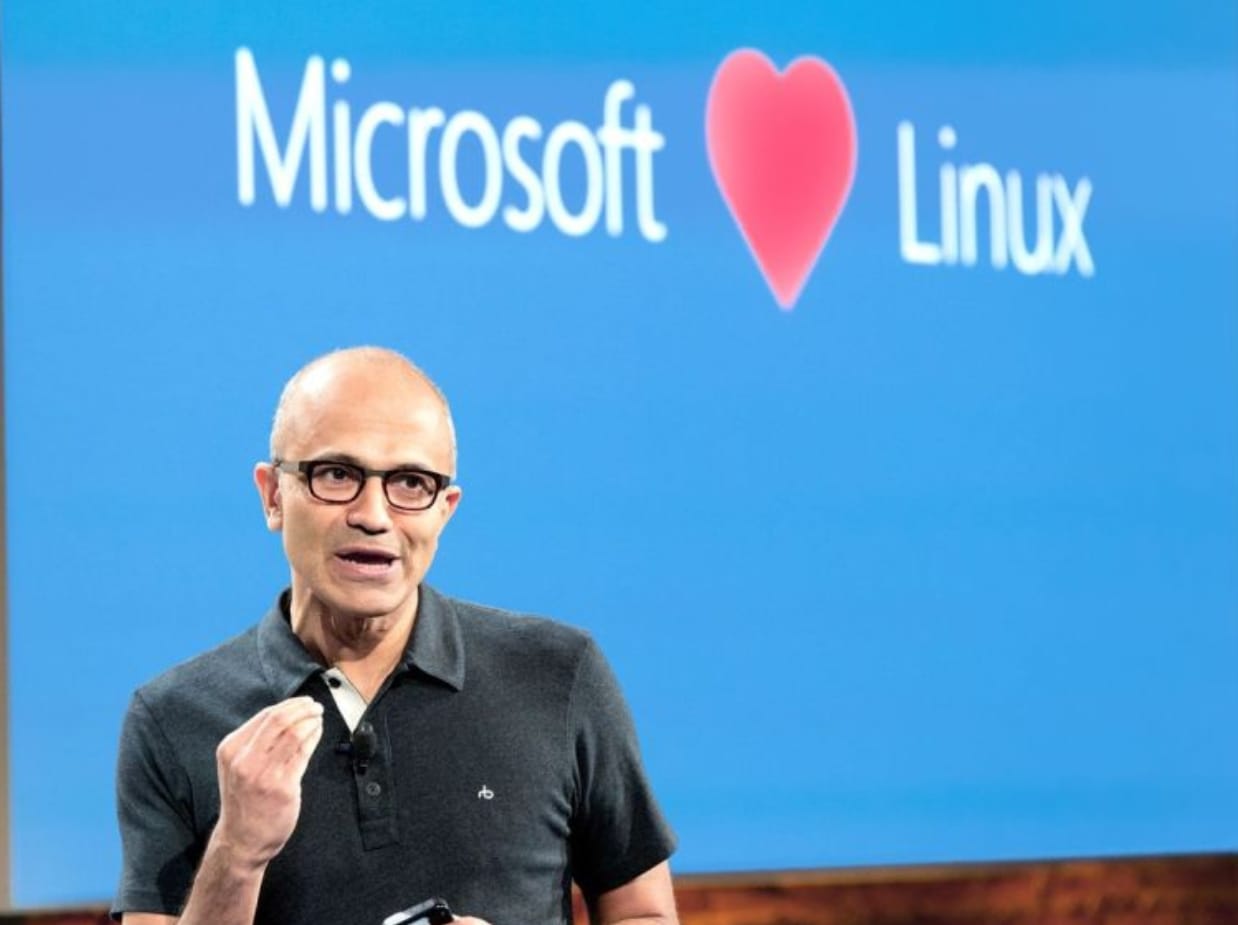
The situation involving Microsoft blocking Nayara Energy’s data, reportedly at the EU’s request, raises significant concerns about the weaponization of corporate dominance and services. This incident highlights the potential for foreign entities to exert control over critical Indian infrastructure and data, bypassing national sovereignty. The call for India to adopt alternatives like Linux on desktop computers and servers and its own cloud storage services, is a direct response to this vulnerability. It suggests a strategic shift towards open-source solutions to mitigate dependency on foreign corporations and enhance data security, asserting technological independence in a complex geopolitical landscape. This move could be a step towards a more self-reliant digital ecosystem for India.
Introduction: The Computing Imperative for India
India’s exponential growth in digital governance, defense, industrial automation, artificial intelligence, Internet of Things (IoT), and citizen services demands a secure, cost-effective, and sovereign computing infrastructure, specially the operating systems. In this landscape, the two most widely used operating systems are Microsoft Windows and Linux.
While Microsoft Windows dominates desktop and laptop environments, Linux powers most backend IT infrastructure—ranging from smartphones to web servers, defense systems, and embedded industrial and consumer devices. India’s future in secure governance, industrial expansion, and digital innovation is critically dependent on choosing the right foundation.
Microsoft Windows has achieved dominance not due to technical superiority, but by manipulating the global operating system market through bundling, anti-competitive original equipment manufacturer (OEM) agreements, patent threats, misinformation campaigns, and aggressive lobbying. These tactics have blocked Linux adoption, stifled innovation, and entrenched vendor lock-in across public and private sectors.
This has resulted in foreign control over critical Indian digital infrastructure, backed by opaque, closed-source code and bound by United States laws, a grave risk to India’s digital sovereignty and economic autonomy.
Microsoft’s Market Capture and Anti-Competitive Tactics
Microsoft’s rise to dominance was enabled by:
Bundling Microsoft Windows with nearly all new personal computers
Exclusive OEM agreements that limited Linux distribution
Business Software Alliance (BSA) audits and legal threats to pressure license purchases
Misinformation (Fear, Uncertainty, Doubt or FUD) campaigns to discredit Linux
Bribing decision-makers in governments and corporations to enforce Microsoft Office formats as national standards
Filing and threatening patent lawsuits against Linux developers to discourage open-source adoption
These strategies allowed Microsoft to monopolize computing globally, leveraging its position to influence policymaking, suppress alternatives, and entrench its market share. As a U.S. company, its dominance aligns with American strategic and economic interests, and poses a risk of digital coercion against other nations.
Strategic Risks of Using Microsoft Windows
Security Concerns:
Frequent vulnerabilities, undisclosed backdoors, and regular virus and cybersecurity attacks point to inherent instability and software flaws. These vulnerabilities may not be accidental—they could be intentional backdoors left open for future exploitation and foreign surveillance.
Legal Exposure: Subject to U.S. legislation like the CLOUD (Clarifying Lawful Overseas Use of Data) Act, which permits foreign data access
Cost Overhead: Recurring licensing, forced upgrades, high maintenance
Stability Risks: Downtime due to heavy updates, performance lags, system crashes
Weaponization Threat: Potential for U.S. to disable systems remotely (e.g., denial of GPS in Kargil, SWIFT sanctions)
Infrastructure Warfare: Systems controlling utilities, transportation, finance, etc., could be remotely compromised
Linux: The Secure, Sovereign Alternative
Linux is the world’s most reliable and open-source operating system. It is the backbone of:
Supercomputers:
100% of the world’s top 500
Cloud Platforms:
Amazon Web Services (AWS), Google Cloud, Microsoft Azure (all Linux-based)
Embedded Systems:
Smart grids, drones, CNC (Computer Numerical Control) machines, routers
Defense and Aerospace: Indian Space Research Organisation (ISRO), Defence Research and Development Organisation (DRDO), and the U.S. National Aeronautics and Space Administration (NASA)
Smart Devices:
Android smartphones, wearables, medical instruments
Even Microsoft runs internal tools on its own Linux-based distribution (CBL-Mariner), proving Linux’s superiority and indispensability.
Snapshot Comparison: Microsoft Windows vs. Linux
Feature- Microsoft Windows
Linux (Open Source)
Ownership- Microsoft Corporation (USA)
Community-driven, not owned
Licensing- Paid, recurring
Free or minimal cost
Transparency- Closed-source
Fully auditable
Security- Frequent exploits
High resilience, fast patches
Vendor Lock-in- High
None
Customization- Limited
Full
Supercomputing Usage- Zero
100%
IoT/Cloud Deployment- Partial
Dominant
Recalculated National Cost Savings
Assumptions:
Estimated public-sector and government PC sales: 5 million annually
Estimated cost of Microsoft Windows and associated software per PC: ₹14,000 (includes Microsoft Windows, Microsoft Office, antivirus, PDF tools)
Total Avoidable Annual Expense: 5 million × ₹14,000 = ₹7,000 crore (approximately USD 850 million)
These savings could be utilised for:
Fund 200,000 Linux-based smart classrooms
Build 15,000 primary health centers
Equip all government high schools with digital labs
3× the Ministry of Earth Sciences’ annual budget
1.5× annual allocation for the Skill India Mission
ICFOSS Report: The International Centre for Free and Open Source Software estimated that migrating all schools in India to Free and Open Source Software (FOSS) like Linux could alone save ₹8,254 crore (USD 1.3 billion), as per report, “Economic Impact of Free and Open Source Software Usage in Government,” published in June 2015 on research by Prof. Rahul De of Indian Institute of Management Bangalore.
Strategic Justification for India’s Full-Scale Linux Migration
Adopting Linux nationwide delivers:
Digital Sovereignty: Freedom from foreign tech control
Enhanced Security: Open code reduces surveillance risk
Innovation Ecosystem: Encourages software experimentation and collaboration
Economic Efficiency: No license fees, longer-lasting hardware, reduced maintenance
Indigenous Empowerment: Fuels Make in India and Atmanirbhar Bharat programs
Most of India’s national digital systems—Aadhaar, Unified Payments Interface (UPI), Goods and Services Tax Network (GSTN), state-level Management Information Systems (MIS), and ISRO platforms—already run on Linux. However, desktop systems used by students, bureaucrats, and administrators remain tethered to Windows.
Without Linux-trained professionals, India risks an invisible choke point in scaling its digital infrastructure.
National Need for Linux-Literate Human Capital
Linux proficiency is now critical in:
Defense and aerospace
Semiconductor design
Industrial Internet of Things (IIoT)
Artificial intelligence, robotics, cybersecurity
Smart city infrastructure
Action Points:
Integrate Linux into school and college STEM (Science, Technology, Engineering, Mathematics) curricula
Train teachers and faculty to use and develop on Linux
Offer Linux certifications under the Skill India Mission
Encourage Common Services Centres (CSCs) and Industrial Training Institutes (ITIs) to teach Linux
Consumer and Legal Protections
To ensure accountability:
Bring all commercial software under the Consumer Protection Act and Information Technology Act
Mandate full refunds and business loss compensation if software fails to deliver as advertised
This will encourage the development of dependable software and protect users from coercive licensing and failure-prone products.
Linux in Embedded, IoT, and Industrial Domains
Linux dominates in:
Power distribution and smart grids
Electric vehicle ecosystems and smart transportation
Robotics and machine automation
Healthcare instrumentation and diagnostics
Telecommunications and national infrastructure
Promoting Linux use in these sectors ensures affordability, adaptability, and strategic independence.
Roadmap for National Migration to Linux
Phased Implementation:
Begin with pilot migrations in select departments, public-sector undertakings, and state IT boards
Gradually expand to all ministries and nationwide government units within 3–5 years
Skill Development:
Launch a National Linux Skills Development Program
Offer multilingual certifications and community training hubs
Support Infrastructure:
Build a domestic Free and Open-Source Software (FOSS) ecosystem
Develop an Indian Linux distribution with Indian language interfaces and local applications
Ensure 24×7 regional support helplines and documentation
Government Leadership:
Mandate FOSS in all government procurement
Install Linux in all new school computer labs, public IT centers, and training institutes
Strategic Recommendations
Policy Directive: Enforce Linux-first policy for all public digital infrastructure
PC Hardware Reform: Mandate sale of computers with no OS or pre-installed Linux
Curriculum Modernization: Replace Microsoft-only labs with Linux and open-source software environments
Skill Mission Integration: Include Linux in Digital India and Skill India missions
Startup Promotion: Offer incentives to Linux-based Indian software firms
Procurement Reform: Use open standards in all government IT contracts
Legal Accountability: Amend laws to penalize non-performing software vendors
Annual Compliance Audit: Evaluate national digital sovereignty and FOSS adoption progress
Conclusion: Linux as a Pillar of Sovereign Digital India
India must break its dependence on foreign, closed-source software that poses financial, legal, and national security risks. Linux is the world’s technological foundation, it is time India uses it to build a sovereign, secure, and innovative digital future.
Let India own its code. Let India lead the open-source revolution.