
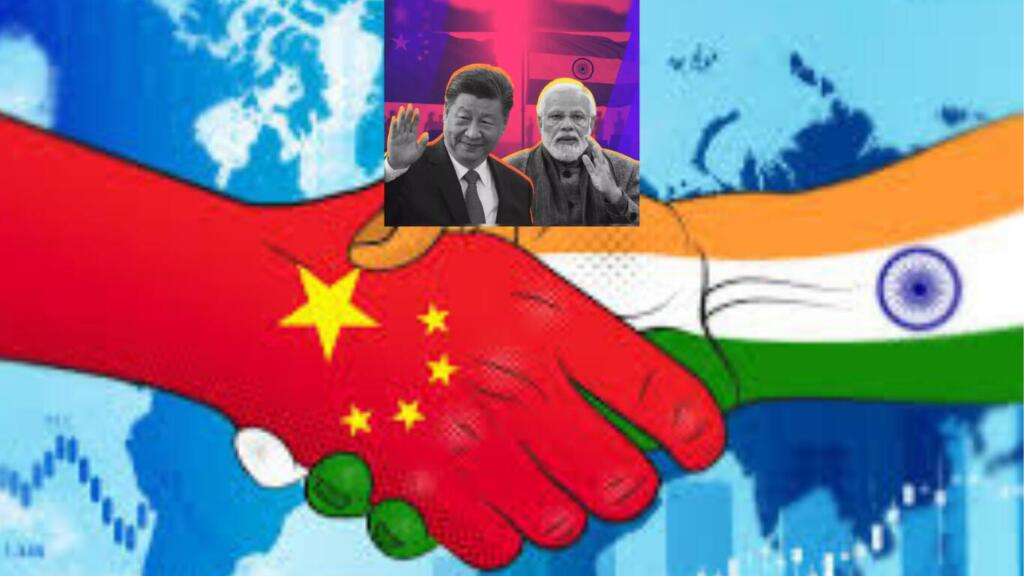
When Prime Minister Narendra Modi met Chinese President Xi Jinping on the sidelines of the Shanghai Cooperation Organisation (SCO) Summit in Tianjin, it marked their first bilateral interaction in nearly a year. The meeting drew global attention as the two Asian giants attempted to cautiously reset relations after years of mistrust, border tensions, and China’s close dealings with Pakistan.
In his opening remarks, President Xi employed a metaphor that made headlines worldwide. He declared that it was time for the “dragon and the elephant to come together,” underscoring that cooperation between India and China was critical for Asia’s peace and the progress of the developing world. Xi described the two nations as civilizational powers and urged that they embrace friendship, good-neighbourliness, and long-term strategic patience.
“China and India are two ancient civilizations and the world’s most populous countries. We share the historical responsibility of improving the well-being of our peoples, promoting solidarity in the Global South, and advancing the progress of human society,” Xi said. He further highlighted the 75th anniversary of China-India diplomatic relations, urging both nations to take a strategic view amid what he called a “fluid and chaotic” international environment.
Modi’s Three-Word Diplomacy
Prime Minister Modi, however, responded with clarity that resonated strongly from an Indian perspective. In just three words—trust, respect, and sensitivity—Modi conveyed India’s guiding principles for future engagement with China. Each word was carefully chosen to draw India’s red lines.
“Trust” was a reminder that agreements must not be violated, a reference to China’s past actions along the Line of Actual Control (LAC). “Respect” emphasized equality and sovereignty, making it clear that India would not tolerate coercive diplomacy. “Sensitivity” was aimed at China’s ties with Pakistan, support for anti-India elements, and repeated disregard for India’s territorial concerns.
Modi stressed that the welfare of 2.8 billion people, nearly one-third of humanity, depended on cooperation between India and China. But he underlined that such cooperation could not be one-sided or built on pressure tactics. “We are committed to taking our relations forward on the basis of mutual trust, respect, and sensitivity,” he said.
Symbolism of the Dragon and the Elephant
Xi’s metaphor of the dragon (China) and the elephant (India) at SCO symbolizes the potential for both countries to emerge as engines of growth and stability. Together, India and China hold demographic, economic, and cultural weight unmatched by any other bilateral partnership. Yet, while Xi invoked symbolism, Modi’s response reflected pragmatism rooted in real challenges.
Border stability remains fragile, despite disengagement after the Galwan clashes of 2020. For India, unresolved territorial disputes, Chinese obstruction at multilateral forums, and Beijing’s deepening military and economic cooperation with Pakistan are unresolved trust deficits. Modi’s three-word formula was thus less about lofty rhetoric and more about practical preconditions for genuine partnership.
Kailash Mansarovar Yatra: A Symbolic Restart
Among the tangible outcomes at the SCO meeting, Modi announced the resumption of the Kailash Mansarovar Yatra, suspended since 2020. This annual pilgrimage, deeply revered by Hindus, Buddhists, and Jains, involves a sacred journey to Mount Kailash and Lake Mansarovar in Tibet. Traditionally, pilgrims traveled via two routes—the Lipulekh Pass in Uttarakhand and the Nathu La Pass in Sikkim.
The suspension of the Yatra during COVID-19 coincided with rising border tensions, reflecting the freeze in ties. Its resumption signals a limited thaw and carries immense cultural and spiritual importance. For thousands of Indian devotees, the reopening of the Yatra is not only a religious milestone but also a subtle indicator that both governments are willing to allow people-to-people exchanges to restart.
A Cautious Path Ahead
While the optics of the SCO meeting suggested conciliatory tones, underlying mistrust remains difficult to erase. China’s continued presence near the LAC, its investments in Pakistan-occupied Kashmir, and its strategic ambitions in the Indian Ocean remain pressing concerns for New Delhi.
For India, the road ahead is one of cautious engagement. Modi’s emphasis on trust, respect, and sensitivity has set clear boundaries for the relationship. Unless China demonstrates commitment to these principles, India is unlikely to move beyond cautious cooperation.
Walking Together, But Carefully
The SCO meeting in Tianjin was not about lofty friendship but about carefully calibrated messaging. Xi Jinping may speak of dragons and elephants walking together, but Modi reminded the world that India’s cooperation comes with conditions. By placing trust, respect, and sensitivity at the core of his message, Modi has ensured that India engages China from a position of strength, not weakness.
The “dragon and the elephant” may indeed walk together—but only if China acknowledges India’s concerns and respects its sovereignty. For now, both sides appear ready to test the waters of cooperation, but India has made it clear: friendship cannot come at the cost of national interest.