
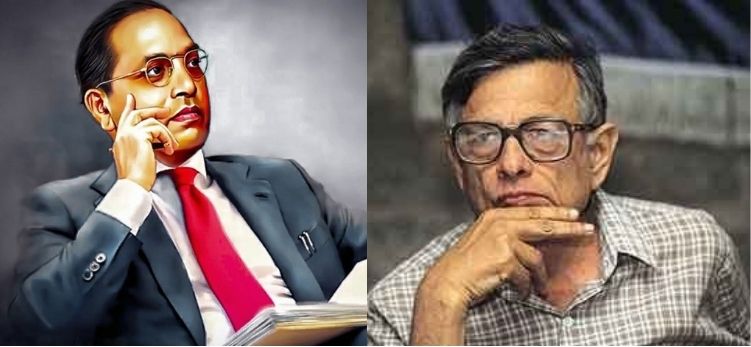
In India’s complex political landscape, Dr. Bhimrao Ramji Ambedkar stands apart- a towering figure for Dalits, a constitutional architect for the nation, and a relentless advocate of Dalit rights. His image is celebrated, his ideas are studied, and his life story is venerated as a triumph over centuries of oppression.
Yet a recent remark from Irfan Habib, the Marxist historian considered a doyen of the Left intellectual establishment, has sparked a storm. Speaking in a recent interview, Habib said:
“Back then, no one respected Ambedkar. He’s only getting recognition now. He sided with the British, not the national movement.”
The blunt assessment has set off a war of words between Ambedkar’s defenders and those who view history through the Left’s ideological prism.
Habib’s words hit a raw nerve for Dalit activists and Ambedkarite groups. For them, questioning Ambedkar’s “nationalism” is not an academic critique but an affront to identity itself.
Social media platforms saw a surge in posts condemning what many called an attempt to “erase” Ambedkar’s unique role in the freedom era.
Ambedkar and the Left
Marxist historians have long approached Ambedkar with ambivalence. While acknowledging his fight against caste, they often situate him outside the mainstream nationalist narrative. Habib’s remark reflects this position: Ambedkar, they argue, focused on securing political safeguards for Dalits even if it meant engaging with colonial authorities; a stance that clashed with the Indian National freedom struggle.
On the ground, Ambedkar’s image has moved far beyond academic debate. Across India’s villages, towns, and cities, his statues are garlanded daily, his portraits adorn living rooms, and his quotes are painted on public walls. For many Dalits, he is a messiah, the liberator who gave them constitutional rights and a vocabulary of dignity.
Any suggestion that he was “on the wrong side” of history is seen as deeply offensive.
The controversy has political resonance. Dalit votes are fiercely contested across India, especially in states like Uttar Pradesh, Maharashtra, and Bihar. A perceived insult to Ambedkar can quickly become a rallying cry. Parties such as the BJP, BSP, and even sections of the Congress have historically positioned themselves as protectors of Ambedkar’s legacy.
In this charged climate, Habib’s comment risks widening the rift between Dalit movements and the Left; a relationship that has always been more tactical than ideological.
Ultimately, the debate over whether Ambedkar “sided with the British” is not just about archival evidence or historical interpretation. It is about ownership of a legacy- whether the nation remembers him as a constitutional genius who stood apart from Gandhi and Nehru, or as a marginal figure elevated only in recent decades.
For now, one thing is clear: Habib’s words have reopened an old wound, one that cuts across academic, political, and emotional lines. And in India’s volatile politics of memory, such wounds rarely heal quietly.