
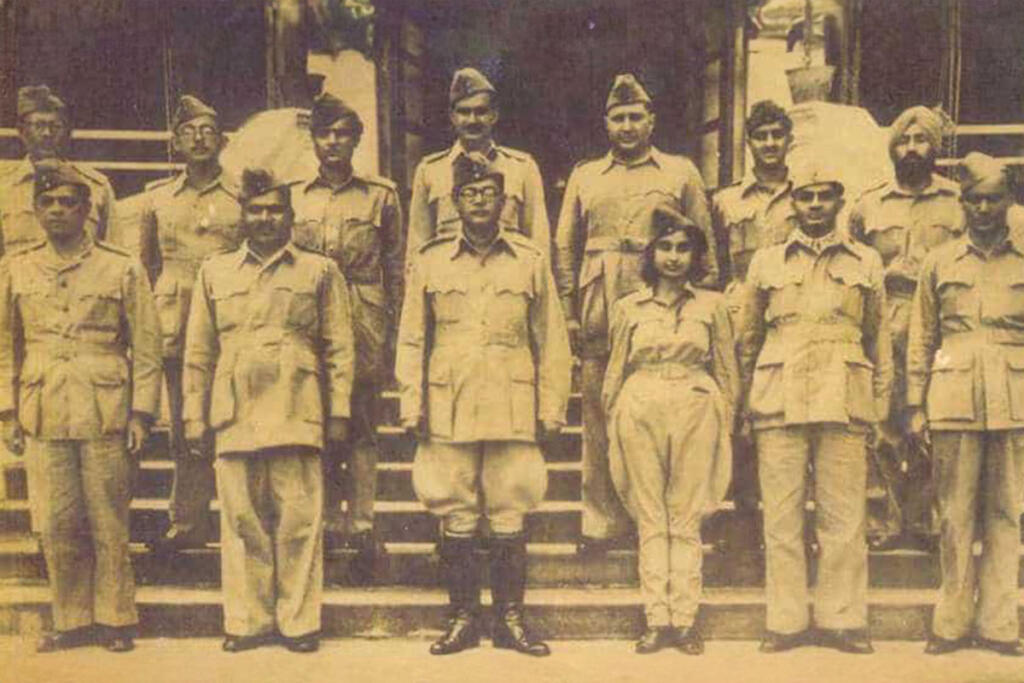
Few figures in India’s freedom struggle inspire as much reverence and mystery as Netaji Subhas Chandra Bose. A man who dared to challenge the might of the British Empire, Bose’s fiery leadership of the Indian National Army (INA) and his vision of an armed uprising set him apart from his contemporaries. His words in 1943 reflected both foresight and conviction: “India and Japan have in past been bound by deep cultural ties which are about 20 centuries old. In recent times, these cultural relations have been interrupted… It is however certain that when India is free these relations will be revived.”
Yet, ironically, it is Japan that holds the last pieces of the puzzle of Bose’s life and death. While other countries have declassified their documents, Japan continues to keep three crucial files on Netaji secret, even after almost 80 years. This secrecy has left space for speculation, conspiracy theories, and unanswered questions from the alleged plane crash in Taiwan to theories of his survival in disguise. The time has come for clarity.
Japan’s Role in Netaji’s Final Days
By mid-1945, it had become clear that the war in the eastern hemisphere was nearing its end. Netaji, who had led the INA with courage, began working with his inner council on plans for underground activity within India. His strategy was bold: mobilize demobilized soldiers, workers from ordnance factories, peasants, and left-leaning political groups for an armed revolution.
While Bose wished to shift to Soviet Russia for strategic reasons, Japan outright refused his request in June 1945. Instead, Tokyo urged him to stay and fight “in the spirit of live or die together.” Eventually, plans were drawn up to secretly drop Bose back in India, possibly in Assam or Bengal, or route him through Yunnan near the Burmese border.
According to Debnath Das, one of his close associates, Japan even agreed to facilitate his travel to Bengal. On this understanding, Bose boarded a flight to Saigon, as the Japanese claimed it would be easier for him to move towards India from there. But instead of returning to his homeland, Netaji’s journey would end in the greatest mystery of India’s independence struggle.
The Plane Crash Theory: Fact or Fabrication?
On August 18, 1945, Japan announced that Netaji had died in a plane crash at Taihoku (now Taipei). However, from the very beginning, doubts have surrounded this claim. Eyewitnesses, including Habibur Rahman, Nonogaki, and Takahashi, reported hearing cannon shot-like explosions before the aircraft nose-dived. Could this have been a mere propeller malfunction, or was the plane targeted?
Key questions remain unanswered:
-
Why did the engine suddenly blow up at Taihoku, when take-offs at Saigon and Tourane were smooth?
-
Why did the crash occur even after 600 kilograms of ammunition had been offloaded?
-
Was it truly a mechanical failure, or did an external shell strike the engine?
Japan’s own investigative reports confirmed Bose’s death but failed to explain what actually caused the crash. And herein lies the heart of the mystery hidden in Japan’s three secret files on Netaji. Without their release, the truth remains incomplete.
False Narratives and Theories of Survival
In the absence of hard evidence, Bose’s disappearance has fueled decades of speculation. Some believe there was no crash at all. Others argue that he was captured or even killed by Communists in the Soviet Union. Still others maintain that Bose returned to India incognito, living as a sadhu for decades. There are even groups convinced that Netaji never died.
But what is undeniable is this: the lack of transparency has allowed false narratives to fester. The Japanese government, by withholding critical files, has kept alive an unnecessary cloud of mystery over one of India’s greatest leaders.
India–Japan Ties: A Moment for Truth
Today, India and Japan share a Special Strategic and Global Partnership, rooted in centuries of civilizational contact. From Bodhisena, the Indian monk who consecrated the Great Buddha at Todaiji Temple in 752 AD, to cultural icons like Swami Vivekananda, Rabindranath Tagore, Rash Behari Bose, and Justice Radha Binod Pal, India’s imprint on Japan is deep and lasting.
Post-war, ties grew stronger. India signed a separate Peace Treaty with Japan in 1952, showing goodwill when the world still shunned Tokyo. Today, under Prime Minister Narendra Modi’s Act East policy and Indo-Pacific vision, cooperation with Japan spans trade, defense, technology, and cultural exchange.
And yet, amidst this growing partnership, the silence over Netaji’s files is glaring. As Modi undertook a visit to Japan now voices, are growing stronger, urging India to bring back Netaji’s remains from Tokyo’s Renkoji temple.
Time to Release the Truth
For too long, the mystery of Netaji Subhas Chandra Bose’s last days has been clouded by speculation, secrecy, and half-truths. Japan’s refusal to declassify three crucial files only deepens the suspicion. If India–Japan relations today are indeed at their zenith, then what better way for Tokyo to honor this friendship than by releasing the truth?
It is time to end the myths and false narratives. Netaji was last seen with the Japanese; it is Japan that owes history an explanation. The man who gave his all for India’s freedom deserves clarity, dignity, and closure. The release of these files would not only honor Netaji’s memory but also strengthen the spiritual and strategic bond between India and Japan.
For the millions who revere him, for the nation that he fought for, and for history itself the truth about Netaji must finally come out.