









TFIPOST हिन्दी
TFIPOST Global
Tfipost.com
Tfipost.com
No Result
View All Result
  • Premium
  • Politics
    • All
    • Analysis
    • Opinions
    • Trending
    Despite Nehru’s objection, Rajendra Prasad became India’s first President !

    How Nehru Resisted Dr. Rajendra Prasad—from Presidency to Somnath visit  and Beyond

    Nehru’s Erasure of RC Majumdar Stands as a Stark Warning about Power over History

    Nehru’s Erasure of RC Majumdar Stands as a Stark Warning about Power over History

    India Cannot Be Broken and Peace in Bangladesh Cannot Be Built Upon Delusion

    India Cannot Be Broken and Peace in Bangladesh Cannot Be Built Upon Delusion

    Maniben’s Diary: Nehru Proposed Babri Masjid Funding, Patel Said No

    Maniben’s Diary: Nehru Proposed Babri Masjid Funding, Patel Said No

    • Analysis
    • Opinions
    • Trending
  • Economy
    • All
    • Business
    • Economy1
    • Finance
    From Paper-Mandates to eNACH Registration: How Digital Mandates Are Changing Cash Flow

    From Paper-Mandates to eNACH Registration: How Digital Mandates Are Changing Cash Flow

    What is the financial management cycle?

    What is the financial management cycle?

    Smart Investment Planning: Calculating Mutual Fund SIP Growth Easily

    Smart Investment Planning: Calculating Mutual Fund SIP Growth Easily

    Convert ETH to USD Using Price Statistics for Better Trading Decisions

    Convert ETH to USD Using Price Statistics for Better Trading Decisions

    • Business
    • Finance
  • Defense
    • All
    • Defence
    • Strategy
    • Weaponry
    Veterans Deserve More Than Promises: The System Must Match the Soldier’s Sacrifice

    Veterans Deserve More Than Promises: The System Must Match the Soldier’s Sacrifice

    How Ukraine Uses Psychological and Information Warfare to ‘Win,’ and What India Can Learn From This Strategy

    How Ukraine ‘Wins’ the Psychological and Informatiaon War Despite Destruction — Lessons India Cannot Afford to Ignore

    Pakistan’s ‘ship-launched ASBM’ claim doesn’t withstand technical or industrial scrutiny

    Pakistan’s ‘ship-launched ASBM’ claim doesn’t withstand technical or industrial scrutinys

    Borders Can Change: Why Rajnath Singh’s Sindh Remark is India’s New Message to Pakistan

    Borders Can Change: Why Rajnath Singh’s Sindh Remark is India’s New Message to Pakistan

    • Defence
    • Strategy
    • Weaponry
  • Geopolitics
    • All
    • Africa
    • Americas
    • Asia Pacific
    • Europe
    • South Asia
    • West Asia
    End of NATO? US Secretary of State Marco Rubio May Skip Foreign Ministers’ Meet in Brussels for First Time in Two Decades

    End of NATO? US Secretary of State Marco Rubio May Skip Foreign Ministers’ Meet in Brussels for First Time in Two Decades

    ‘Best Fighter In the World’ Dmitry Peskov Pitches For Sukhoi-57 Fighter Jet Ahead of Putin’s Visit to India

    ‘Best Fighter In the World’ Dmitry Peskov Pitches For Sukhoi-57 Fighter Jet Ahead of Putin’s Visit to India

    ‘We Are Ready to Go As Far As India Is’: Ahead of Putin Visit, Kremlin Says India-Russia Partnership Has No Limits

    ‘We Are Ready to Go As Far As India Is’: Ahead of Putin Visit, Kremlin Says India-Russia Partnership Has No Limits

    “Call Him a ‘Man of Peace’ First”: Leaked Call Transcript Reveals Wittkoff’s Step-by-Step Guide to Crack Deal With Trump

    “Call Him a ‘Man of Peace’ First”: Leaked Call Transcript Reveals Wittkoff’s Step-by-Step Guide to Crack Deal With Trump

    • Africa
    • Americas
    • Asia Pacific
    • Europe
    • South Asia
    • West Asia
  • Knowledge
    • All
    • Culture
    • Education
    • History
    • Indology
    Despite Nehru’s objection, Rajendra Prasad became India’s first President !

    How Nehru Resisted Dr. Rajendra Prasad—from Presidency to Somnath visit  and Beyond

    Talom Rukbo Initiated the Donyi–Polo Movement: Bringing Tribal Youth Back to Their Roots

    Talom Rukbo: The Forgotten Hero Who Shielded Arunachal’s Tribal Communities from Religious Conversion

    How Guru Tegh Bahadur The Ninth Sikh Guru Became a Martyr for Religious Freedom

    How Guru Tegh Bahadur The Ninth Sikh Guru Became a Martyr for Religious Freedom

    21 November 1962: Looking Back at the Indo-China war and How it Redefined the Border Equation

    21 November 1962: Looking Back at the Indo-China war and How it Redefined the Border Equation

    • Culture
    • History
    • Indology
  • Law
  • Lounge
    • All
    • Books
    • Cinema
    • Entertainment
    • Food
    • Games
    • Health
    • Lifestyle
    • Satire
    • Sports
    • technology
    • Travel
    감정을 가진 로봇의 시대가 오고 있다

    감정을 가진 로봇의 시대가 오고 있다

    Casino Chats and Shared Wins: The Rise of Social Gambling Rooms

    Casino Chats and Shared Wins: The Rise of Social Gambling Rooms

    Is AISaver Face Swap the Best Tool for Face Swap Video Online Free in 2025?

    Is AISaver Face Swap the Best Tool for Face Swap Video Online Free in 2025?

    Why Fat Analysis Matters in the Food and Feed  Industry?

    Why Fat Analysis Matters in the Food and Feed Industry?

    • Books
    • Cinema
    • Food
    • Health
    • Sports
    • technology
    • Travel
    • Satire
Tfipost.com
  • Premium
  • Politics
    • All
    • Analysis
    • Opinions
    • Trending
    Despite Nehru’s objection, Rajendra Prasad became India’s first President !

    How Nehru Resisted Dr. Rajendra Prasad—from Presidency to Somnath visit  and Beyond

    Nehru’s Erasure of RC Majumdar Stands as a Stark Warning about Power over History

    Nehru’s Erasure of RC Majumdar Stands as a Stark Warning about Power over History

    India Cannot Be Broken and Peace in Bangladesh Cannot Be Built Upon Delusion

    India Cannot Be Broken and Peace in Bangladesh Cannot Be Built Upon Delusion

    Maniben’s Diary: Nehru Proposed Babri Masjid Funding, Patel Said No

    Maniben’s Diary: Nehru Proposed Babri Masjid Funding, Patel Said No

    • Analysis
    • Opinions
    • Trending
  • Economy
    • All
    • Business
    • Economy1
    • Finance
    From Paper-Mandates to eNACH Registration: How Digital Mandates Are Changing Cash Flow

    From Paper-Mandates to eNACH Registration: How Digital Mandates Are Changing Cash Flow

    What is the financial management cycle?

    What is the financial management cycle?

    Smart Investment Planning: Calculating Mutual Fund SIP Growth Easily

    Smart Investment Planning: Calculating Mutual Fund SIP Growth Easily

    Convert ETH to USD Using Price Statistics for Better Trading Decisions

    Convert ETH to USD Using Price Statistics for Better Trading Decisions

    • Business
    • Finance
  • Defense
    • All
    • Defence
    • Strategy
    • Weaponry
    Veterans Deserve More Than Promises: The System Must Match the Soldier’s Sacrifice

    Veterans Deserve More Than Promises: The System Must Match the Soldier’s Sacrifice

    How Ukraine Uses Psychological and Information Warfare to ‘Win,’ and What India Can Learn From This Strategy

    How Ukraine ‘Wins’ the Psychological and Informatiaon War Despite Destruction — Lessons India Cannot Afford to Ignore

    Pakistan’s ‘ship-launched ASBM’ claim doesn’t withstand technical or industrial scrutiny

    Pakistan’s ‘ship-launched ASBM’ claim doesn’t withstand technical or industrial scrutinys

    Borders Can Change: Why Rajnath Singh’s Sindh Remark is India’s New Message to Pakistan

    Borders Can Change: Why Rajnath Singh’s Sindh Remark is India’s New Message to Pakistan

    • Defence
    • Strategy
    • Weaponry
  • Geopolitics
    • All
    • Africa
    • Americas
    • Asia Pacific
    • Europe
    • South Asia
    • West Asia
    End of NATO? US Secretary of State Marco Rubio May Skip Foreign Ministers’ Meet in Brussels for First Time in Two Decades

    End of NATO? US Secretary of State Marco Rubio May Skip Foreign Ministers’ Meet in Brussels for First Time in Two Decades

    ‘Best Fighter In the World’ Dmitry Peskov Pitches For Sukhoi-57 Fighter Jet Ahead of Putin’s Visit to India

    ‘Best Fighter In the World’ Dmitry Peskov Pitches For Sukhoi-57 Fighter Jet Ahead of Putin’s Visit to India

    ‘We Are Ready to Go As Far As India Is’: Ahead of Putin Visit, Kremlin Says India-Russia Partnership Has No Limits

    ‘We Are Ready to Go As Far As India Is’: Ahead of Putin Visit, Kremlin Says India-Russia Partnership Has No Limits

    “Call Him a ‘Man of Peace’ First”: Leaked Call Transcript Reveals Wittkoff’s Step-by-Step Guide to Crack Deal With Trump

    “Call Him a ‘Man of Peace’ First”: Leaked Call Transcript Reveals Wittkoff’s Step-by-Step Guide to Crack Deal With Trump

    • Africa
    • Americas
    • Asia Pacific
    • Europe
    • South Asia
    • West Asia
  • Knowledge
    • All
    • Culture
    • Education
    • History
    • Indology
    Despite Nehru’s objection, Rajendra Prasad became India’s first President !

    How Nehru Resisted Dr. Rajendra Prasad—from Presidency to Somnath visit  and Beyond

    Talom Rukbo Initiated the Donyi–Polo Movement: Bringing Tribal Youth Back to Their Roots

    Talom Rukbo: The Forgotten Hero Who Shielded Arunachal’s Tribal Communities from Religious Conversion

    How Guru Tegh Bahadur The Ninth Sikh Guru Became a Martyr for Religious Freedom

    How Guru Tegh Bahadur The Ninth Sikh Guru Became a Martyr for Religious Freedom

    21 November 1962: Looking Back at the Indo-China war and How it Redefined the Border Equation

    21 November 1962: Looking Back at the Indo-China war and How it Redefined the Border Equation

    • Culture
    • History
    • Indology
  • Law
  • Lounge
    • All
    • Books
    • Cinema
    • Entertainment
    • Food
    • Games
    • Health
    • Lifestyle
    • Satire
    • Sports
    • technology
    • Travel
    감정을 가진 로봇의 시대가 오고 있다

    감정을 가진 로봇의 시대가 오고 있다

    Casino Chats and Shared Wins: The Rise of Social Gambling Rooms

    Casino Chats and Shared Wins: The Rise of Social Gambling Rooms

    Is AISaver Face Swap the Best Tool for Face Swap Video Online Free in 2025?

    Is AISaver Face Swap the Best Tool for Face Swap Video Online Free in 2025?

    Why Fat Analysis Matters in the Food and Feed  Industry?

    Why Fat Analysis Matters in the Food and Feed Industry?

    • Books
    • Cinema
    • Food
    • Health
    • Sports
    • technology
    • Travel
    • Satire
No Result
View All Result
Tfipost.com
Tfipost.com
No Result
View All Result
  • Premium
  • Politics
  • Economy
  • Defense
  • Geopolitics
  • Knowledge
  • Law
  • Lounge

Indus Water Treaty: How Nehru’s One-Sided Deal Traded Away India’s Lifeline to Pakistan & Haunted the Nation for Decades

The Indus Waters Treaty remains a striking example of how leadership decisions can shape a nation’s destiny for generations.

Harishanker R P by Harishanker R P
18 August 2025
in Analysis
Indus Water Treaty: How Nehru’s One-Sided Deal Traded Away India’s Lifeline to Pakistan & Haunted the Nation for Decades
Share on FacebookShare on X

Prime Minister Narendra Modi, speaking from the ramparts of the Red Fort on Independence Day, called the 1960 Indus Water Treaty “unjust and one-sided.” His words rekindled a long-standing debate that dates back to the time of Jawaharlal Nehru himself, when even Parliament was largely against the deal. A dominant view across the political spectrum at the time was that India had sacrificed far too much, leaving its farmers and future generations to pay the price.

What many do not recall is that when the treaty was signed, it was done without consulting Parliament, and by the time MPs debated it, the pact was already ratified. The Indus deal became one of the sharpest points of criticism faced by Nehru in his career, drawing fire not just from opposition figures like a young Atal Bihari Vajpayee but also from within the Congress benches.

RelatedPosts

How Nehru Resisted Dr. Rajendra Prasad—from Presidency to Somnath visit  and Beyond

Jamiat Ulama e Hind and Madani’s pitch for Sharia Laws for Muslims swearing by Secular Constitution

Congress’s Pakistan Syndrome: How Appeasement and Denial Threaten India’s Strength

Load More

The story of the Indus Water Treaty is not just about water. It is about how a nation’s leadership chose appeasement over national interest, and how that choice has cast a shadow over India’s development and security for more than six decades.

The Treaty: What Nehru Signed Away

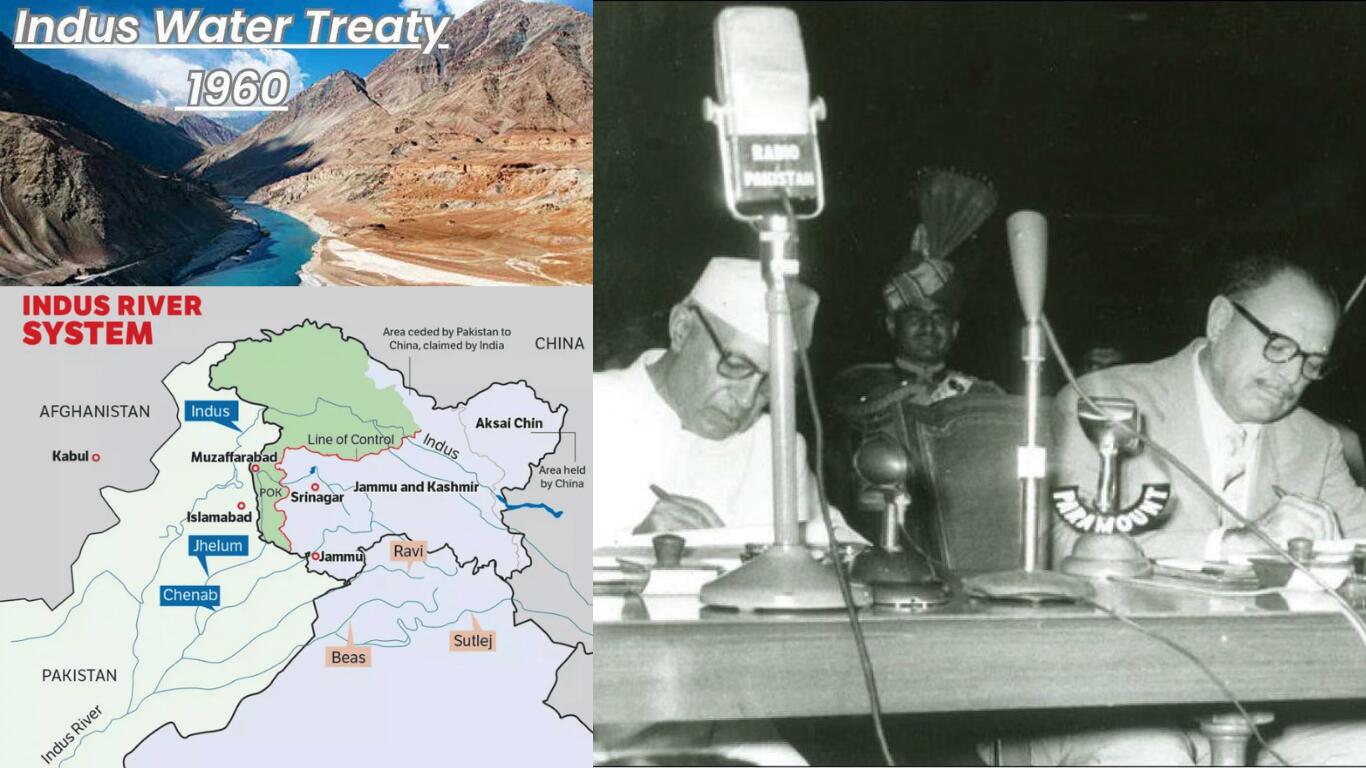
The Indus Water Treaty was signed on September 19, 1960, in Karachi by Nehru and Pakistan’s military ruler, President Ayub Khan, with the World Bank acting as a guarantor.

Under the agreement, the waters of the three eastern rivers Ravi, Beas, and Sutlej were allocated to India. The three western rivers Indus, Jhelum, and Chenab were given to Pakistan. More importantly, India was obliged to pay ₹83 crore in sterling pounds to Pakistan for replacement works, despite facing its own foreign exchange crisis at the time.

This effectively meant India was left with control of only about 20% of the total waters of the Indus basin, while Pakistan walked away with the lion’s share around 80%. Nehru hailed the deal as an example of cooperation, but MPs from across the spectrum described it as “a sell-out,” “a second partition,” and a “grave injustice to Indian farmers.”

The criticism was not about water alone. It was also about the principle: why was India giving away such a critical resource to a hostile neighbour, especially without consulting Parliament or linking it to the larger issue of Jammu and Kashmir?

Nehru Versus Parliament: “A Second Partition”

On November 30, 1960, the Lok Sabha debated the Indus Water Treaty. Ten members moved motions against it. Just two hours were allotted, but the interventions made in that short time revealed the extent of dissatisfaction.

Even Congress MPs were scathing. Harish Chandra Mathur warned that the treaty meant perpetual losses to Rajasthan to the tune of ₹70–80 crore annually, describing it as an act of “over-generosity at the cost of our own people.” He accused the Prime Minister of surrendering step by step to Pakistan since 1948 and failing to link water settlement with Kashmir.

Asoka Mehta, another Congress stalwart, likened the treaty to a “second partition”, warning that it reopened wounds of 1947. He noted that instead of securing a fair deal, India had actually ended up with worse terms than earlier proposals, calling it a blunder that would haunt future generations.

A.C. Guha, from Bengal, pointed out the glaring imbalance: India had 26 million acres in the Indus basin but only 19% of it irrigated, while Pakistan’s 39 million acres had over 50% irrigation. He criticised the financial terms too Pakistan received more than ₹400 crore in grants, while India was saddled with loans. He called the ₹83 crore payment to Pakistan “the height of folly” at a time when India itself was struggling.

These were not voices of the opposition alone. They came from within Nehru’s own party, reflecting a deep unease at the manner in which the Prime Minister had bypassed Parliament and compromised India’s interests.

Vajpayee’s Warning: “This Treaty is Wrong”

Among the strongest critics was a young Atal Bihari Vajpayee, then in his early 30s. Speaking with clarity and conviction, Vajpayee reminded the House that the government had earlier announced it would stop waters to Pakistan by 1962. Now, the same government was conceding permanent rights. “Either that announcement was wrong, or this treaty is wrong,” he said pointedly.

Vajpayee quoted Ayub Khan, who had boasted that India had conceded joint control of rivers. He warned that such concessions would embolden Pakistan further and undermine India’s sovereignty. Importantly, Vajpayee also criticised the secrecy surrounding the deal, noting that Parliament had been deliberately kept in the dark until it was a fait accompli.

His conclusion was sharp: “This treaty is not in the interest of India. It will not bring lasting friendship with Pakistan.”

Those words would prove prophetic. Far from creating goodwill, Pakistan continued its hostility, sponsoring terrorism and wars against India while benefiting from a treaty that guaranteed it waters from the Indus system.

Nehru’s Defence: A Lonely Stand

When Nehru rose to reply, he appeared weary and defensive. He dismissed comparisons with partition as “meaningless language,” even mocking the criticism by asking, “Partition of what? A pailful of water?”

He argued that international treaties could not be run through constant parliamentary consultation and justified the payment to Pakistan as “purchasing peace.” According to him, rejecting the treaty would have destabilised West Punjab and the broader subcontinent.

But his reasoning failed to convince. He left the chamber soon after, to meet a visiting dignitary, leaving behind a dissatisfied House and a growing perception that India had been shortchanged.

The Legacy and Modi’s Course Correction

For decades, the IWT remained untouched, even as Pakistan continued to bleed India through proxy wars and cross-border terrorism. Farmers in Punjab, Haryana, Rajasthan, and Jammu & Kashmir bore the brunt of water scarcity while Pakistan reaped the benefits of India’s concessions.

The criticism voiced in 1960 never really disappeared. It found new resonance in later years, especially as Pakistan intensified its hostility.

Finally, in 2025, after the Pahalgam terror attack, Prime Minister Narendra Modi decided to put the treaty into abeyance. His government has signalled that India will no longer allow its resources to be taken for granted by a neighbour that openly supports terrorism. Modi’s words at the Red Fort that the treaty was unjust and caused immense harm to India’s farmers echoed the warnings of Vajpayee and other leaders who had opposed Nehru’s deal six decades earlier.

Learning from History

The Indus Water Treaty remains a striking example of how leadership decisions can shape a nation’s destiny for generations. Nehru’s eagerness to be seen as a statesman led him to sign away critical resources without Parliament’s approval, and India has paid the price ever since. His critics Vajpayee, Asoka Mehta, Guha, and many others had seen the dangers clearly.

Prime Minister Modi’s decision to revisit the treaty is not merely about water. It is about correcting a historic wrong, asserting India’s sovereignty, and ensuring that national interest is never sacrificed for misplaced idealism.

In 1960, India was forced to accept a deal that many called a “second partition.” In 2025, under Modi, India has begun to undo that legacy, guided not by appeasement but by self-respect and strength.
Tags: Atal Bihari VajpayeeCongressIndia-PakistanIndus Water TreatyJawaharlal NehruPakistan
ShareTweetSend
Previous Post

‘India attacked Hidden US Nuclear Stockpile in Kirana Hills, Pakistan’: Former Amb Deepak Vohra

Next Post

Delhi Shocker: Md Firoz Rapes Mother Who Returned From Haj, Accuses Her of ‘Bad Character’

Related Posts

How Ukraine Uses Psychological and Information Warfare to ‘Win,’ and What India Can Learn From This Strategy
Analysis

How Ukraine ‘Wins’ the Psychological and Informatiaon War Despite Destruction — Lessons India Cannot Afford to Ignore

29 November 2025

From the very beginning, the Ukraine crisis was sold not as a standalone local conflict, but as part of...

Kerala: How Anti-Hindu play Veeranattyam won Malappuram Youth Festival, and why it has sparked debate on selective freedom of expression?
Analysis

Kerala: How Anti-Hindu play Veeranattyam won Malappuram Youth Festival, and why it has sparked debate on selective freedom of expression?

26 November 2025

A fresh controversy has engulfed Kerala’s cultural and educational landscape after the play Veeranattyam widely criticised as anti-Hindu secured...

Revisiting the Constitutional Spirit: Language, Identity and the Framers’ Vision
Analysis

Revisiting the Constitutional Spirit: Language, Identity and the Framers’ Vision

26 November 2025

The incorporation of the Devanagari script and the acknowledgement of Sanskrit’s civilizational significance were subjects of thoughtful deliberation in...

Load More

Leave a Reply Cancel reply

Your email address will not be published. Required fields are marked *

I agree to the Terms of use and Privacy Policy.
This site is protected by reCAPTCHA and the Google Privacy Policy and Terms of Service apply.

Currently Playing

A War Won From Above: The Air Campaign That Changed South Asia Forever

A War Won From Above: The Air Campaign That Changed South Asia Forever

00:07:37

‘Mad Dog’ The EX CIA Who Took Down Pakistan’s A.Q. Khan Nuclear Mafia Reveals Shocking Details

00:06:59

Dhurandar: When a Film’s Reality Shakes the Left’s Comfortable Myths

00:06:56

Tejas Under Fire — The Truth Behind the Crash, the Propaganda, and the Facts

00:07:45

Why Rahul Gandhi’s US Outreach Directs to a Web of Shadow Controversial Islamist Networks?

00:08:04
Facebook Twitter Instagram Youtube
tfipostTfipost.com
Right Wing | News Analysis | Indian Opinion
  • About us
  • Contact Us
  • Careers
  • Brand Partnerships
  • Terms of use
  • Privacy Policy
  • Sitemap

©2025 TFI Media Private Limited

No Result
View All Result
  • Premium
  • Politics
    • Analysis
    • Opinions
    • Trending
  • Economy
    • Business
    • Finance
  • Defense
    • Defence
    • Strategy
    • Weaponry
  • Geopolitics
    • Africa
    • Americas
    • Asia Pacific
    • Europe
    • South Asia
    • West Asia
  • Knowledge
    • Culture
    • History
    • Indology
  • Law
  • Lounge
    • Books
    • Cinema
    • Food
    • Health
    • Sports
    • technology
    • Travel
    • Satire
TFIPOST हिन्दी
TFIPOST Global

©2025 TFI Media Private Limited


