
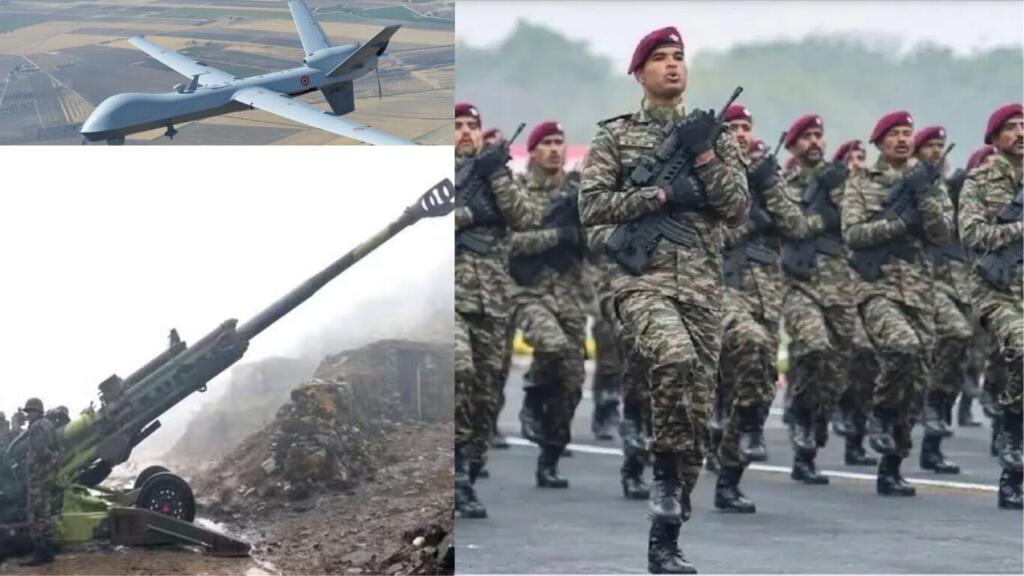
In a decisive step towards reshaping its warfighting capabilities, the Indian Army is preparing for one of its most significant structural transformations in decades. Triggered by operational experiences from Operation Sindoor and the changing nature of modern warfare, the Army is now poised to integrate drones and anti-drone technologies as standard equipment across all frontline battalions.
Drone Teams to Become the New Combat Norm
At present, Indian Army battalions do employ drones, but they are supplementary and operated by personnel who are often pulled from their regular combat roles. This practice has proven inefficient during real-time operations. Under the new doctrine, drones and counter-drone systems will no longer be add-ons but integral to every infantry, artillery, and armoured unit.
According to a detailed report by The Indian Express, this transformation aims not only at technological modernisation but also a complete reconfiguration of combat units to ensure rapid, autonomous and precise responses in future conflicts. Dedicated drone teams will be embedded within each battalion, with responsibility for deploying surveillance UAVs, combat drones, and anti-drone technology. Even at the platoon and company level, the Army plans to deploy drones for real-time situational awareness. This will necessitate a significant manpower restructure, with about 70 personnel per unit undergoing role reassignment to form drone-operating squads and support elements.
Light ‘Bhairav’ Commando Units to Strengthen Tactical Edge
Another major reform includes the raising of 30 elite light commando battalions named Bhairav. Each unit, comprising approximately 250 soldiers, will be trained for specific tactical roles such as precision strikes, intelligence-led missions, and surgical responses across diverse terrains. These specialised battalions will fill critical operational gaps, especially in counter-terror and border combat missions.
Recruitment and training for these units have already been greenlit, with regimental centres instructed to expedite the process. The first few battalions are expected to become operational within weeks, marking a swift implementation of this doctrine.
Rudra Brigades: Integrated Combat Units for Hybrid Warfare
Perhaps the most ambitious aspect of the restructuring is the creation of Rudra Brigades—all-arms integrated units capable of independent operations. These formations will combine infantry, artillery, armour, drone units, and logistics into a single operational entity. The logic behind this shift is to prepare for future battlefields where speed, mobility, and cross-domain coordination will be essential.
These integrated brigades are designed to function without the need for external reinforcements, giving commanders flexibility to conduct conventional and hybrid warfare missions across multiple theatres be it the Line of Control, Northeast insurgency zones, or even international deployments if necessary.
Artillery and Mechanised Forces Undergo Next-Gen Revamp
The Indian Army’s artillery regiments are also being modernised with an emphasis on precision and reach. Plans are underway to add two larger gun batteries per regiment and a third dedicated drone battery. The introduction of Divyastra batteries—a new generation of artillery formations—will include long-range guns, loitering munitions, and anti-drone systems tailored for both attack and defence.
Similarly, the mechanised and armoured units are being restructured in line with a revised warfighting doctrine. The goal is to make them lighter, more mobile, and tech-integrated, while retaining their traditional firepower edge.
This sweeping reform blueprint, as per sources, is not only a response to internal studies but also directly influenced by operational lessons from Operation Sindoor, which was launched in May after the Pahalgam terror attack. Army Chief General Upendra Dwivedi publicly hinted at these structural changes during the Kargil Vijay Diwas commemorations on July 26.
A Force Ready for Tomorrow’s War
The Indian Army’s restructuring marks a clear pivot towards preparing for 21st-century threats from high-altitude combat and counter-terrorism to full-spectrum conventional warfare. The integration of drones, formation of Bhairav commando units, and development of Rudra Brigades are all part of a comprehensive roadmap for future-readiness.
Incorporating technological superiority with structural agility, this transformation is set to make the Indian Army leaner, faster, and deadlier. From lessons learnt in Kashmir to the need for dominance on emerging frontlines, India’s military doctrine is entering a bold new phase one where preparation meets precision.