














Shaun Rein, founder of the China Market Research Group and a vocal critic of US foreign policy, has urged India to reconsider its cautious stance toward China, citing recent developments as validation of his long-standing warnings.
“I’ve been warning India for years that America will try to contain them the same way it did Japan—and is now doing with China. Or you can be like the EU and become a vassal. Indians attacked me, saying China is the threat. Well, who’s right after Trump’s threats and tariffs? India should move closer to China,” posted Rein on X
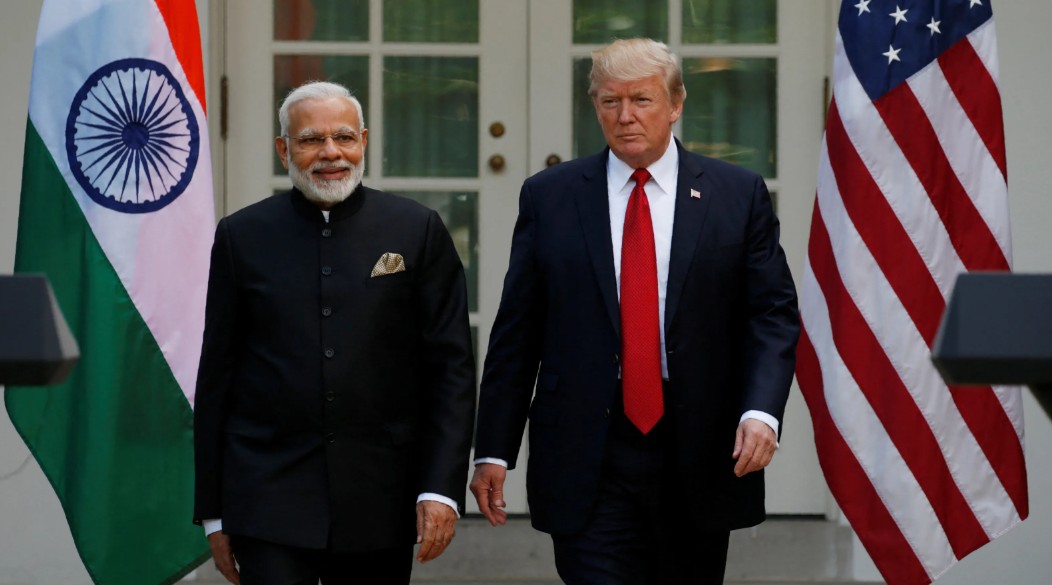
Rein’s comments came shortly after United States President Donald Trump vowed to “substantially” increase tariffs on Indian goods, accusing India of profiting from its oil trade with Russia.
“India is not only buying massive amounts of Russian oil, they are then, for much of the oil purchased, selling it on the open market for big profits. They don’t care how many people in Ukraine are being killed by the Russian War Machine,” Trump claimed.
In a May interview, Rein made a similar argument and said, “Prime Minister Modi should align India’s economy more closely with China over the next three to five years.”
He added that Washington cannot be trusted in the long run: “If India becomes too powerful—which it will in the next 10 to 20 years—America will try to contain and undermine it.”
Harsh V Pant, Vice President for Studies and Foreign Policy at the Observer Research Foundation, echoed the complexity of the situation in an article for Foreign Policy.
“Trump has signaled a possible pivot toward China, prompting New Delhi to strike its own balance between Washington and Beijing,” he wrote.
Pant emphasised that India’s recent overtures toward China should not be mistaken for weakness but rather viewed as tactical adaptations to shifting geopolitical realities.
This recalibration follows the first meeting in five years between Prime Minister Narendra Modi and Chinese President Xi Jinping on the sidelines of the 2024 BRICS summit.
Since then, diplomatic and economic ties have seen gradual improvement, grazing rights for Indian herders have been restored, the Kailash Mansarovar pilgrimage has resumed, and talks are ongoing to reopen direct flights.
India-China relations had sharply deteriorated following the deadly 2020 Galwan Valley clashes, but both sides now appear to be inching back toward cautious engagement.
Trump’s renewed threats have also coincided with a growing US-Pakistan closeness—marked by his meetings with Army Chief Asim Munir and high-profile recognition of General Michael Kurilla—which some in Beijing interpret as a strategic effort to gather intelligence on Chinese military systems and disrupt the China-Pakistan Economic Corridor.
Security analyst Sushant Sareen warned that the US may have jeopardised its relationship with India.
“Even if these Trump tantrum tariffs are rolled back, who in India will trust the US anymore? Meanwhile, strengthen your missiles and all defensive and offensive systems. Pakistan may be tempted to test the waters,” he wrote.
Responding to the tariff announcement, India’s Ministry of External Affairs (MEA) called out what it termed Western hypocrisy.
“India began importing from Russia because traditional suppliers redirected shipments to Europe. At the time, the United States actively encouraged these imports,” the MEA stated.
The MEA pointed out that the European Union’s trade with Russia in 2024 totaled €67.5 billion in goods and €17.2 billion in services—figures that far exceed India’s.
It also noted that the United States continues to import key materials from Russia, including uranium hexafluoride, palladium, fertilizers, and chemicals.
As global alignments shift and the geopolitical chessboard becomes more fluid, India finds itself re-evaluating its foreign policy calculus amid renewed uncertainty.