























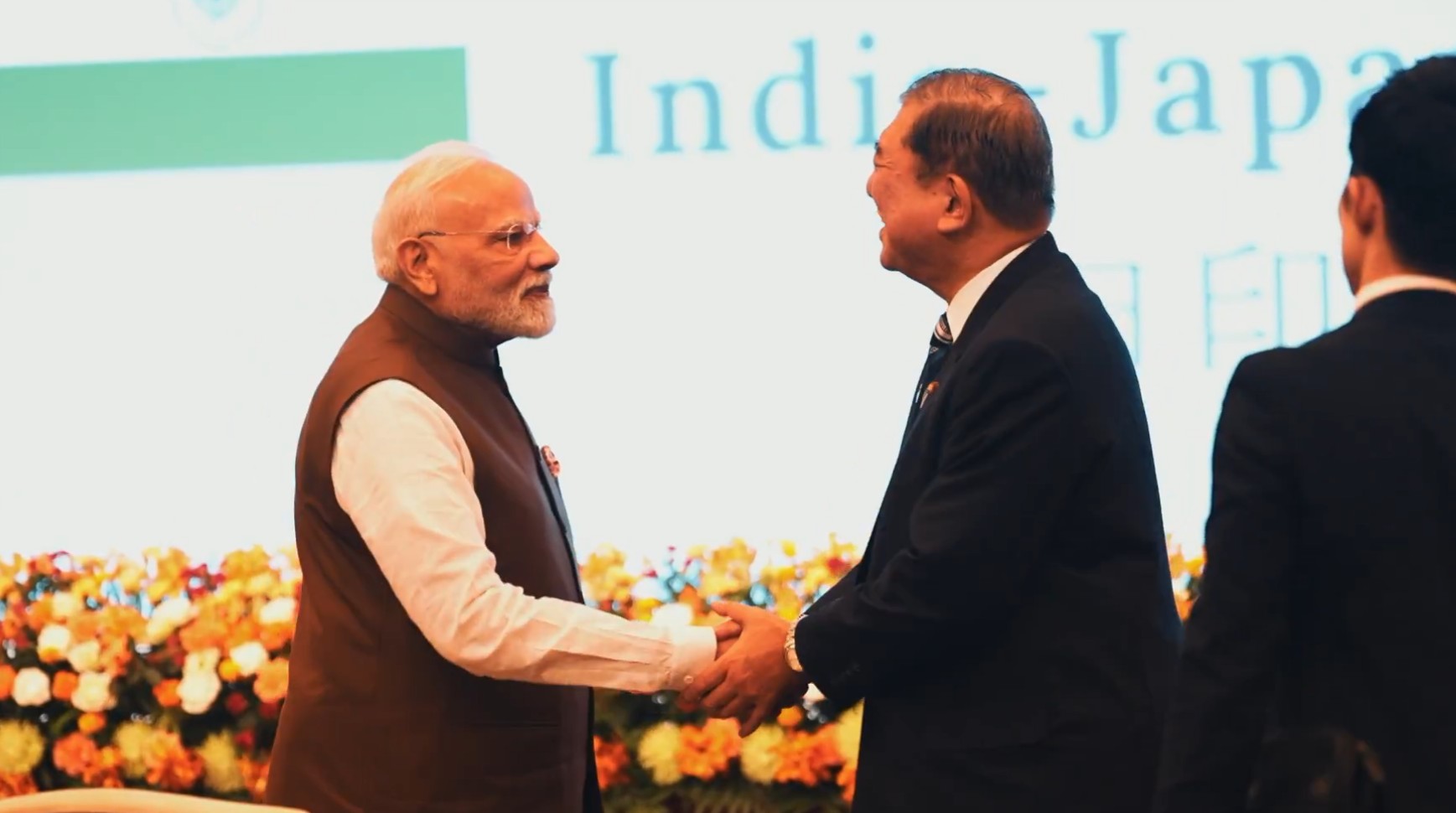
In a major step toward deepening bilateral ties and addressing mutual demographic and economic needs, India and Japan on Friday signed a pivotal Action Plan on Human Resources, set to facilitate the exchange of 500,000 people over the next five years.
Of these, 50,000 skilled and semi-skilled Indian professionals will head to Japan, opening up fresh avenues for Indian youth and marking a potential shift in Japan’s traditionally rigid work culture.
Announcing the plan during a special MEA press briefing in Tokyo, Indian Foreign Secretary Vikram Misri said the agreement comes after years of conversations about leveraging the existing Indian diaspora in Japan more effectively.
“There is an Indian diaspora in Japan, but the mechanics of how to leverage this better have been a subject of discussion between both governments,” Misri said.
“And we find that one of the outcomes of these discussions is the discovery of a natural complementarity between the two sides of what India can provide at this point in time and what Japanese society, Japanese economy, and Japanese business need at this point in time,” he added.
Boost for Indian Youth: Jobs, Skills, and Global Exposure
For India’s large pool of young, ambitious professionals—especially those trained in healthcare, engineering, construction, caregiving, and hospitality—this agreement is a gateway to stable, well-paying global employment.
It offers access not only to work but also to cultural and linguistic exposure, skill development, and long-term career pathways in a technologically advanced and economically powerful nation.
The initiative is expected to create new mobility opportunities for Indian youth, reduce domestic unemployment pressure, and enhance India’s global workforce footprint—especially in sectors where Japanese demand continues to outpace domestic supply.
A Soft Reboot for Japan’s Work Culture
While India stands to gain employment and international experience for its citizens, Japan may undergo a more profound transformation—a cultural one.
Japan’s workforce is currently grappling with multiple challenges: a declining birth rate, a rapidly aging population, and a long-standing corporate culture rooted in long hours, hierarchical structures, and limited work-life balance.
The consequences of such a system have led to rising mental health issues, shrinking productivity, and a pressing call from the government itself to encourage “more leisure” in people’s lives.
By inviting a large contingent of foreign workers—particularly Indians known for their adaptability and multilingual capabilities—Japan is not just filling labour gaps, but inviting diversity, youthfulness, and potentially even new values into its workplaces.
These foreign professionals may act as catalysts for a more inclusive, flexible, and balanced work environment.
Security Ties Get a Boost Too
While the human resource exchange was a significant takeaway from Prime Minister Narendra Modi’s visit, bilateral security cooperation also saw a major push with the signing of a joint declaration.
Responding to questions about whether the talks touched on US-India or India-China dynamics, Misri said, “At this point in time, our discussion with Japan was about our bilateral issues. We were not discussing issues between, either one of us, in any third country. Naturally, what is happening in the rest of the world is discussed. But today’s focus remained squarely on our bilateral cooperation.”
On the security front, the joint declaration provides a flexible and future-oriented foundation.
“An important feature of this document is the broad concept of security it embodies, which includes cooperation on cybersecurity, counterterrorism, defence industry, research and development, and closer cooperation on security issues in multilateral groupings. One of the new features of the security engagement between the two countries would be an institutionalised dialogue between the national security advisors of the two countries,” Misri explained.
A Partnership Rooted in People and Progress
The twin developments—the human resource action plan and enhanced security cooperation—underline a growing strategic, economic, and people-centric partnership between India and Japan.
With technology, mobility, and mutual needs driving the relationship forward, this moment marks a significant chapter in India-Japan relations.
For Indian youth, it’s an invitation to the global stage. For Japan, it may well be the beginning of a workforce transformation long overdue.