
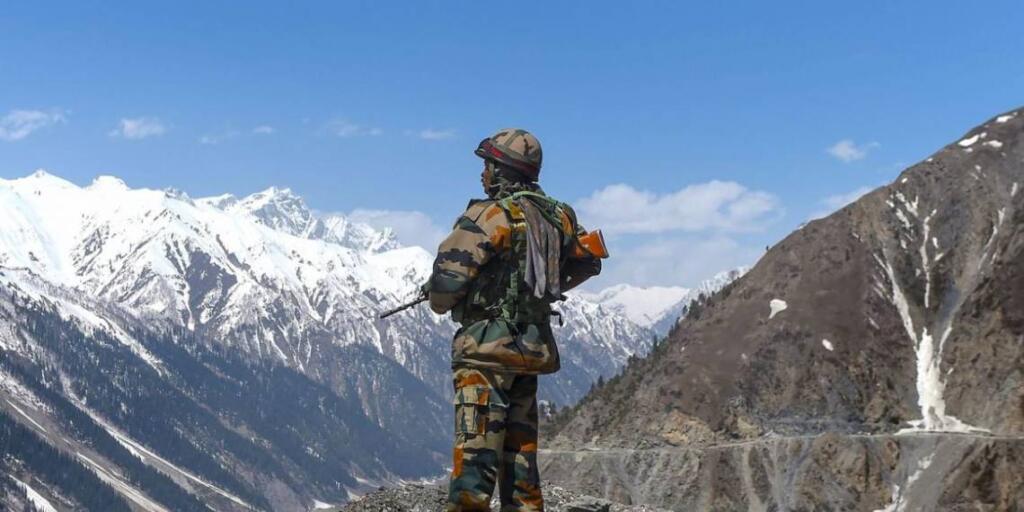
With an aim to improve mobility and military movement, India has been building infrastructure near the Line of Actual Control (LAC) and constructed a key road in Bhutan close to the China border, enhancing both regional connectivity and strategic preparedness.
The road has been built in Bhutan near Doklam, where India and China had a standoff in 2017. The road connects to the Haa Valley in Bhutan, which is about 21 kilometres from Doklam.
Under Project Dantak, the road was built by the Border Roads Organisation (BRO) at a cost of Rs 254 crore and was inaugurated by Bhutan’s Prime Minister Tobgay Tshering on August 1.
The road will help local people in Bhutan and also improve movement of security forces if needed.
The road leads to the Chumbi Valley in the Tibet Autonomous Region. Chinese soldiers are deployed in the Chumbi Valley.
The road offers India potential logistical and military mobility toward the Chumbi Valley in the Tibet Autonomous Region, where Chinese troops remain deployed. It also enhances the Bhutanese Army’s ability to access and monitor the border area.
The road will help the Bhutanese Army reach the border near the Chumbi Valley. It will also help with the movement of supplies. While Bhutan will use the road for now, India will also benefit if there is a need in the future.
India is strengthening its ties with Bhutan. Bhutan is close to the India-China border and faces challenges from China. India sees its partnership with Bhutan as important for this reason.
Indian Army Chief General Upendra Dwivedi recently visited Bhutan and was briefed on the progress of the road. His visit comes amid India’s continued push to upgrade border infrastructure to counter China’s build-up across the LAC.
BRO Director General Lt Gen Raghu Srinivasan is also on an official visit to Bhutan to review ongoing works under Project Dantak. He met with Bhutan’s King Jigme Khesar Namgyel Wangchuck and Prime Minister Tobgay, both of whom lauded BRO’s long-standing role in the country’s infrastructure development.
India and Bhutan have deepened strategic cooperation in recent years, particularly following the 2017 Doklam incident, when the Indian Army intervened to stop Chinese road construction toward Jampheri Ridge.
The 72-day standoff ended with a Chinese withdrawal, but Beijing later built helipads and stationed troops in the region.
Given its proximity to the sensitive tri-junction of Sikkim, Bhutan, and Tibet, Doklam remains a strategically vital area.
India’s latest infrastructure efforts underscore the importance of its partnership with Bhutan in maintaining stability in this contested region.