
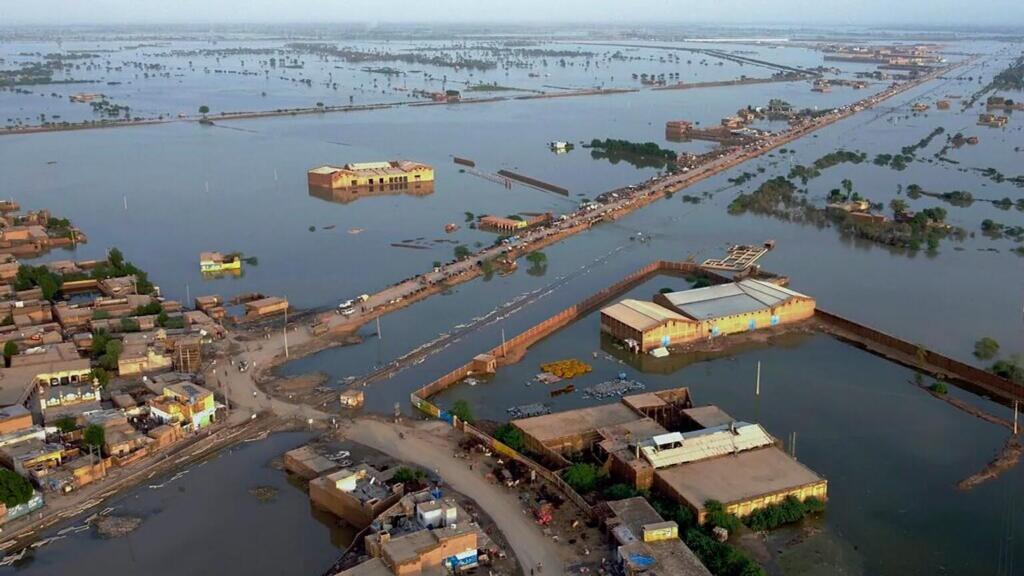
Nature knows no borders, no religions, no political divides. Yet every monsoon, South Asia becomes a stage for both devastation and hypocrisy. When Uttarakhand or Himachal faced floods, voices in Pakistan mocked it as “Allah’s punishment.” But now, with Pakistan reeling from 800 deaths and 7,000 destroyed homes, the same question arises if calamities are punishments, then who is punishing Pakistan? Is it nature, poor planning, or divine anger over persecution, extremism, and terrorism? The truth is bitter: disasters strike where neglect thrives. They demand humility, not arrogance, from those who survive.
The Wrath of Nature in Jammu & Kashmir
The revered Vaishno Devi Yatra has remained suspended for the fifth consecutive day after massive landslides and floods struck Jammu and Kashmir. At least 11 people, including seven members of a single family, were killed when a landslide buried the house of Nazir Ahmad in Baddar village, Reasi. Ahmad, his wife, and their five children aged between five and 13 died under mounds of debris.
In Ramban district, a cloudburst in Rajgrah village triggered flash floods that swept away five people and damaged several homes, including a school. Four bodies were recovered, while search operations continue for a missing person.
Officials confirmed that record-breaking rains have killed more than 36 people across the Union Territory, leaving destruction in areas like Peerkho and Nikki Tawi where entire localities were washed away. In Reasi’s Katra, near the Vaishno Devi shrine, a landslide claimed 29 lives and injured 20 more, halting the pilgrimage midway along the 12-km trek route.
Pakistan’s Flood Woes: A Mirror of Negligence
Across the border, Pakistan too is battling devastation. Since June, monsoon floods have killed nearly 800 people and damaged more than 7,000 homes. The mountainous north was worst hit, where over 450 people died in Khyber Pakhtunkhwa alone.
Pakistan Prime Minister Shehbaz Sharif himself admitted: “Natural disasters are acts of God, but we cannot ignore the human blunders.” Poor urban planning, unchecked construction near rivers, deforestation, mining, and clogged stormwater drains have worsened the crisis. Cities like Karachi, with more than 20 million residents, came to a standstill. Ten people were electrocuted or killed in roof collapses after heavy rain submerged roads and homes.
Experts warn that Pakistan’s vulnerability is not only due to climate change but also decades of corruption, mismanagement, and neglect of critical infrastructure.
A Question of Divine Justice
Whenever disasters strike India, especially in the Himalayan states like Uttarakhand or Himachal Pradesh, some individuals in Pakistan have been quick to brand such tragedies as “divine punishment” upon Indians. Social media often carries comments mocking Indian deaths, claiming God’s wrath has fallen on “idol worshippers.”
But when Pakistan itself faces floods year after year, the same logic poses uncomfortable questions. If natural calamities are punishments, then why are Pakistanis who suffer equally from floods, landslides, and epidemics being punished? Could it be, instead, that the destruction is not about religion but about governance failures, environmental neglect, and human greed?
Moreover, Pakistan’s track record raises moral questions. From sponsoring terror activities across the border, to persecution and forced conversions of Hindus and other minorities, to providing safe havens to extremists, the country has often been criticized internationally. If divine justice is invoked for disasters, then should Pakistan not reflect inwardly asking whether these actions too bring consequences?
The Shared Climate Burden of South Asia
Both India and Pakistan sit on the frontlines of climate change. The South Asian monsoon, which once nurtured agriculture, has become increasingly erratic. Torrential rains cause floods, cloudbursts, and landslides, while long dry spells lead to water shortages.
Former minister Sherry Rehman pointed out that Pakistan’s forest cover has fallen to just five percent the lowest in South Asia stripping nature of its natural flood barriers. Similarly, India too struggles with illegal encroachments, poor drainage, and deforestation.
The reality is clear: disasters do not discriminate between borders, religions, or communities. They strike wherever negligence and shortsightedness leave societies unprepared.
Time for Reflection, Not Mockery
Natural disasters are not a stage for political point-scoring or religious mockery. The floods in Jammu & Kashmir and Pakistan prove that calamities are blind to faith or geography. If some mocked Indian tragedies as “punishments,” the same standard would force one to ask: who punishes Pakistan for its own disasters?
Instead of celebrating suffering, those who spread hatred must learn humility before nature’s power. For Pakistan, this also means reflecting on whether its policies of extremism, persecution, and terrorism are truly sustainable not just politically, but morally. True resilience lies not in assigning blame but in reforming governance, protecting the environment, and embracing humanity over hatred.