
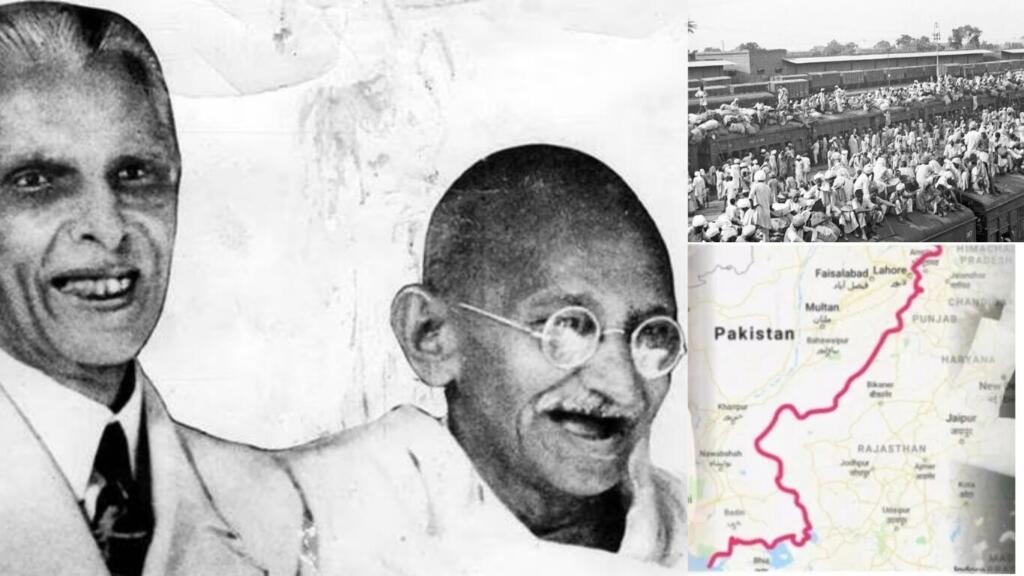
The year 1947–48 is remembered for India’s partition, independence, and the assassination of Mahatma Gandhi. Yet, buried under these historical milestones is an episode that remains one of the most controversial in India’s post-independence history Gandhi’s last fast. Critics argue that this fast amounted to political blackmail, pressuring the Government of India to release ₹55 crore to Pakistan at a time when the new nation was openly hostile and waging war in Kashmir.
A Year of Bloodshed and Turmoil
In the immediate aftermath of independence, India was plunged into violence. The partition triggered mass slaughter, with millions displaced and hundreds of thousands killed along religious lines. Refugee camps overflowed, and cities like Delhi were flooded with Hindu and Sikh survivors from Pakistan.
In Maharashtra, the assassination of Gandhi on January 30, 1948, sparked targeted violence against Chitpavan Brahmins. Their homes were torched, many were killed, and survivors fled to already overcrowded urban areas. While these tragedies unfolded, another political storm was brewing — Gandhi’s insistence on securing what he believed were the rights of Delhi’s Muslims.
Gandhi’s Demands in His Final Fast
Gandhi had long wielded the “fast unto death” as a political tool, often to push for Hindu–Muslim unity. In January 1948, with Pakistan supporting tribal invasions in Jammu and Kashmir, Gandhi announced yet another fast. His demands included:
-
Restoring over 100 Delhi mosques that had been converted into refugee shelters.
-
Ensuring the free movement of Muslims in Old Delhi.
-
Allowing Muslim returnees from Pakistan to settle without opposition.
-
Organizing the Urs at Khwaja Bakhtiyar Dargah peacefully.
-
Ending economic boycotts against Muslims.
-
Housing Hindu refugees in Muslim areas only with Muslim consent.
To Gandhi, these measures were essential to safeguard minorities. To many Hindu refugees, freezing in the winter cold after being evicted from mosque shelters, they were an act of betrayal.
Industrialist Ghanshyam Das Birla and other leaders warned Gandhi that his push to release ₹55 crore to Pakistan — part of a financial settlement from partition — would embolden a hostile neighbor. Pakistan, they argued, would likely use the funds to purchase arms against India. Gandhi remained unmoved.
The ₹55 Crore Controversy
At partition, the Reserve Bank of India held ₹375 crore in assets. It was agreed that Pakistan would receive ₹75 crore as part of the division of assets and liabilities, with ₹20 crore already paid and ₹55 crore pending.
However, by late 1947, Pakistan had launched armed incursions into Jammu and Kashmir, occupied Gilgit-Baltistan, and backed tribal militias committing atrocities in Baramulla and Muzaffarabad. Prime Minister Jawaharlal Nehru and others initially froze the remaining payment.
On January 13, 1948, Gandhi began his fast, stating it was for the protection of minorities in both India and Pakistan. His supporters and the government feared public unrest and moral backlash if he died during the protest. On January 18, the Government of India announced that it would transfer the ₹55 crore to Pakistan. That same day, Gandhi broke his fast.
French author Dominique Lapierre, in Freedom at Midnight, claimed Gandhi was even making plans to travel to Pakistan with the help of Mumbai cotton broker Jahangir Patel. Pakistan’s founder, Muhammad Ali Jinnah, initially refused the visit but changed his stance after the money was released. The trip, however, never happened.
Operation Gulmarg: The Backdrop of War
While Gandhi was fasting for minority rights and the transfer of funds, Pakistan was executing Operation Gulmarg, a military plan to seize Kashmir.
The scheme involved arming 20 Lashkars — tribal militias of about 1,000 men each — from Pashtun regions. Armed at brigade headquarters in Bannu, Wanna, Peshawar, Kohat, Thall, and Nowshera, they assembled in Abbottabad before launching their attack on October 22, 1947.
The invasion began in Muzaffarabad, where the militias killed civilians, looted property, and burned homes. Instead of advancing directly to Srinagar, they moved to Baramulla, repeating the massacre. Out of a population of 14,000 in Baramulla, fewer than 2,000 survived. These events marked the beginning of the first Indo-Pak war.
A Fast That Divided the Nation
Gandhi’s final protest remains one of the most debated episodes in India’s history. Supporters see it as a principled stand for communal harmony. Critics view it as dangerous moral coercion that compromised national security and ignored the plight of Hindu and Sikh refugees.
By securing the release of ₹55 crore to a belligerent Pakistan — in the middle of a war it had instigated — Gandhi’s fast became more than a moral gesture; it became a geopolitical turning point. The decision continues to divide historians and political thinkers, leaving an enduring question: in the fragile first months of independence, did Gandhi’s idealism strengthen India’s moral fabric or weaken its defenses?