




















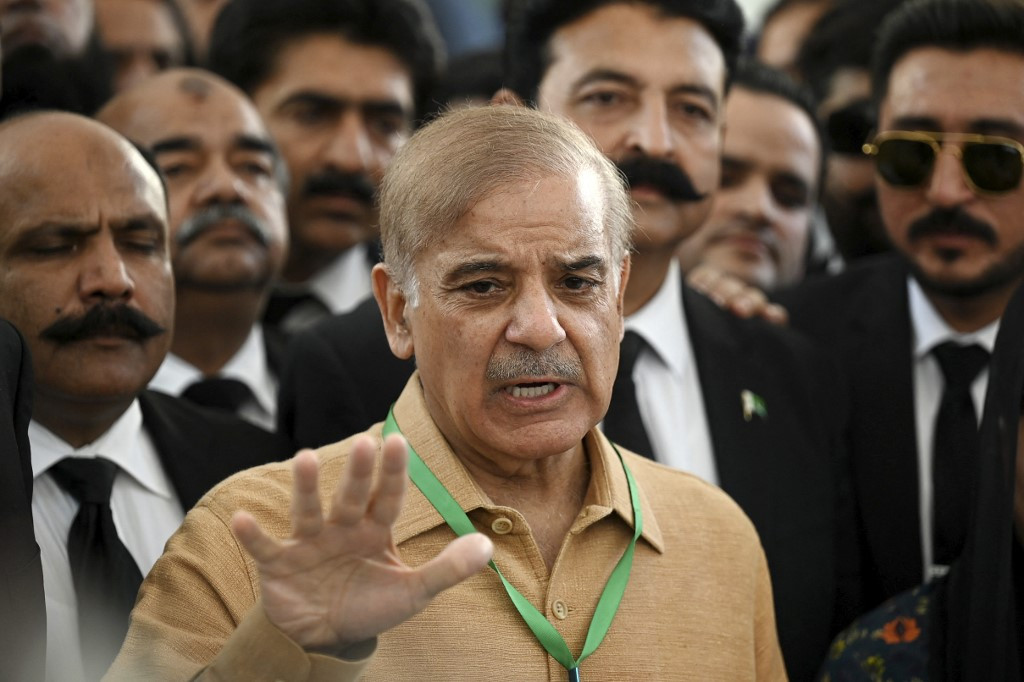
Pakistan has once again resorted to reckless rhetoric and baseless threats, with Prime Minister Shehbaz Sharif now vowing that India will not be allowed to “snatch even a single drop” of water from his country under the Indus Waters Treaty. This latest outburst marks the fourth provocative statement from top Pakistani leadership in just 48 hours, following nuclear sabre-rattling by Army Chief Asim Munir, historical distortion by former Foreign Minister Bilawal Bhutto, and brazen threats of internal attacks by Defence Minister Khawaja Asif. As Pakistan’s economy sinks and internal instability grows, its leaders seem intent on manufacturing external hostilities to divert attention from their own failures recklessly targeting India with aggressive, empty posturing.
Shehbaz Sharif’s Water War Rhetoric
In yet another display of political theatrics, Pakistan Prime Minister Shehbaz Sharif on Tuesday threatened India with “serious consequences” if New Delhi halts Islamabad’s share of water under the Indus Waters Treaty. Speaking at an event in Islamabad, Sharif declared, “If you attempt such a move, Pakistan will teach you a lesson you will never forget.”
The PM’s inflammatory statement follows India’s decision to put the 1960 Indus Waters Treaty in abeyance after the 22 April Pahalgam terrorist attack, which claimed the lives of 26 people. Union Home Minister Amit Shah had already made it clear that the agreement would never be restored a position backed by India’s firm resolve to secure its sovereignty and resources.
Sharif, however, stuck to the tired Pakistani narrative, claiming that water was a “lifeline” for his nation and vowing not to compromise “even a single drop” of Pakistan’s so-called rights.
Bilawal Bhutto Plays the Civilisation Card
Adding to the coordinated verbal offensive, former Pakistan Foreign Minister Bilawal Bhutto Zardari claimed that diverting Indus waters away from Pakistan was an “attack on the Indus Valley Civilisation.” Speaking at an event in Sindh, Bhutto said, “If Indian Prime Minister Narendra Modi announces an attack on Indus, he attacks our history, our culture, and our civilisation.”
Such dramatics conveniently ignore the fact that the Indus Waters Treaty was signed after nine years of negotiations, brokered by the World Bank, and that India has scrupulously honoured its commitments often at the expense of its own interests.
Asim Munir’s Reckless Nuclear Threat
Not to be outdone, Pakistan’s Army Chief General Asim Munir issued an outrageous nuclear threat against India, reportedly boasting that Pakistan could “take down India and half the world” if faced with an existential threat. This dangerous and irresponsible rhetoric highlights the very real concerns about nuclear command and control in Pakistan, where the military establishment openly collaborates with terrorist outfits.
India’s Ministry of External Affairs slammed Munir’s comments, noting that such nuclear sabre-rattling has long been Pakistan’s “stock-in-trade” and reaffirming that India will not be cowed by any nuclear blackmail.
Khawaja Asif’s Call for Internal Strikes in India
In yet another disturbing statement, Pakistani Defence Minister Khawaja Asif declared that any future conflict would not be limited to the borders but would involve attacks “inside India.” This blatant threat of cross-border terrorism further cements Pakistan’s image as a state sponsor of violence, using militant proxies to advance its agenda.
By issuing such remarks in rapid succession, Pakistan’s political and military leadership has exposed a coordinated strategy: escalate tensions with India, incite hostility, and distract the Pakistani public from deepening political chaos, financial bankruptcy, and international isolation.
Pakistan’s Dangerous Diversion Tactics
The series of hostile statements from Shehbaz Sharif, Bilawal Bhutto, Asim Munir, and Khawaja Asif over the past 48 hours underscores a pattern Pakistan’s leadership is weaponising rhetoric to divert attention from its collapsing economy, runaway inflation, and spiralling political instability.
India, however, has made it clear that it will not bow to threats or intimidation. Whether it is safeguarding its national security, protecting its natural resources, or defending its borders, New Delhi has the capacity and the will to respond decisively to any aggression.
By playing the water card and issuing hollow threats, Pakistan has once again shown the world that it thrives on confrontation rather than cooperation. But empty bluster will not change reality India’s resolve is stronger than Pakistan’s rhetoric.