
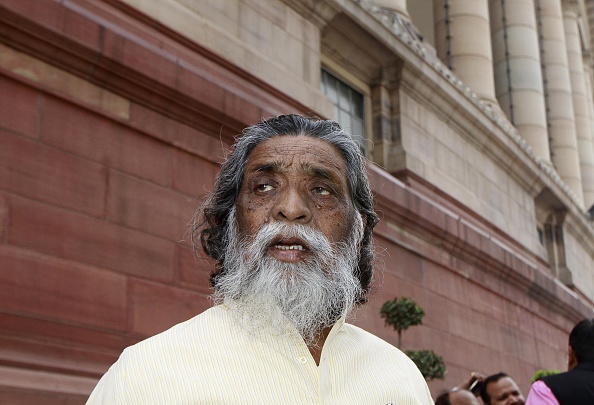
Shibu Soren, veteran tribal leader, former Jharkhand Chief Minister, and one of the founding members of the Jharkhand Mukti Morcha (JMM), passed away at the age of 81. A towering figure in Jharkhand’s political landscape, Soren was widely known as “Dishom Guru” – a title given to him by his followers in the Santhal tribal community. Over a political career spanning four decades, he held several key positions, including Union Minister and Rajya Sabha MP. Soren died at Sir Ganga Ram Hospital in Delhi, where he had been under treatment for over a month. His condition had been critical in recent days.
Commitment to Jharkhand’s Identity
Born in 1944 in the Ramgarh district (then a part of Bihar), Shibu Soren emerged as a grassroots leader advocating for the rights and recognition of tribal communities. He co-founded the Jharkhand Mukti Morcha in 1972 along with Leftist trade unionist A.K. Roy and Binod Bihari Mahato. The movement played a pivotal role in the eventual formation of the state of Jharkhand in 2000.
Shibu Soren’s political base was rooted in the Santhal community, and his leadership contributed immensely to the assertion of tribal identity and aspirations. He was first elected to the Lok Sabha in 1980 from the Dumka constituency, which went on to become a JMM stronghold.
Political Journey: From Parliament to the Chief Minister’s Office
Shibu Soren served as a Member of Parliament multiple times — elected to the Lok Sabha eight times and serving two terms in the Rajya Sabha. In 2005, he became the Chief Minister of Jharkhand for the first time, although his initial stint lasted only nine days after failing to secure a majority in the Assembly.
Two more terms as Chief Minister followed, both marked by political turbulence and short durations. He also served as the Union Minister for Coal in the UPA government under Prime Minister Manmohan Singh. However, coalition dynamics and legal challenges often cut short his tenures.
Despite electoral ups and downs — including a defeat in Dumka in 2019 — Soren remained a deeply respected figure in Jharkhand politics and within tribal communities across eastern India.
Controversies and Legal Battles
Shibu Soren’s political life was not without controversy. In 2006, while serving as Coal Minister, he was convicted by a Delhi Court in connection with the 1994 kidnapping and murder of his former private secretary, Shashi Nath Jha. The court sentenced him to life imprisonment, making it a rare case of a sitting Union Minister being convicted for murder.
However, the Delhi High Court later overturned the conviction, stating that there was insufficient evidence to prove his involvement in the conspiracy. The case had drawn significant national attention, especially with the backdrop of allegations that Jha was privy to political dealings involving bribes during a crucial confidence vote in Parliament.
Despite legal setbacks and challenges in office, Shibu Soren’s contribution to the formation and shaping of Jharkhand is undeniable. He was instrumental in championing tribal rights, land reforms, and local governance. His deep connect with the grassroots earned him unwavering support in many parts of the state.
He is survived by his wife Roopi Soren, sons Hemant and Basant, and daughter Anjali. Hemant Soren currently serves as the Chief Minister of Jharkhand and recently took over as the JMM president. Another son, Durga Soren, passed away in 2009.
End of an Era in Jharkhand Politics
Shibu Soren’s passing marks the end of an era in Indian politics. Known for his strong grassroots connect and his tireless advocacy for the tribal population, he leaves behind a complex but impactful legacy. Tributes poured in from across the political spectrum, with Prime Minister Narendra Modi describing him as a “grassroots leader who was passionate about empowering tribal communities, the poor and the downtrodden.”
His life was a testament to perseverance, resilience, and the enduring power of regional movements in shaping India’s democratic fabric. As Jharkhand and the nation mourn his loss, “Dishom Guru” will be remembered for his pivotal role in giving a voice to the marginalized.