
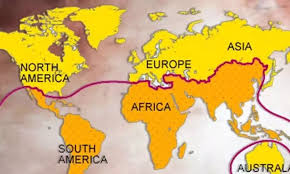
American economic colonisation has historically destabilised nations worldwide—first the Third World, then the Second World (Soviets), followed by the European Union, and now even its own economy faces strain. The U.S. has long sustained global dominance through economic colonisation, weaponising the dollar, debt, sanctions, and exploitative trade rules. By exporting inflation, enforcing tariffs, and controlling global institutions, it enriched itself at the expense of weaker nations, often disguising plunder as “aid” or “policy advice.” Yet, rising powers in manufacturing, technology, and strategic alliances are dismantling this system, exposing the U.S. model as parasitic and increasingly unsustainable in a multipolar world.
The story of American global dominance is not just about military might or political influence—it is a tale woven with the threads of economic exploitation, systemic inequality, and a deeply entrenched culture of greed. Unlike the classical colonial empires of Europe, the United States did not colonise vast lands politically in Asia or Africa. Instead, it perfected a subtler and far more insidious method: economic colonisation. Through tariffs, debt traps, structural adjustments, sanctions, and dollar hegemony, the US has enslaved the Global South for the royal life of its wealthy elite.
This system, however, is now cracking under its own contradictions. The very nations once forced into dependency are rising—notably India, which has emerged as a manufacturing and technology powerhouse, a global voice of the South, and a threat to the American model of economic extraction. Alongside other nations resisting US sanctions and tariffs, India represents a broader global awakening against Western hegemony.
The Foundations of American Protectionism
The United States, ironically, built its economic power not on free trade, but on protectionism. In the 19th century, American leaders were acutely aware that their industries could not compete with the industrial giants of Europe, particularly Britain. High tariffs, sometimes exceeding 50%, were imposed to shield domestic manufacturers.
The Smoot-Hawley Tariff Act of 1930 raised tariffs on over 20,000 goods. Rather than protecting the US economy, it triggered retaliatory tariffs worldwide, collapsed international trade by two-thirds, and deepened the Great Depression. Protectionism had worked when America was weak; but by 1930, its greed destabilised the entire world.
This hypocrisy—protective growth at home and forced free trade abroad—would later form the foundation of America’s economic colonisation strategy.
From World War to World Order: Colonisation without Colonies
After World War II, the US emerged as the undisputed economic leader. It avoided the expense of political colonisation but engineered a financial empire through treaties like Bretton -Woods System that created currency colonisation and institutions like the United Nations, World Bank, the IMF, and the General Agreement on Tariffs and Trade (GATT), later the WTO.
These institutions, framed as guardians of global prosperity, were in fact colonialism in another subtle form and were designed to keep the Global South dependent. The IMF’s Structural Adjustment Programs (SAPs) forced indebted nations to privatise, cut social spending, and open markets to foreign competition. The effect was devastating:
- In Africa, SAPs destroyed small-scale agriculture. Subsidised US grain and chicken flooded markets, bankrupting local farmers. By 2000, per capita income in Sub-Saharan Africa was lower than it had been in 1970.
- In Latin America, the “Lost Decade” of the 1980s left entire economies trapped in cycles of debt repayment, poverty, and stagnation.
- In Asia, countries like Indonesia and the Philippines saw industries dismantled to make way for multinational corporations.
This was not development aid. It was systematic economic colonisation—nations remained politically independent but economically shackled.
False Economics as a Weapon
To maintain legitimacy, Western economists created deceptive theories:
- Modernisation Theory (Rostow) preached that all nations must follow a Western path to prosperity, ignoring centuries of plunder.
- Resource Curse Theory argues that countries rich in natural resources often experience slower economic growth, weak institutions, and corruption because resource wealth breeds dependency, rent-seeking, and mismanagement. Instead of prosperity, abundance of resources can trap nations in underdevelopment and political instability.
- Comparative Advantage urged poor nations to export raw materials and import finished goods, permanently locking them into poverty.
- Free Market Fundamentalism, pushed by the Chicago School and enforced by the IMF, dismantled local protections while allowing the US and Europe to subsidise their own industries.
These were not neutral theories—they were doctrines of exploitation. They persuaded the Global South to accept poverty as God gifted and to dismantle self-reliance, while the Global North grew rich.
Tariffs, Sanctions, and the Return of Naked Self-Interest
By the 21st century, the US’s dominance began to erode, and its mask of free trade slipped. Protectionism returned with force.
The China factor was central. By 2020, China had overtaken the US as the world’s largest trading nation. Unable to compete, Washington accused Beijing of currency manipulation, theft of intellectual property, and state subsidies. Instead of outcompeting, the US launched a tariff war—imposing duties on over $360 billion worth of Chinese goods.
But sanctions and tariffs were not reserved for China. They became a geopolitical hammer:
- India faced threats of tariffs on its steel and aluminum exports, and US sanctions for buying Russian oil and S-400 defence systems.
- Turkey was punished with sanctions for purchasing Russian weapons.
- The EU itself was slapped with tariffs on steel, cars, and agriculture, despite being a close ally.
- Iran, Venezuela, Cuba, and Russia were hit with sweeping sanctions designed to strangle their economies.
What was once framed as rules-based trade became outright coercion. The US no longer even pretended fairness—it demanded obedience.
The Rising Resistance
Many countries are resisting or bypassing U.S. trade wars and sanctions, showing that the American model of economic coercion is weakening:
- China – Counter-tariffs and De-dollarisation Moves
- China directly retaliated against U.S. tariffs with its own tariffs on American goods (especially agriculture and technology), weakening U.S. farmers’ influence.
- Beijing is aggressively pushing yuan-based trade (like buying oil from the Middle East in yuan), creating an alternate financial order.
- Russia – Survival and Growth Despite Sanctions
- Despite one of the harshest sanction regimes in history post-Ukraine war, Russia has rerouted oil, gas, and wheat exports to Asia (India, China, Turkey, Middle East).
- Moscow’s trade volumes with the Global South are at record highs, showing sanctions can be bypassed.
- Iran – Oil Trade Through Shadow Networks
- Iran has been under U.S. sanctions for decades but continues to sell millions of barrels of oil per day, largely to China and through barter-like deals.
- Tehran has also deepened ties with BRICS, using non-dollar settlements.
- Venezuela – Oil-for-Food and Crypto Workarounds
- S. sanctions tried to suffocate Venezuela, but it turned to oil-for-goods deals with China, Russia, and India.
- Caracas also used its national crypto “Petro” to bypass banking sanctions.
- Turkey – Playing Both Sides
- A NATO member but openly resists U.S. dictates; buys Russian S-400 systems despite U.S. sanctions.
- Expands its trade with Russia and China while ignoring U.S. pressure.
- European Union (Ironically) – Fighting Back Against U.S. Tariffs
- When Trump imposed tariffs on EU steel and aluminum, the EU retaliated with counter-tariffs on iconic U.S. goods (Harley-Davidson, bourbon etc).
- Shows that even allies resist U.S. trade aggression when it hurts their industries.
- India – Ignoring U.S. Sanctions on Russia
- India kept buying record Russian oil despite U.S./EU sanctions, refining and reselling petroleum products worldwide.
- Washington threatened, but India leveraged its size and market power to resist, showing autonomy.
- Simultaneously, India is boosting its own defense and other exports (to SE Asia, Africa, Middle East) as a replacement to Western dependency.
- BRICS Expansion – Collective Resistance
- Countries like Saudi Arabia, UAE, Iran, Egypt, and Ethiopia joining BRICS+ show a major shift.
- By trading in local currencies, they are undermining the U.S. dollar’s monopoly.
Sanctions Backfiring: The Isolation of the US
The US has long used sanctions as its economic weapon of choice, but this blunt instrument is now isolating America itself. Nations are learning to bypass the dollar and create alternative systems.
- Russia – After being cut off from SWIFT in 2022, Russia increased trade with China in yuan and with India in rupees. Its economy adapted, with energy exports redirected to Asia.
- Iran – Despite decades of sanctions, Iran continues oil exports to China and India, while strengthening ties with Russia. Its integration into the Shanghai Cooperation Organisation further shields it from isolation.
- Venezuela – US sanctions aimed to topple the government, but instead pushed it closer to China, Russia, and Iran, ensuring its survival.
- India and Gulf States – India buys Russian oil in rupees, while Gulf states like Saudi Arabia openly consider yuan payments. These moves undercut the petrodollar system, the backbone of US economic power.
Sanctions that once crippled small nations are now pushing them into alternative alliances—and isolating Washington.
Multipolarity Rising: The Global South Pushback
The combination of India’s rise, China’s economic weight, Russia’s resilience, and the assertiveness of smaller nations has accelerated a global shift.
- BRICS Expansion – Now including Egypt, Ethiopia, Iran, and the UAE, BRICS represents over 50% of the global population and nearly 40% of global GDP (PPP). It is openly working to create a parallel financial order outside US control.
- De-dollarisation – Trade in national currencies is expanding rapidly. The dollar, once nearly 90% of global reserves (2001), now accounts for less than 58% in 2023 and falling.
- Resource Nationalism – Countries like Indonesia (nickel) and Chile (lithium) are reclaiming sovereignty over critical resources, refusing to remain suppliers for Western corporations.
This new multipolar order is no longer willing to accept an exploitative economic model designed in Washington.
The Unmasking of American Greed
The United States, born out of a rebellion against colonialism, became the greatest economic coloniser of the modern age. It forced free trade on the weak while protecting itself; it created deceptive theories of economics to disguise plunder; it weaponised sanctions to demand obedience. For decades, the Global South was trapped in this system.
But now, the mask has fallen. The rise of India, the resilience of sanctioned nations, and the growing unity of the Global South expose America’s real agenda: wealth for its elite, poverty for others.
From Exploiter to Isolated Power
The historical record is unambiguous: America’s wealth is not merely the result of innovation, but of systematic exploitation—through protectionism, structural adjustment, debt, sanctions, and coercion.
Today, the system is collapsing. India’s technological, manufacturing, and defence rise has given the Global South a model of cooperation. Russia, Iran, Venezuela, and others have shown that sanctions can be resisted. BRICS and other blocs are dismantling dollar hegemony.
The greed and hegemonic ambitions that once enslaved the world for the comfort of America’s wealthy elite may ultimately isolate the US itself. As the Global South awakens, led by nations like India, the old economic empire is giving way to a multipolar world built not on exploitation, but on equality.