
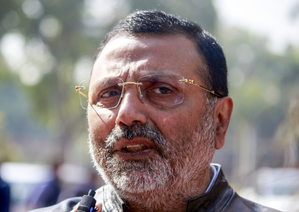
A 2009 trade agreement between India and the United States has come under renewed political scrutiny after BJP MP Nishikant Dubey accused the previous Congress-led UPA government of compromising national interests. In a sharply worded statement on X (formerly Twitter), Dubey suggested that the deal put to risk the livelihoods of Indian farmers and small businesses in favor of appeasing American trade demands.
The controversy erupted after Dubey posted a portion of a confidential diplomatic cable highlighting U.S. concerns during trade negotiations with India, then represented by Commerce Minister Anand Sharma. The document, marked ‘SBU’ (Sensitive but Unclassified), outlines a list of grievances raised by U.S. officials, including market access issues and regulatory transparency.
U.S. Concerns Over Market Barriers and Health Data
The cable reveals that the U.S. expressed frustration over India’s delayed response to a dairy certification proposal and restrictions on American pork, poultry, and pet food. It also pointed out Washington’s request for scientific data regarding avian influenza restrictions, information that it claimed was not being adequately shared by Indian authorities.
In an attempt to resolve the impasse, India’s Ministry of Commerce agreed to hold a Digital Video Conference (DVC) with U.S. trade representatives on November 19 or 20, 2009.
Dubey Slams Congress, Defends Modi’s Approach
Reacting to the revelation, Nishikant Dubey criticized the Congress government for allegedly sacrificing India’s strategic agricultural and industrial interests. He accused the administration of sidelining farmers, dairy producers, poultry businesses, and small-scale industries to safeguard U.S. interests.
Using a popular Hindi proverb in his post on X which in english translates to ‘After eating a hundred rats, the cat goes on a pilgrimage’, Dubey implied that Congress’s recent criticism of trade policies lacks credibility given its own record.
He compared this with the Modi government’s current approach, asserting that ‘any agreement with the United States today will only be signed on India’s terms, keeping national interests front and center.’
The post has sparked debate online and in political circles, as ongoing Indo-U.S. trade talks continue to navigate sensitive sectors like agriculture, health safety standards, and digital commerce.