
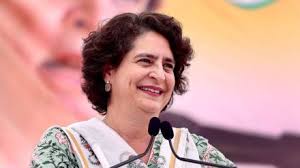
The absence of Congress leader and Wayanad MP Priyanka Gandhi Vadra from the Indian Union Muslim League’s (IUML) new national office launch in Delhi has set off political ripples. At a time when the Congress is trying to balance its long-standing alliance with the IUML while projecting a broader, pan-India image, her decision not to attend has triggered speculation. Was this a matter of health, as officially stated, or a strategic move to recalibrate Congress’ image ahead of upcoming elections? Either way, Priyanka’s absence has ensured the IUML event gained attention far beyond its expected political circles.
IUML’s in Kerala and Its Role for Congress
The IUML, one of the oldest Muslim political organizations in India, remains a cornerstone of the Congress-led United Democratic Front (UDF) in Kerala. Its base among the Muslim community has often tipped the scales in favor of Congress candidates.
-
In 2016, when Congress was reduced to 22 seats in the Kerala Assembly, the IUML secured 18 on its own.
-
During the 2019 Lok Sabha elections, IUML’s support was pivotal to Rahul Gandhi’s landslide win in Wayanad.
-
In the 2024 general elections, the IUML played a decisive role in ensuring the UDF won 18 out of 20 seats in the state.
For both Rahul and Priyanka Gandhi, IUML’s backing is not just symbolic but politically indispensable. Hence, Priyanka’s absence at the Delhi event is being seen as more than just a scheduling issue—it has potential long-term implications.
Health Excuse or Strategic Balancing?
At the IUML’s inaugural of its national committee office, the “Quaid-e-Millat Centre,” leaders initially announced that Priyanka would attend. However, Congress general secretary K.C. Venugopal later clarified that she could not make it due to indisposition, reading out her best wishes instead.
While health concerns provide a convenient explanation, political observers point to Congress’ need to balance its “Muslim appeasement” tag. Since independence, from the Khilafat movement to the Shah Bano case, Congress has been repeatedly accused of prioritizing Muslim vote bank politics. Priyanka’s absence, therefore, could be interpreted as an attempt to craft a more neutral image for herself and the party.
Rahul Gandhi’s Equation with IUML
Another factor behind Priyanka’s absence could be Rahul Gandhi’s direct link with the IUML through Wayanad. Rahul has already established a strong relationship with the party, which ensures Congress’ survival in Kerala. Strategically, Congress may want to maintain Rahul as the primary face of its IUML ties, while Priyanka positions herself as a national leader with a wider, pan-India appeal.
This division of roles could be a carefully considered plan. While Rahul continues to consolidate Congress’ southern stronghold with IUML’s support, Priyanka could project herself as someone who is not entirely dependent on community-based alliances.
Looking Ahead: Congress’ 2029 Calculus
Congress’ eyes are already set on the future, particularly the 2029 Lok Sabha elections. The party wants to rebrand itself as more than a coalition dependent on caste, community, or region-specific support. Priyanka’s absence from IUML’s Delhi office inauguration could be part of this broader repositioning exercise.
However, her non-participation has not gone unnoticed within the IUML. For decades, the party has provided Congress with dependable electoral support, and any perceived distancing may raise doubts about the strength of this alliance. Yet, Congress strategists argue that such calculated moves are necessary if the party wishes to project a “pan-national” identity rather than remain confined within older patterns of appeasement politics.
Symbolism of an Absence
Priyanka Gandhi’s decision not to attend the IUML Delhi launch is more than just an absence—it is a signal. While Congress maintains its alliance with the IUML in Kerala, it is simultaneously attempting to shed the weight of being labelled as a party reliant on Muslim appeasement. Whether this balancing act will succeed or backfire remains to be seen.
One thing is certain: by skipping the IUML event, Priyanka Gandhi has made herself—and Congress’ strategy—the center of political chatter. Sometimes, absence speaks louder than presence.