













Adaso Kapesa Inspector (GD) from 55th Battalion in Pithoragarh, Uttarakhand, is the first woman to serve in the Special Protection Group (SPG)—India’s most elite security unit charged with protecting the Prime Minister.
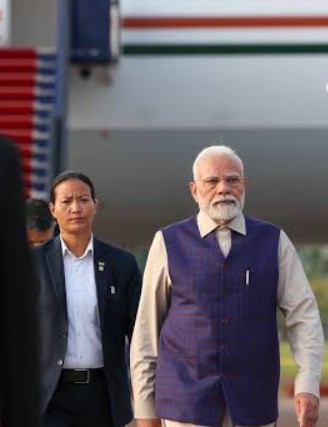
Kapesa, a native from Manipur, drew attention after images of Prime Minister Narendra Modi’s recent visit to the UK surfaced online. It wasn’t just the diplomacy or high-level optics that garnered the notice of the people, but also the poised figure standing directly behind him.
A woman in a crisp black suit and earpiece, exuding calm authority. She wasn’t merely present; she was commanding the moment. Serving as the woman officer in the SPG, she has now shattered one of the last gender barriers in the country’s security apparatus.
Her journey to the SPG began in the Sashastra Seema Bal (SSB), a Central Armed Police Force under the Ministry of Home Affairs.
From the Northeast to the Nation’s Frontline
Kapesa’s appointment is more than just a personal achievement—it is a powerful symbol of growing gender inclusivity in India’s armed forces. Until now, the SPG was an all-male domain. With Kapesa’s induction, that history has changed.
Her appearance beside the Prime Minister during a high-stakes foreign visit wasn’t just ceremonial—it was strategic and symbolic.
In that moment, she represented not only elite security but a new kind of leadership: diverse, capable, and representative of modern India.
Social Media Hails a Trailblazer
As photos of Kapesa circulated online, social media lit up with admiration. Users called her a “role model,” “trailblazer,” and “symbol of strength,” especially for young women from underrepresented communities.
The praise echoed far beyond the armed forces—her visibility struck a chord with every Indian who’s ever been told that certain doors were not meant for them.
Why the SPG Role Matters
The Special Protection Group is not just any security detail. It is a highly trained elite unit, entrusted with the protection of the Prime Minister and, in select cases, former PMs and their families. SPG officers are trained in combat, intelligence, surveillance, and crisis response—it’s one of the most demanding roles in Indian security services.
Kapesa’s induction doesn’t merely diversify the ranks—it challenges long-held perceptions about who qualifies to lead in these critical spaces.
A Defining Shift in Uniformed Leadership
Kapesa’s presence in the SPG is more than a milestone—it’s a message. A message that women belong at the highest levels of national service, even in rooms built for the toughest missions.
For India’s security ecosystem, her elevation is nothing short of historic. And for every young woman in Manipur—or anywhere else—wondering if they can one day stand at the heart of the nation’s power, the answer is now clear, she already is.