
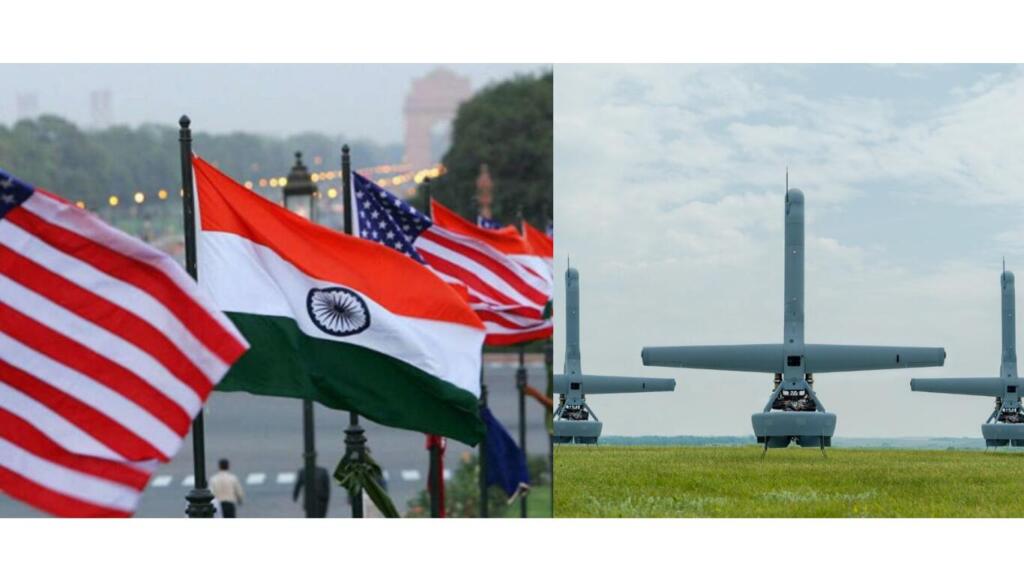
In a landmark development for India’s defence manufacturing sector, the country is on the verge of sealing a strategic agreement with US-based Shield AI to acquire and domestically produce the cutting-edge V-BAT combat drones. This initiative marks a rare and significant transfer of military drone technology from the United States to India, signalling a paradigm shift from traditional imports toward indigenous production and co-development of advanced defence platforms. At the heart of this project is a $4.5 billion emergency procurement programme launched in the aftermath of Operation Sindoor—a bold response by India to increasing regional security threats.
A Strategic Shift in Defence Procurement
The Ministry of Defence is currently in advanced negotiations with Shield AI to supply its V-BAT drones to the Indian Air Force under a $35 million emergency procurement contract. This initial contract, which hits the upper threshold of India’s emergency purchase ceiling, is only a part of the broader picture. The key highlight of the collaboration is a $90 million joint venture between Shield AI and JSW Defence—an arm of India’s JSW Group. This JV will facilitate full technology transfer (ToT), enabling India to assemble, test, and eventually manufacture the V-BAT system on its soil.
JSW Defence plans to invest $90 million across two years, with $65 million earmarked for deployment in the first year. These funds will be utilised to establish a full-fledged manufacturing facility, implement global compliance protocols, and train Indian engineers and technicians to handle, maintain, and even upgrade the licensed systems. This arrangement is a strategic deviation from the norm and reflects India’s maturing defence ecosystem, which now seeks not only capability enhancement but also technological sovereignty.
V-BAT: Tactical Drone for Modern Warfare
The V-BAT drone stands out in the crowded UAV segment due to its vertical take-off and landing (VTOL) capability, fixed-wing structure, and long-endurance performance. Built for demanding ISR (intelligence, surveillance, reconnaissance) missions, it is a battle-proven platform already deployed by elite forces, including the United States Marine Expeditionary Units. With its ducted fan design, it is logistically compact and can be rapidly deployed in high-intensity combat zones—supporting special forces, artillery units, and even forward infantry troops.
The plan is not just to meet Indian defence requirements but to position India as a global production hub for the V-BAT system. This aligns with the Modi government’s ambitious push under ‘Aatmanirbhar Bharat’ to make India a major exporter of defence equipment, particularly to friendly nations in Southeast Asia, the Middle East, and Africa.
Apache Induction: Boosting Tactical Readiness Along Pakistan Border
Even as India prepares to manufacture the V-BAT domestically, it continues to upgrade its tactical capabilities. The Indian Army has inducted the first batch of Boeing’s AH-64E Apache attack helicopters near the Pakistan border, marking a substantial leap in battlefield readiness. These helicopters are not just high-tech assets—they represent India’s focus on integrated battlefield awareness and precision strike capability.
Armed with advanced radar, night vision, and Hellfire missiles, the Apache fleet is expected to play a decisive role in western theatre operations. The initial delivery of three helicopters—out of a total of six—comes at a time when cross-border tensions remain high post-Operation Sindoor, underscoring India’s preparedness for multi-domain operations.
India Seeks Javelin Missile Co-Production with the US
Adding to India’s deepening defence cooperation with the US, the country has officially submitted a Letter of Request (LoR) for the co-production of the Javelin anti-tank guided missile (ATGM) system. This shoulder-fired, third-generation missile is known for its fire-and-forget capability and lethal performance against armoured threats.
If approved, this deal would bring yet another advanced American technology under the ambit of India’s ‘Make in India’ initiative. It also reinforces India’s intent to reduce dependency on emergency foreign arms procurement during crises. The Javelin co-production, like the V-BAT deal, fits into the larger vision of building a resilient, indigenous defence industry capable of delivering high-end technology during both peace and wartime.
India’s Defence Landscape Under Transformation
The Shield AI-JSW Defence V-BAT project, along with the induction of Apache helicopters and the push for Javelin missile co-production, represents a new chapter in India-US strategic defence partnership. These developments are more than acquisitions—they are enablers of self-reliance, export potential, and regional deterrence. As India confronts simultaneous challenges on both its western and northern borders, this transformation in defence strategy—grounded in tech transfer, indigenous production, and strategic alliances—signals a bold and assertive future. With such deals, India is no longer just a buyer but a builder of cutting-edge military hardware.