










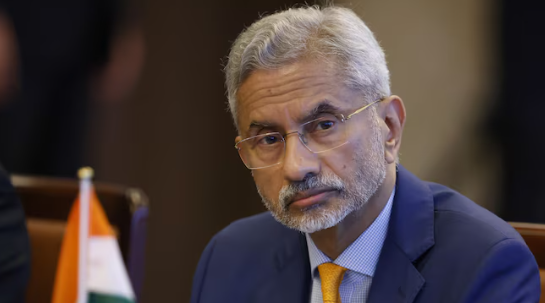
A long-anticipated trade agreement between the United States and India appears to be nearing completion, with External Affairs Minister S. Jaishankar expressing cautious optimism during his official visit to the U.S.
In an interview with Newsweek, Jaishankar revealed that negotiations are at an advanced stage, stating, “We’re more than halfway through the process. I remain hopeful about concluding the agreement, but since another party is involved, I can’t make guarantees.” He urged observers to “watch this space” for developments in the coming days.
The minister highlighted the consistent growth in U.S.-India relations over the past several decades, noting that the bilateral relationship has improved under each of the last five U.S. presidents — from Clinton to Biden. “At the end of every presidency, our ties with the United States have only become stronger,” he said.
Jaishankar acknowledged that challenges have arisen in the past, referencing the 2013 diplomatic controversy involving Indian envoy Devyani Khobragade. He emphasized that no bilateral relationship is without friction, but stressed that the overall direction of ties remains positive.
Meanwhile, the White House has also confirmed the momentum behind the trade talks. Press Secretary Karoline Leavitt described the relationship between President Joe Biden and Prime Minister Narendra Modi as “very good” and reiterated that the trade deal is nearing final stages. A formal announcement is expected soon, marking a potential milestone in economic cooperation between the two countries.
The agreement is anticipated to focus on reducing trade barriers, enhancing supply chain resilience, and expanding commercial ties between the world’s two largest democracies.
Jaishankar, currently in Washington to attend the Quad Foreign Ministers’ Meeting (QFMM) on July 1, will join counterparts from the U.S., Japan, and Australia. The meeting is expected to address regional security issues and assess progress on key Indo-Pacific initiatives in preparation for the upcoming Quad Leaders’ Summit, which will be hosted by India.
Prior to arriving in Washington, Jaishankar made a stop in New York, where he inaugurated an exhibition at the United Nations titled “The Human Cost of Terrorism.” The display aims to spotlight the global impact of terrorism and underscore the importance of accountability for state-sponsored extremism.
During his remarks, Jaishankar reiterated India’s non-aligned yet globally engaged stance, noting that the country remains open to dialogue with a range of international partners — from the G7 and Quad to BRICS and even Iran and Russia. “We are a political democracy, a market economy, and a futuristic society. Few countries have the diplomatic reach we possess,” he said.
As anticipation builds over a possible trade breakthrough, experts suggest the agreement could significantly boost bilateral trade, enhance strategic alignment, and reinforce India’s role as a key U.S. partner in the Indo-Pacific region.