
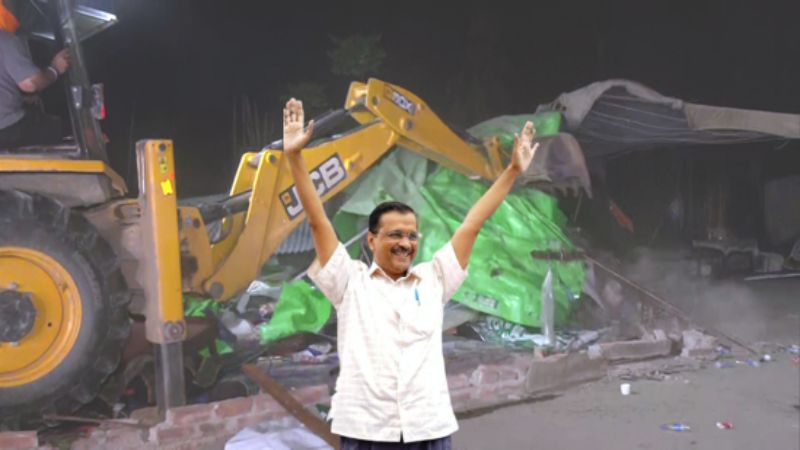
Former Chief Minister of Delhi Arvind Kejriwal has taken self-praise to a new level by publicly declaring that he deserves a Nobel Prize for his governance. The statement, delivered with apparent seriousness, marks yet another instance of theatrical politics eclipsing sober administration, drawing inevitable comparisons to the hyperbole of U.S. President Donald Trump.
The basis of Kejriwal’s claim? That he has managed to run the Delhi government despite what he describes as relentless obstruction from the BJP-led central government and the Lieutenant Governor. According to him, this resistance has made his governance so challenging that it qualifies as award-worthy.
Addressing a gathering at an event held in Mohali to launch the Punjabi edition of the book ‘The Delhi Model’, authored by Jasmine Shah, the former Delhi chief minister claimed the BJP-led Delhi administration had ruined the city, stating that after the AAP left office, services had collapsed.
‘Last year, in June, when it was 50 degrees Celsius, there was not even one minute of power cut, but now there is a power cut that has lasted six years. They have destroyed Delhi. They are doing politics, and they just want to earn money. I should get a Nobel Prize for governance and administration because my AAP government did so much work in the national capital despite disruptions by the L-G,’ Kejriwal said.
One of the initiatives often brought up in this context is the Mohalla Clinic program, once touted as a revolutionary step in primary healthcare. Despite the hype, the clinics have faced issues ranging from poor maintenance and staffing shortages to inconsistent availability of medicines and diagnostics. Many projects have stalled not just due to political friction, but due to mismanagement, bureaucratic inertia, and a lack of consistent oversight- factors well within the state government’s remit.
This narrative of victimhood isn’t new. For years, Kejriwal has projected himself as a leader besieged by hostile forces, a lone warrior against the system. His repeated slogan-like complaints that others refuse to work and won’t let him work either have become a cornerstone of his public messaging. While power struggles in Delhi’s unique administrative setup are real, constantly invoking them as an excuse for stalled projects or underperformance raises concerns about accountability.
By framing routine governance under pressure as an act deserving of global recognition, Kejriwal risks trivializing both the Nobel Prize and the responsibilities of public office. Leadership isn’t defined by the challenges one faces, but by how effectively those challenges are met, and whether the results speak louder than the rhetoric.
As the country heads toward another crucial election season, Kejriwal’s declaration is more than just a bold statement. It reflects a deeper trend in Indian politics: the growing reliance on drama, victimhood, and personality cults, often at the expense of grounded, transparent governance.
If Kejriwal is indeed positioning himself as a statesman of global stature, perhaps the first step would be to let performance, not praise, do the talking.